Dice A Million Beginners Guide: Surviving The RNG Meat Grinder
The math in this game is actively trying to kill you, but you can beat the dealer if you know exactly which dice are actually worth your time.
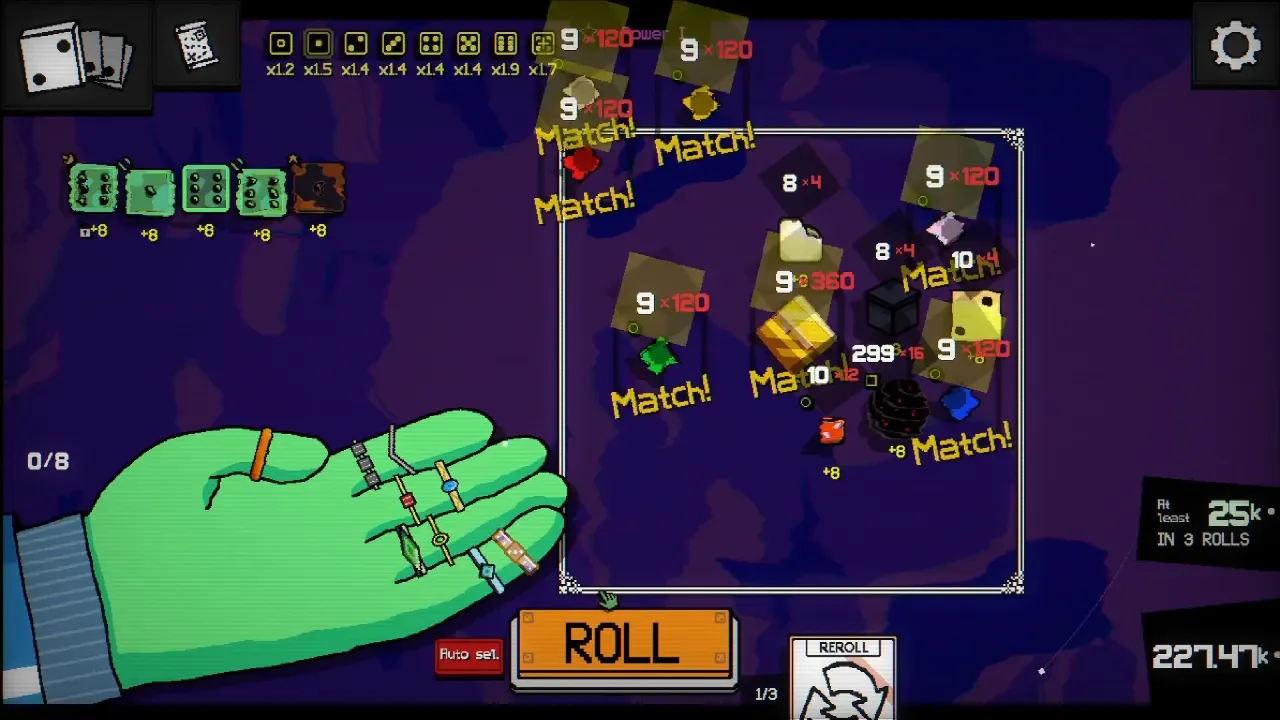
Roguelike deckbuilders are designed to be punishing. It comes with the territory. However, Dice A Million takes that philosophy and beats you over the head with it. You are thrown into a facility with over 120 dice, 80 rings, and mathematical interactions that feel utterly confusing during your first few hours. You will probably brick your run on the second room and wonder if your brain is just broken.
You are not the problem. The game is heavily reliant on brutal randomness. Red dice encounters will show up out of nowhere to ruin your day, and bosses will completely deactivate your board right out of the gate. To survive this mess and chase that one million point threshold, you need to stop picking dice blindly and start drafting the strict meta.
Exploiting The Starter Packs
When you boot up a new run, the game offers you a choice between a card, a stamp, a dice booster pack, or a mystery bag. Do not blindly accept whatever the game hands you.
If your starter pack does not contain a solid passive ring or a top tier die, just restart the run. It sounds incredibly tedious, and it absolutely is, but starting your run at a massive disadvantage is a guaranteed death sentence. Rerolling your initial seed until you get a playable foundation is the only way to consistently push past the first few faces without tearing your hair out.
The Strict Dice Meta
Forget about trying to build a cute "odd number" or "even number" deck. Those gimmicks will get you annihilated by the time you reach the second face. You need high numbers, and more importantly, you need massive multipliers.
If you see an Electric die, you draft it immediately. It is arguably the single best die in the entire game for stacking your multipliers. You also need to look out for Translucid dice to flood your hand with even more multiplier potential.
Once your deck is cleaned up and trimmed down, the Mirror die becomes incredibly powerful. You should also keep a Paper die in your pocket to build up flat bonus points for the specific bosses that actively punish multiplier builds. You still need raw scoring dice like the d100 or d666, but do not bloat your hand with them. If your deck gets too thick, you will never draw your winning combos.
Enchantments and Ring Priorities
There are dozens of enchantments floating around the shop, but only one actually matters. You want the Laconism enchant on absolutely everything you can afford. The rest of the enchantments pale in comparison, with the singular exception of putting an Eternal enchant on a Pinata die. For the record, the "destroy after roll" effect cannot be saved by a standard chance to return to your hand. It specifically needs to be Eternal.
When it comes to your rings, you are looking for pure utility. The Aura ring is top tier for increasing your area of effect. Beyond that, prioritize anything that lets you draw more dice. Rings that spawn cards or Pyramids are essential because they ensure you actually have the resources to play your optimal hand every single turn.
Surviving The Brutal Economy
The shop in this game is completely unhinged. You will quickly notice that the prices vary randomly, the rarity of the dice is random, and the enchantments are unpredictable. The rarity of an item is barely even reflected in its price tag.
Because the economy is a massive gamble, you cannot rely on finding exactly what you need when you need it. This makes deck cleaning extremely dangerous if you do not already have your win conditions secured. Focus your money entirely on grabbing the meta picks mentioned above and ignore the useless filler stamps and gimmick dice.
Navigating Boss Debuffs
The difficulty spectrum of the bosses is incredibly uneven. You will breeze past The Blackout because hidden dice are barely an inconvenience. Then you will run into The Patient, who deactivates all your dice until you roll them once, and your run will instantly end.
Bosses like The Copycat and The Capricious are deliberately designed to annihilate cleaned up decks. Since deck fixing is the entire point of a builder game, these encounters feel incredibly unfair. There is no magic build that counters every single boss. You just have to lean hard into multiplier stacking and hope your raw math outpaces their debuffs.
Understanding The Bizarre Math
You are going to encounter a lot of weird activation orders that feel like broken code. The game logic relies heavily on the physical face of the die rather than its final modified value.
For example, if you have a ring that turns your lowest roll into a 10, and another ring that multiplies prime numbers, rolling a 1 will turn into a 10. However, the prime ring will not trigger because the game still reads the original face as a 1, which is fundamentally not a prime number.
Similarly, debuffs from bosses like The Heretic apply an 80 percent reduction before your own multipliers kick in. If your base value drops to zero from the debuff, any multiplier you apply afterward will just multiply that zero. It is frustrating, but knowing how the math resolves means you can draft around it. Stop trying to build complex novelty decks, stick to raw multiplier stacking, and pray the RNG respects your time.