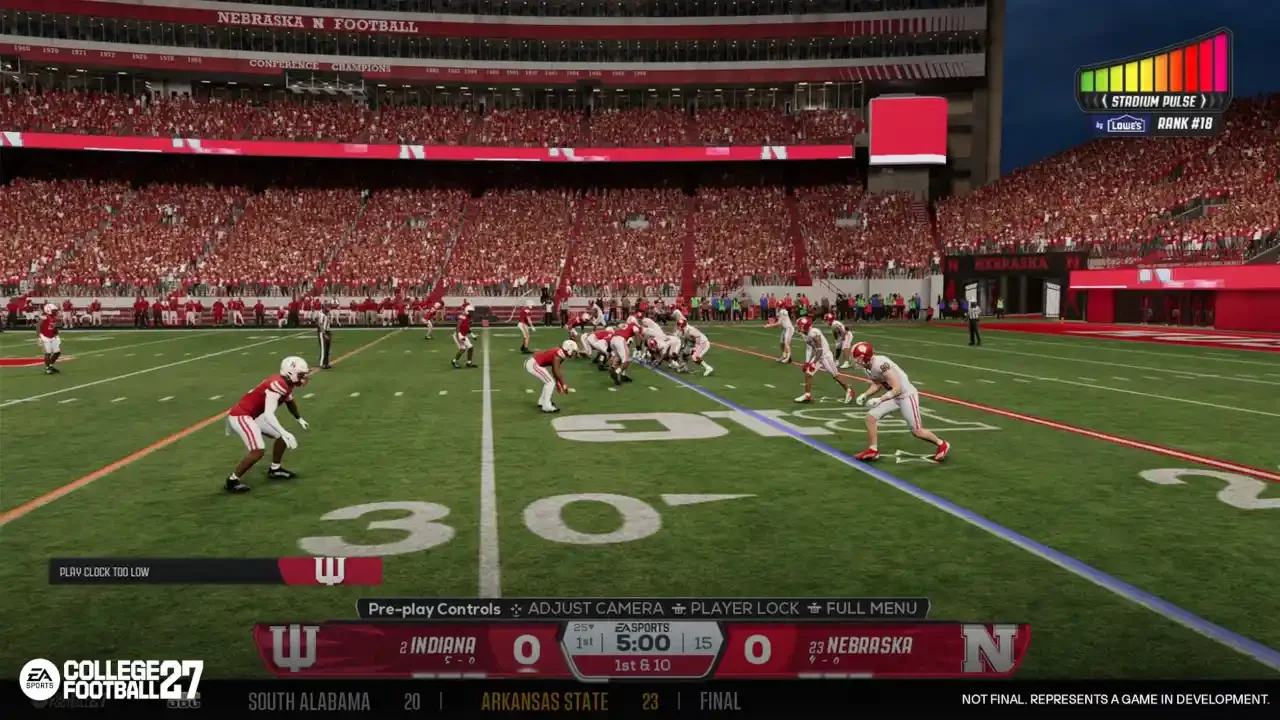
EA Sports College Football 27 Single-Player Microtransactions: Corporate Greed Out Of Bounds
Sneaking predatory microtransactions into offline single-player game modes is a fantastic way for a publisher to completely alienate its entire community.
When EA launched College Football 27 on July 2 for the big spenders who dropped $150 on the early access MVP+ membership, the initial on-field praise was instantly drowned out by a wave of corporate greed. You can now use real-world cash to buy your way through offline career modes. This isn't a surprise addition to multiplayer modes. EA quietly infected the sacred ground of Dynasty and Road to Glory with pay-to-win mechanics. If you've already been trying to balance your program's budget using my College Football 27 Dynasty Blueprint guide, you know the game's economy is already demanding. Now, it turns out the publisher purposefully broke the offline progression system just to manipulate you into opening your real-world wallet.
The Extinction Of Free Single-Player Progression
Before you waste hours trying to naturally level up your character, you need to realize that the developers deliberately turned offline progression into a vertical cliff.
The real point of contention isn't just that you can buy shortcuts. The problem is that EA actively sabotaged existing features to clear a path for their new storefront. In previous editions, you could jump into the settings menu and tweak specific experience points sliders to accelerate the rate at which you leveled up. If you didn't have fifty hours a week to dedicate to a video game, you could bypass the grind and play exactly how you wanted.
The Death Of XP Sliders
In College Football 27, those progression sliders have been completely removed from the settings menu. The math behind the default experience system is now intentionally punishing. If you refuse to buy the XP shortcuts, it takes something like 150 plus playoff seasons before your coach can reach max level. If you embark on a traditional, full 30-year coaching campaign in Dynasty mode, perfect execution will still only bring your Coach rating to a maximum level of 75 out of 100. The game essentially breaks its own leveling caps. It forces you onto an infinite treadmill where purchasing microtransactions is the only viable path to actually max out your coaching perks.
Gutting Road To Glory Training
The single-player cuts hit just as hard when you step onto the field as an individual athlete. In past years, you could spend your weekly energy on a dedicated Training option to secure easy skill points. That feature is completely gone. If you read my College Football 27 Road to Glory player upgrade guide, you already know how painful it is to survive the bench grind as a freshman. Now, instead of balancing your athlete's schedule naturally, EA expects you to solve your progression delays by purchasing College Football Points to bypass the hassle.
The Real Cost Of Pay-To-Win Coaching
The actual financial demands of these offline shortcuts are genuinely staggering.
If you want to maximize your coach's skills in Dynasty mode right at the start of your career, skipping that newly engineered grind will run you roughly $100 in real-world cash. That means the microtransaction alone costs more than the retail price of the base game.
I put together a quick breakdown of the College Football Points bundles below so you can see how much money you are expected to fork over.
The absolute worst part of this rollout is the sheer dishonesty surrounding it. EA flew content creators out to a massive preview event in Chicago back in June, hyping up the immersion and mechanics of the game. Throughout that entire presentation, the developers said absolutely nothing about pay-to-win tiers invading the offline modes. They waited until early access went live to quietly flick the switch. This triggered massive community pushback, prompting creators like Bordeaux to launch protests under the "#CFBPlayDontPay" banner, which managed to reach 9th in the United States trending charts. The development team is apparently scheduled to drop a response blog on Thursday, July 9, to address the firestorm.
Corporate Debt And The Looming Monetization Wave
This aggressive push for extra cash isn't just an isolated incident or a sudden whim from the development studio.
As reported by Mike Straw from Insider Gaming, EA has been actively looking at ways to add more monetization options to all of the games and franchises in its portfolio. Whether it be College Football 27 and its single-player modes, UFC 6, which will have paid expansions for the first time, Madden 27, which will have more monetization as well, or EA FC with its upcoming The Grounds mode, everything is on the table regarding how EA is preparing to pay off its new corporate obligations. Even future single-player-only titles from EA will have more monetization options implemented.
The corporate baseline completely shifted following a massive $55 billion buyout deal involving the Saudi Arabia Public Investment Fund (PIF), Affinity Partners, and Silver Lake to take the company private. That acquisition saddles EA with a brutal $20 billion in fresh corporate debt, and your favorite gaming modes are being sacrificed to help clear the balance sheet.
This means the offline paywalls in College Football 27 are just the opening salvo. Multiple anonymous development sources have stated that the teams actually building the game were completely livid about the implementation, knowing for months that the community response would be incredibly loud. Unfortunately, executive leadership is simply planning to wait out the current storm, banking on predictable consumer behavior to ensure that enough people keep buying the shortcuts to make the controversy highly profitable. The corporate strategy is to just drop a short-term band-aid to quiet the crowd, while relying on the standard messaging of, "well, you don't have to spend the money if you don't want to."