Heroes of Might and Magic: Olden Era Magic System Breakdown
You are going to completely exhaust your mana reserves and lose your entire army if you do not understand the brutal cooldown rules governing spellcasting.
Magic in Jadame is an overly complicated mess of overlapping menus and hidden proficiency checks. You might think you can just build a magic tower and instantly start hurling fireballs to win your matches. That strategy will get you killed. The game strictly separates your kingdom wide research from your individual hero spellbooks. If you do not plan your economy around securing rare resources for spell unlocks, you will hit the mid game with absolutely zero magical firepower. Mastering the flow of combat using the tricks outlined in my HoMM Olden Era Combat Guide is mandatory, but supplementing those tactics with a perfectly timed debuff is how you wipe out enemies without suffering a single casualty. I am going to decode exactly how magic actually works so you can stop casting blindly.
The Kingdom Magic Infrastructure
Your spells do not just magically appear in your pocket. You have to build the infrastructure to research them and then manually teach them to your heroes.
The Observatory Versus Mage Guilds
You must understand the difference between your Observatory, your Mage Guilds, and your Spellbooks. A Mage Guild determines the specific spells available in a single town. The Observatory represents the collective magical knowledge of your entire kingdom across all your controlled cities. A Spellbook dictates what an individual hero actually knows.
When you construct a Level 1 Mage Guild in a town, the game adds a random assortment of Tier 1 spells to your Observatory. Here is the trick that the game barely explains. If you build another Level 1 Mage Guild in a second town, the game will either unlock completely new Tier 1 spells for your Observatory or automatically upgrade an existing Tier 1 spell to a higher level. Constructing multiple guilds creates a massive compounding effect for your spell power.
You must protect your cities at all costs. If an enemy captures a town holding a Mage Guild, your kingdom instantly loses whatever spells or upgrades that specific guild contributed to your Observatory.
Manual Unlocks and Alchemical Dust
You do not have to rely entirely on random rolls from building guilds. You can open your Observatory menu and manually unlock missing spells using rare resources. A Tier 1 spell costs two Mercury, two Crystals, and two Gems. As you learned in my HoMM Olden Era Beginner Tips guide, managing your economy to hoard these specific resources is critical.
Once a spell is unlocked, you can manually upgrade it using Alchemical Dust. You can only apply a manual upgrade to a spell once. The massive benefit here is that any hero who already knows that spell instantly receives the upgraded version out in the field. They do not need to return to town to benefit from the boost.
Hero Spellbooks and Proficiency
Just because your kingdom knows a spell does not mean your hero can actually cast it. You have to pass specific skill checks to access your arsenal.
Mana Pools and Spell Power
Every single hero starts with a Spellbook regardless of their class. Your ability to cast is dictated by your Knowledge and Spell Power attributes. Every single point of Knowledge grants your hero 10 maximum mana. Spell Power directly scales the duration and raw strength of your casted effects.
Mana regeneration is incredibly stingy. If you start your turn out in the wild, you only regenerate a pathetic 10 percent of your maximum mana pool. To fully restore your reserves, you must end your turn inside a town equipped with a Mage Guild.
Tiers Versus Levels
You need to separate spell Tiers from spell Levels in your head. A spell Tier indicates how difficult a spell is to learn. A spell Level indicates how effective the spell actually is in combat. A Level 1 spell might only hit a single target, while upgrading that exact same spell to Level 4 causes it to strike the entire enemy army.
By default, every hero can learn Tier 1 and Tier 2 spells. To access Tier 3, 4, and 5 spells, you must invest in the Wisdom skill. Alternatively, simply having basic proficiency in a specific magic school allows your hero to learn any spell from that particular school regardless of the Tier requirements.
When your hero visits a town with a Mage Guild, they will automatically attempt to learn every single spell your kingdom has unlocked in the Observatory, provided they meet the Wisdom or school proficiency requirements. If you pick up a magical scroll on the map, the spell is added to that specific hero immediately without altering your kingdom wide Observatory.
Casting on the Battlefield
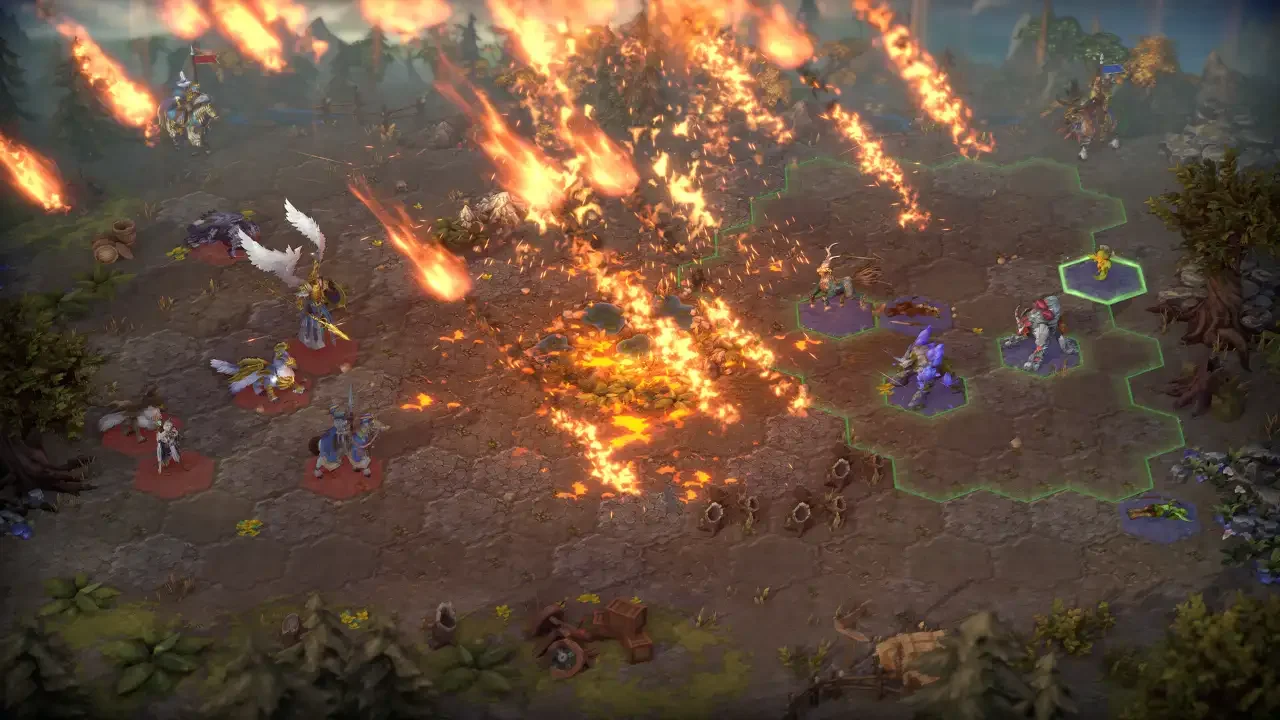
Once you actually enter combat, you face strict limitations on how frequently you can hurl magic at your enemies.
The Cooldown Penalty
By default, your hero is restricted to casting exactly one spell per battle round. Furthermore, every spell operates on a strict cooldown timer. A Tier 1 spell locks you out of using it again for two full turns. Every subsequent Tier adds an additional turn to the cooldown. You have to hunt down specific artifacts and hero skills to reduce these timers if you want to rely on a specific spell repeatedly.
Mastering Thaumaturgy
If you want to break the rules, you need a magic class hero. Classes like the Dungeon Warlock or the Temple Cleric have access to a unique skill called Thaumaturgy. This skill allows you to cast more than one spell per battle round.
There are two massive catches to Thaumaturgy. First, casting a second spell costs significantly more mana than normal. Second, you cannot cast two spells from the exact same magic school in a single round. You cannot chain two Primal destruction spells together even if the cooldowns technically allow it. Because of the escalating mana tax, I highly recommend casting your most expensive spell first. Use Thaumaturgy to follow up with a cheaper utility spell to maximize your mana efficiency.
Astrology and Global Spells
Not all magic takes place on the combat grid. You can actively manipulate the overworld map to gain an unfair advantage before a fight even starts.
As you develop your towns and secure specific points of interest, you will generate Astrology points. You spend these points directly in your Observatory interface to unlock massive global map spells. These global spells allow you to teleport across the map, scout hidden areas, or directly sabotage enemy armies while they are traveling. Astrology spells have strict hero level requirements, so you need to focus on feeding experience to your primary hero if you want to weaponize the overworld.