The Legend of Khiimori Horse Guide: Genetics, Breeding, and Traits
Building a stable of elite courier horses across the Mongolian steppes requires careful planning, deep pockets, and a lot of patience.
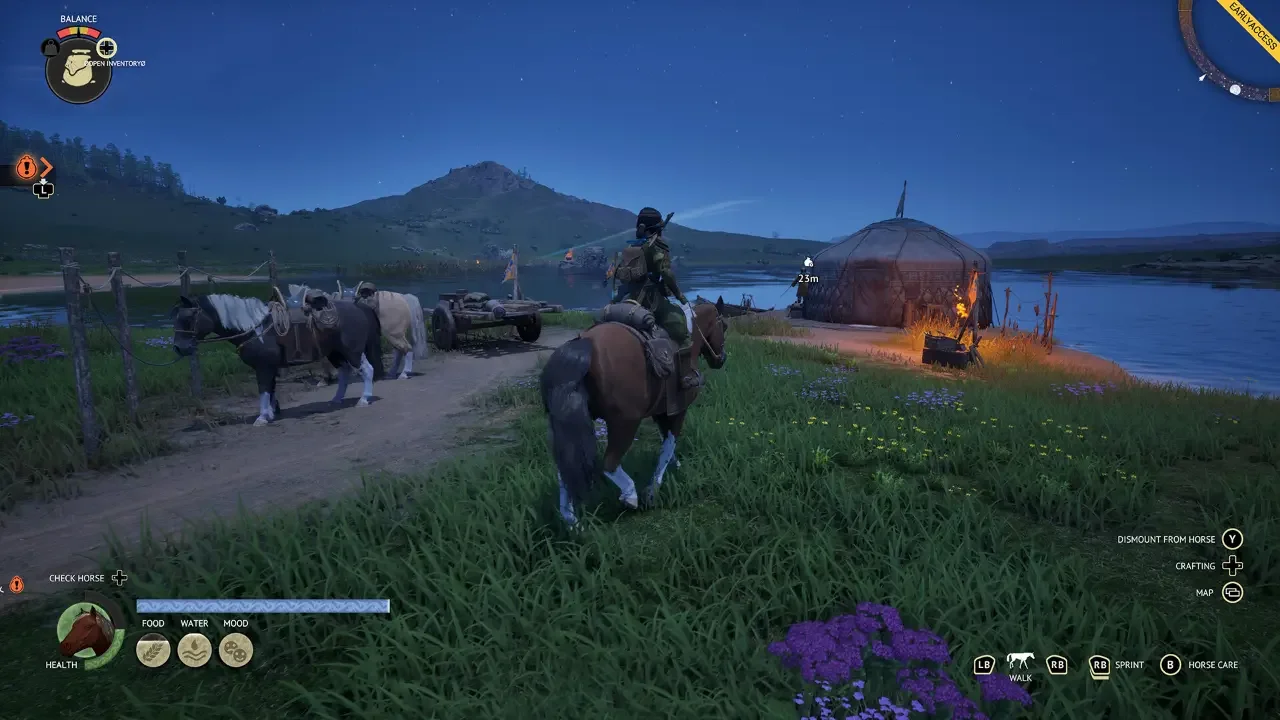
You survived the tutorial and managed to keep your starter animal alive for a few days. Congrats, I am genuinely proud of you. However, running long-haul deliveries with a basic mount will eventually get you stranded in a ditch. The environments in The Legend of Khiimori are gorgeous, but they demand a highly prepared rider. If you are still struggling to figure out why your horse is constantly annoyed or how to balance your saddlebags without snapping an ankle, you should pause here and read my complete beginner's survival guide first.
This guide focuses entirely on the advanced mechanics of building your stable. I am going to walk you through the wildly expensive breeding economy, how inherited personality traits alter your daily rides, and how to intentionally train your horse's hidden skills so you can actually survive the mid-game.
Buying Your First Real Mount
Before you can start experimenting with genetics, you need to expand your roster. Once you push past the initial quest segments, the game finally hands you a pouch of coin and points you toward a trader selling actual, functioning animals.
The Three Starter Breeds
The trader gives you three distinct options for your first major purchase. You can choose a strong horse, a fast horse, or a balanced horse. These correlate directly to the in-game models of the Ferghana, the Akhal Teke, and the Mongolian breeds.
I highly recommend dropping your hard-earned coin on the Ferghana early on. The massive boost to the Strength stat means you can carry significantly heavier cargo loads without immediately exhausting the animal. If you prefer to focus on quick, light deliveries across flat plains and want to outrun predators, the Agility focused Akhal Teke is a fantastic alternative. You are never permanently locked into these early decisions. You can always sell your older horses back to the trader once you establish a proper breeding program and start producing superior foals.
The Breeding Economy
Breeding forms the absolute core progression loop of your entire experience. You cannot rely on a single horse to survive every delivery route. You need a specialized stable, and building that stable takes a massive amount of in-game currency.
Stable Requirements and Costs
The barrier to entry for breeding is painfully steep. You must own a minimum of three horses to initiate the process. You need one active horse to ride for your daily courier jobs, plus one stallion and one mare resting in the stable.
If you need to buy fresh stock to hit that minimum, the trader charges a hefty 1000 coins per horse. On top of the purchase price, you have to pay a 20 coin fee every single time you arrange a mating session. Once you pay the fee, the actual gestation takes one full in-game day. If you lack the patience to stand around watching a barn, you can simply walk to your nearby shack and sleep until sunrise.
Your new foal will spawn at the gate located just left of the breeding station. You can enter the pen to pet the newborn, but you cannot saddle it up immediately. It takes roughly three in-game days for the foal to mature into a usable delivery mount.
Also, a quick note for the players currently wasting hours trying to lasso wild horses across the map: stop. You cannot tame wild horses in the current Early Access build. You have to buy or breed your entire roster.
Understanding Genetics and Traits
Horses in this game are highly individual creatures. They possess hard numerical stats that dictate their physical limits and distinct personality traits that will absolutely ruin your delivery run if you ignore them.
Personality Quirks
Foals randomly inherit behavioral traits from their parents. These quirks drastically change how you interact with the animal on a long journey. Some horses are born with the "Nocturnal" trait, granting them a massive mood boost when you travel under the stars. Others might roll the "Lazy" trait, causing them to lose their minds and throw a tantrum if you force them to gallop for too long.
I recently bred a beautiful Mongolian mare named Athena, only to discover she was "Wind Spooked." If a heavy gale picked up while we were crossing an exposed ridge, her mood would tank instantly and she would refuse to run. You have to read your horse's profile card and accommodate their specific neuroses. You can pass these traits down to future generations, so be careful about breeding two highly anxious horses together unless you want a stable full of nervous wrecks.
Biome Specialization
Once you understand how the stats scale and how traits function, the need for a diverse stable makes perfect sense. You cannot just ride your favorite pony everywhere.
Matching the Tool to the Job
The weather in this game will punish you if you bring the wrong animal to a delivery. You cannot take a fragile desert sprinter into the snowy mountain peaks. The freezing temperatures will drain its Endurance instantly, and it will lack the Strength required to push through the deep powder.
You need to match the tool to the job. Keep a high Strength mount specifically for routes that cross deep rivers with strong currents. Breed a high Endurance workhorse for the long mountain passes. Check your delivery route, observe the weather forecast, and pull the correct horse from your stable before you set out.