Slay the Spire 2 Beginner's Guide: How to Stop Dying on Floor One
Ascension 0 is beating people up right now, and most of the deaths have nothing to do with bad luck.
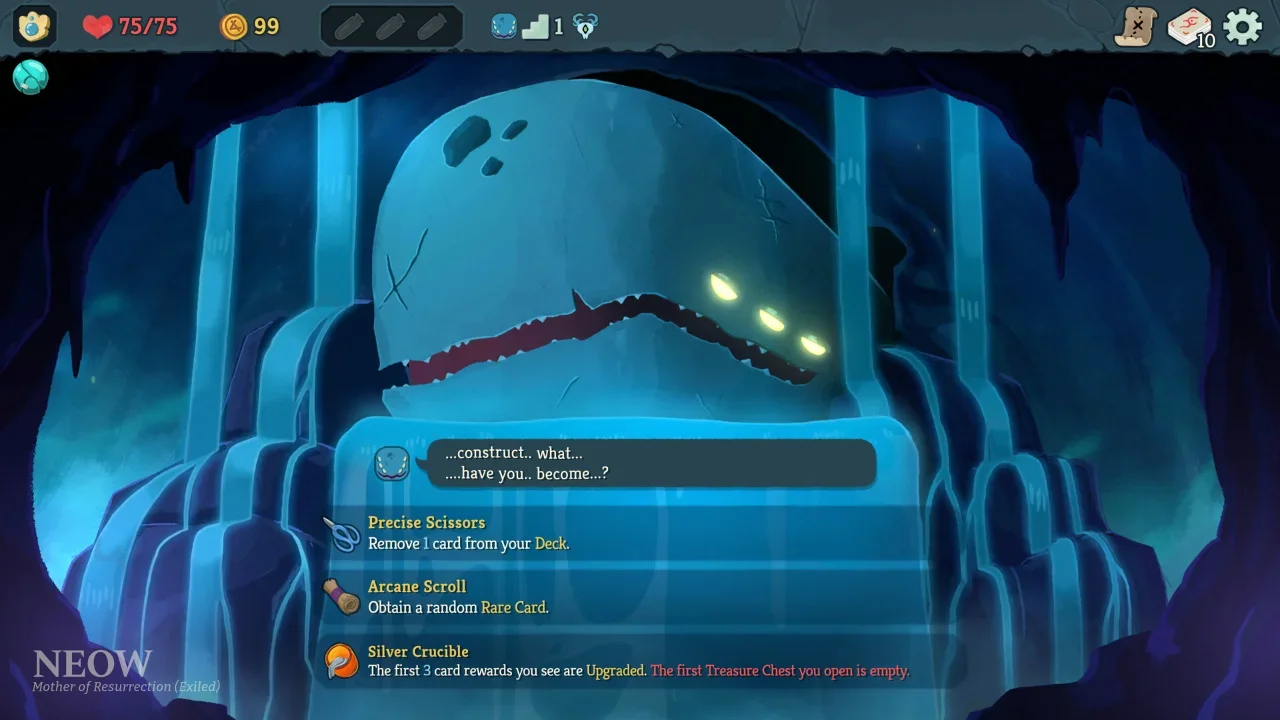
Forum complaints about the new Act 1 elites, the Statue and the Phrog especially, are everywhere right now, and the frustration makes sense. Eating 25 unavoidable damage on turn two feels awful in the moment. Having spent a long stretch getting wrecked by this game's new systems, though, the pattern is clear. The Spire isn't cheating anyone. Most early deaths trace back to habits carried over from the first game that just don't hold up here anymore.
Look at the Boss Before You Touch the Map
Before picking a single path through an Act, scroll up and check the boss icon waiting at the top. Every route decision below that point should bend toward surviving that specific fight. A boss that punishes heavy attack turns means prioritizing block and passive damage on the way up. A boss that hits hard and fast means stockpiling defensive tools instead of greeding for damage. Ignoring the boss until it's already in front of you is how a perfectly fine run falls apart in the last five minutes.
Elites matter more than they used to as well. Two per Act is a reasonable target, since they're the only reliable source of relics, and relics are what actually let a deck scale into the later floors. Skipping them out of caution keeps a character alive through Act 1 and then completely powerless by Act 3, because there's no passive scaling to fall back on. Routing a Campfire right before an Elite node is worth prioritizing too, and it's usually smarter to spend that rest upgrading a key damage card rather than topping off health. Healing buys a little time. A stronger card solves the problem permanently.
Stop Taking Every Card Reward
The instinct to grab loot after every fight is one of the fastest ways to sink a run, and it's a hard habit to break because rejecting free stuff in a video game feels wrong. Every card added to a deck dilutes the odds of drawing what's actually needed in a dangerous moment. A tight 22-card deck reliably puts a block card in hand when a boss is about to hit for 40. A bloated 40-card pile full of situational nonsense just doesn't.
Before clicking any reward, one question decides it: does this specific card solve a problem the deck actually has right now? A deck already sitting on enough block doesn't need another shield. If a card doesn't fit what's currently happening, skipping it is the correct move more often than not.
Gold deserves the same discipline. The Merchant's Card Removal service matters more than any relic on the shelf, especially early. Starting Strikes and Defends are fine on floor one and dead weight by the middle of the run, and every basic card removed makes the good attacks and powers pulled during the climb show up faster and more often. Blowing an entire wallet on a shop relic while five basic Strikes are still clogging the draw pile is backwards.
The Mechanics That Actually Kill People
A few new systems are responsible for a disproportionate number of runs ending early, and none of them existed in the original game.
Pierce ignores block completely, so an enemy winding up a Pierce attack turns any amount of stacked armor into a wasted turn. Weak is the actual answer here, since cutting the enemy's damage output directly is the only thing that helps once block stops working. Corrosion is the other one to watch for, chipping away at maximum HP at the end of every turn it's active. Stalling against a Corrosion enemy just bleeds health away for nothing, so these fights call for frontloaded damage that ends things fast rather than a slow grind.
Enchantments look tempting on paper, boosting a single card significantly, but the fine print usually costs max HP or extra energy per use. Enchanting a card played five times a fight while it drains health each time is a trap that's easy to walk into without reading closely. Quest Cards carry a similar risk, sitting in the deck as unplayable dead weight until some condition gets met, and taking one is only worth it if the rest of the deck is strong enough to carry that dead card in the meantime.
Durability is worth tracking too, since it caps how many times a relic or card can trigger in a single fight. Relics that used to fire indefinitely through a long boss encounter now shut off partway through once that limit's hit, which changes how much can be leaned on during a drawn out fight.
Picking a Character for Where You're At
Not every character plays the same kind of run, and starting with the wrong one makes the early hours rougher than they need to be. A character with built in healing after every fight offers a safety net for learning new enemy patterns without every mistake becoming permanent. A character running on a secondary resource that carries between turns rewards a patient, setup heavy playstyle, hoarding that resource until a single big turn ends the fight. A character built around spending her own health for power and leaning on a summoned pet to soak hits is the hardest one to pilot, since managing two health totals at once is stressful even when it's working exactly as intended.
Co-op Comes With a Catch
Multiplayer finally exists in this game, supporting up to three people at once, but there's no matchmaking of any kind. Playing with strangers isn't an option. Sessions only start by inviting people directly, the host has to remain online for the whole run, and there's no queueing up and hoping for a carry.
Farming XP Without Wasting Time
Solo progression feels noticeably slower than it used to, which makes fast leveling worth knowing early. Building a deck around pure frontloaded burst, cards like Whirlwind or Thunderclap, clearing Act 1's boss, and then letting the very first Act 2 enemy kill the run naturally takes about 15 minutes and returns solid experience. The key word there is naturally. Pausing and hitting "Give Up" instead of dying in combat forfeits the XP entirely, so the kill has to actually happen.
The Glossary Nobody Reads Until They Need It
Half of the deaths in this game come down to not knowing what a keyword actually does mid-fight. Worth bookmarking.
None of this makes Act 1 painless. It just means the pain starts making sense, and a run that dies to the Statue on turn two stops looking like bad luck and starts looking like a routing mistake that was fixable from the map screen.