Monster Lab Simulator Review - Capitalism Is The Real Monster
Playing God with alien genetics sounded like a great weekend until I realized I was just running an unpaid internship in a highly flammable laboratory.
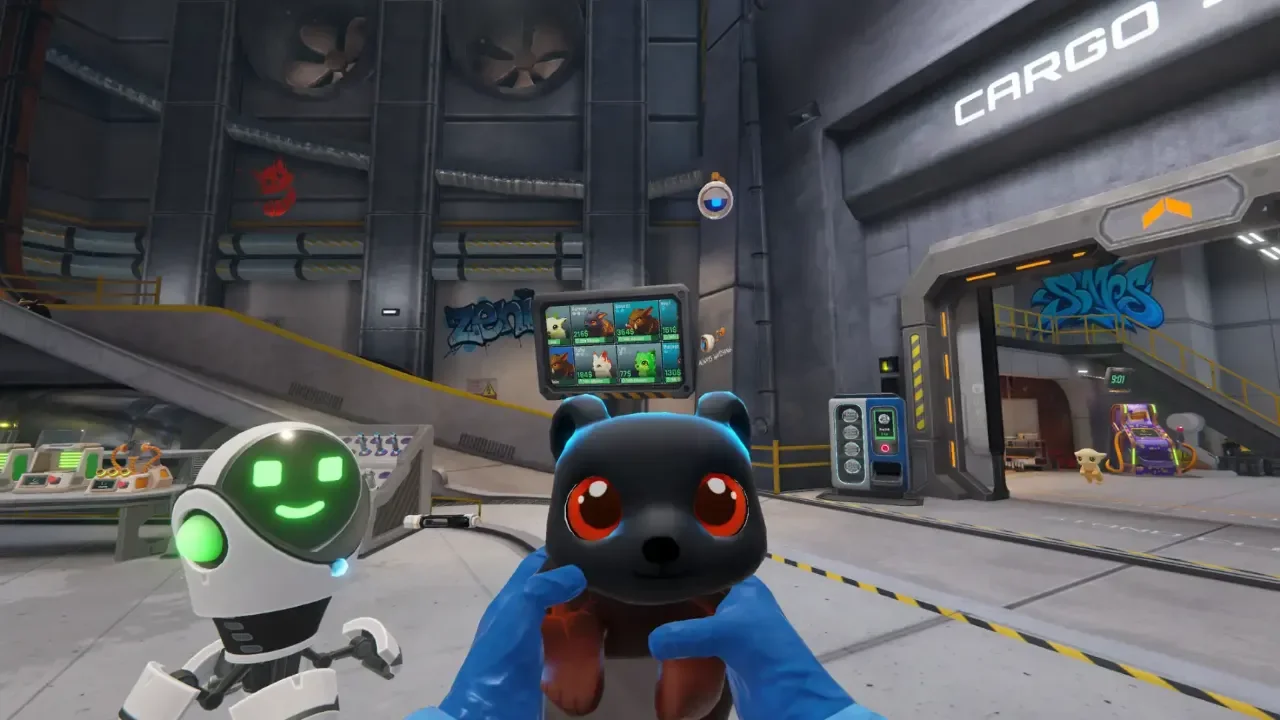
Welcome to Monster Lab Simulator. This is the latest title from Kiki Games that asks you to step into the shoes of a completely unhinged scientist. Your goal is to synthesize eggs, hatch adorable little mutant pets called Fulus, and send them into brutal combat for your own amusement. It sounds like a fantastic formula on paper. You get the addictive loop of a creature collector mashed together with the frantic plate-spinning of a management sim.
I really wanted to lose my entire weekend to this game. The Fulus are undeniably cute. Watching a tiny mutant fox waddle around your workspace brings a genuine smile to my face. The foundation here is rock solid. The problem is that the execution currently feels like a structural collapse waiting to happen. The game is in Early Access, and it wears that label like a massive glowing warning sign. Between an economy that actively punishes you for playing and a mountain of tedious chores, managing this lab quickly turns into a test of your psychological endurance.
The Crushing Reality of Lab Economics
Before we talk about the adorable monsters you get to create, we need to address the horrific state of your bank account.
You start your scientific journey broke. I was broke. The game basically wants you to be broke. The entire core loop revolves around spending money to make money. You buy mysterious essences and eggs, jam them into an incubator, and pop out a fresh Fulu. The logical next step is to sell that creature to fund bigger and better experiments.
Here is where the math completely falls apart. Purchasing the raw materials to synthesize a basic monster costs you roughly a hundred bucks. When you package that creature up and look at the market orders, you will usually find buyers offering you ninety bucks for it. You are literally operating at a net loss every single time you hit the synthesis button. You bleed cash just by playing the game as intended.
To stay afloat, you are forced to rely on a literal slot machine sitting in the corner of your lab. You pull a lever and pray you hit a jackpot just to afford your next batch of water essence. A management game should reward efficiency and smart planning. It should never force you to gamble your last twenty bucks just to keep the lights on. It makes the early game an agonizing grind where you are terrified to experiment because one wrong move means total bankruptcy.
The Market Board Hustle
Even if you ignore the terrible profit margins, the order system itself is incredibly frustrating. The market board cycles through requests for specific Fulus. If you are stuck at level four and the board is demanding high-tier monsters you cannot even synthesize yet, you just have to sit there and stare at the wall until the orders refresh. It grinds the pacing to an absolute halt.
A Masterclass in Tedium
You are supposed to be a brilliant mind pushing the boundaries of genetic science, but you spend ninety percent of your time acting like an overworked janitor.
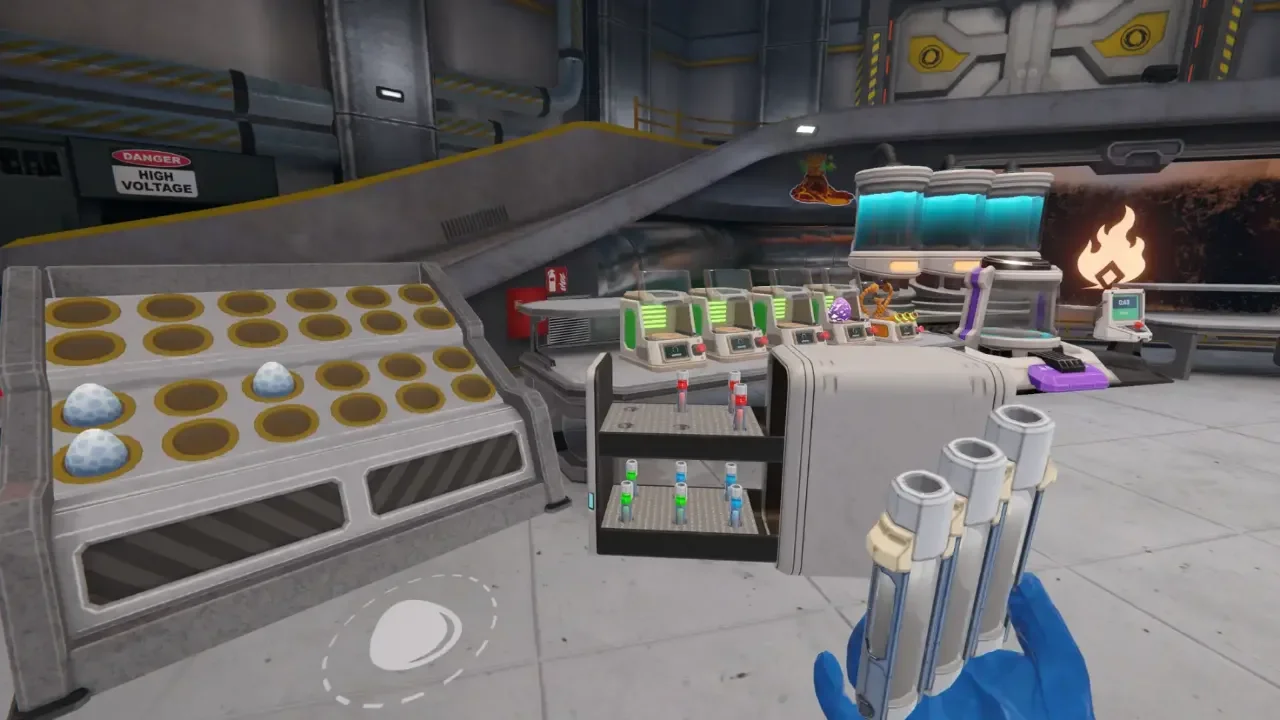
Monster Lab Simulator completely ignores the concept of quality of life features. Every single action requires agonizing manual labor. You cannot just click a menu to move an egg from your storage to the incubator. You have to physically walk over to the delivery tube, pick up the egg, waddle over to the machine, and place it down. Want to add three vials of essence? You have to carry them by hand.
Storage space is practically non-existent. Your lab quickly fills up with empty vials and random clutter. The game offers you an assistant trash robot to help clean up the mess. You save up thousands of dollars to buy this mechanical marvel, and it turns out to be completely incompetent. The robot picks up one item at a time, waddles over to the incinerator, and frequently misses the throw. Your lab just ends up with a massive pile of garbage sitting next to the fire hazard.
The Nightmare of Creature Transportation
The tedium reaches its absolute peak when you start dealing with the monsters themselves. Fulus do not magically teleport into their holding orbs. You have to carry them to a machine, orb them, and then carry the orb to storage.
When your team gets wiped out in a battle, they need to heal. You have to manually carry each individual orb all the way down to the elemental healing zones, wait for a timer to finish, and then carry them all the way back upstairs to the combat room. It is mind-numbing busywork that pads out the runtime without adding any actual fun to the experience.
Genetic Roulette and Brainless Brawls
If you manage to survive the economic depression and the endless walking simulator, you finally get to test your creations in battle and merge them into stronger forms.
The evolution machine lets you throw three Fulus into a blender to create a higher-tier variant. The concept is great. The execution is an absolute slap in the face. The random number generator governing this machine is unforgiving. You can spend hours grinding to afford three legendary monsters, toss them into the fuser, and watch in horror as the machine spits out a common, bottom-tier piece of trash. Losing hours of progress to a single bad dice roll is enough to make anyone hit the uninstall button.
Combat is equally disappointing. You carry your squad to the war room, throw them onto the field, and then completely let go of the controls. You have absolutely zero tactical input. You cannot tell your Fulus who to attack. You cannot trigger their special abilities. You just watch the AI awkwardly bump into the enemy team and hope your numbers are higher than theirs.
The Opponent Scaling Problem
To make matters worse, the enemy scaling is entirely broken. You will frequently walk into the arena with a team of basic, low-level creatures only to find your opponent rocking a full squad of elite legendaries. They wipe the floor with you in seconds. The game then asks you to pay twenty dollars to reroll your opponent. Remember how I said you are always broke? Paying money to avoid an unwinnable fight in a game where money is impossible to earn is a uniquely frustrating kind of torture.
A Unique Flavor in a Crowded Market
I have to give the developers credit for one thing: at least this isn't "Supermarket Simulator Clone #500." While the Steam store is currently drowning in lazy asset flips where you stock shelves and scan groceries, Monster Lab Simulator actually tries to do something interesting. It combines the cozy, addictive vibe of TCG Card Shop Simulator with the monster-taming appeal of something like Palworld.
It has a distinct personality. The lab atmosphere is great, the lighting is atmospheric, and the sense of discovery when you find a new essence combination is genuinely rewarding. It’s that small, unique flavor that kept me playing even when I wanted to scream at the trash robot.

The Verdict
Monster Lab Simulator is a diamond buried under a very large, very heavy pile of garbage. The core loop of discovering new Fulu species is genuinely charming, and it avoids the copy-paste feel of most modern simulator games. However, the current economic balance is broken, the automation is useless, and the RNG in the fusion machine is borderline insulting to the player's time.
If you are a hardcore fan of creature collectors and have the patience of a saint, there is some fun to be found here for a few dollars. Everyone else should wait for the developers to fix the math.
Score: 5.8 Diamond in the rough, but currently more rough than diamond.
We at NLM received a key for this game for free, this however didn't impact our review in any way.
- Undeniably cute and charming Fulu designs.
- Distinct "Mad Scientist" atmosphere and lighting.
- Genuinely rewarding sense of genetic discovery.
- Refreshingly unique concept in a market of clones.
- Broken economy; synthesis often results in a net loss.
- Tedious manual labor and lack of QoL features.
- Brutal RNG in the evolution/fusion machine.
- Combat is entirely hands-off with zero tactical input.