We have reached the point where "Survivor-likes" are reproducing faster than the actual vampires they portray.
Every week, Steam is flooded with games where you walk around a field while your character automatically murders thousands of skeletons. It is a genre defined by dopamine and flashing lights. So when Night Swarm popped up on my radar, I expected another low-effort clone.
I was wrong. Mostly.
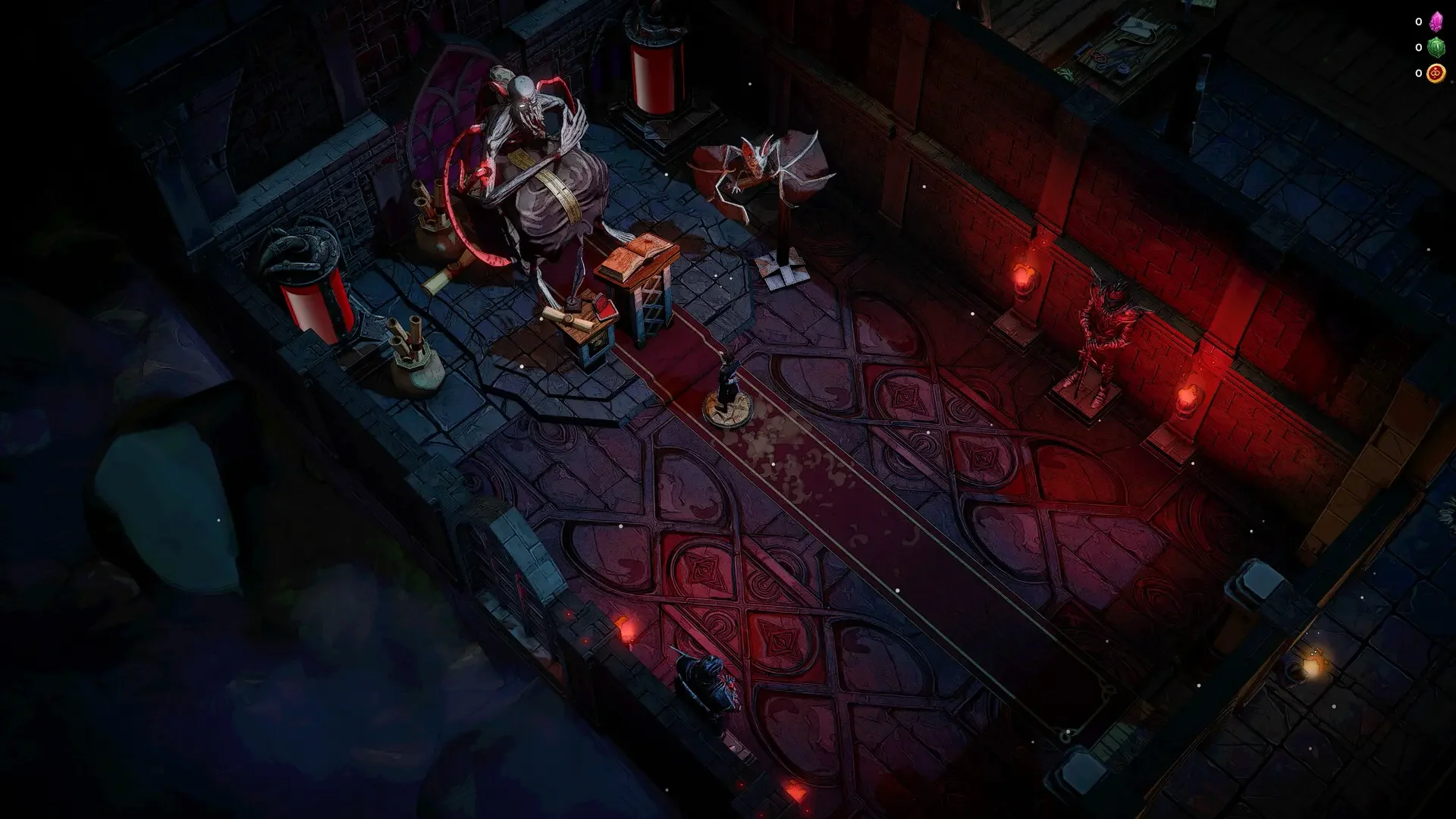
Developed by Fubu Games, Night Swarm is trying to be the sophisticated older brother of Vampire Survivors. It borrows the map structure of Hades, adds a massive castle-building meta-game, and wraps it all in a gorgeous cel-shaded comic book aesthetic.
I spent quite a few hours sinking my teeth into this thing. The gameplay loop is addictive enough to ruin your sleep schedule, but it also makes some baffling design choices that keep it from reaching god-tier status.
The Look And The Wobble
First, we have to talk about the visuals. Night Swarm looks fantastic.
The art style leans heavily into a dark, gothic comic book vibe. The colors pop, the lighting is moody, and the biomes feel distinct. However, the developers made a stylistic choice that is going to divide people.
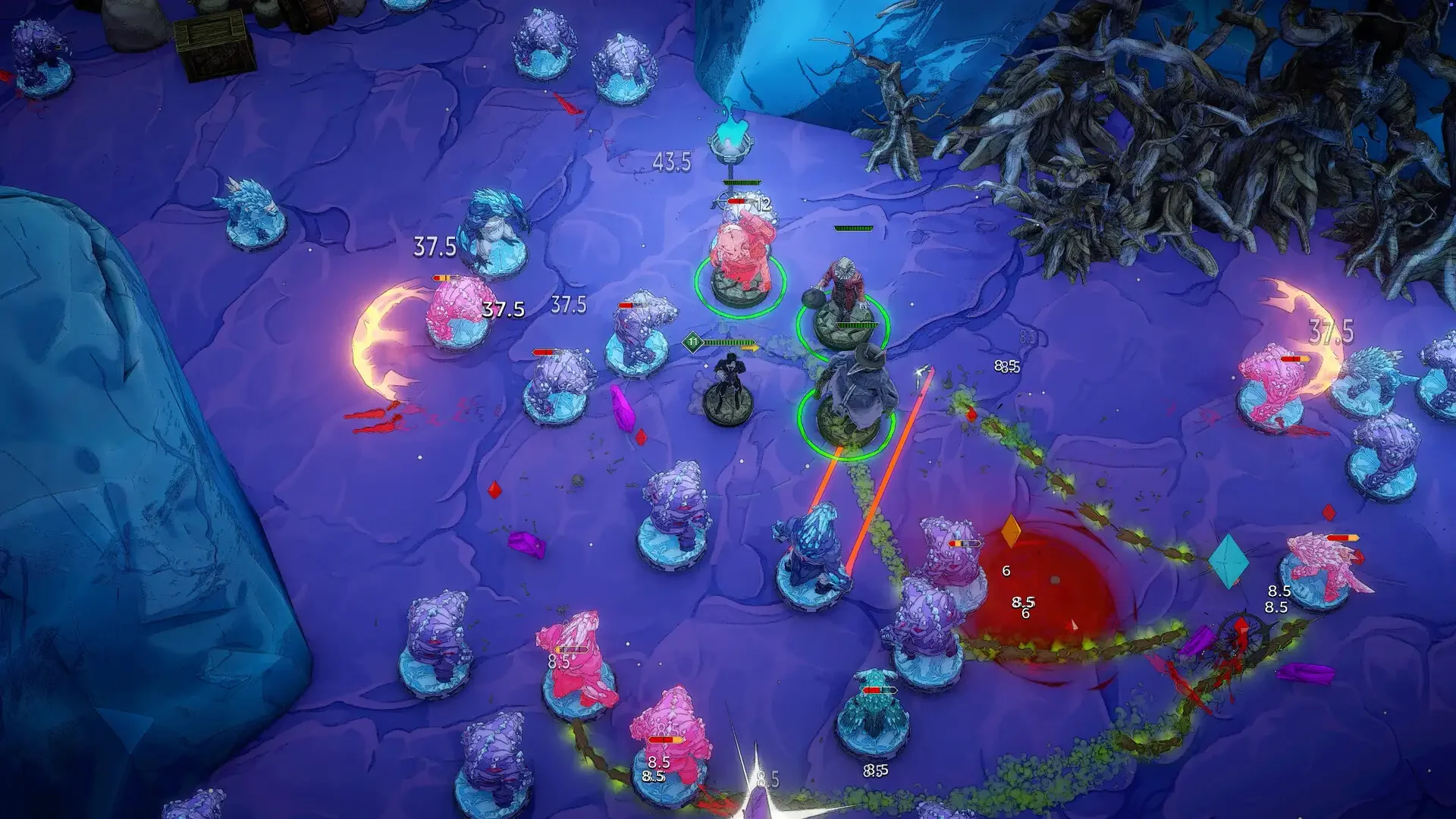
The characters move with a "board game piece" wobble. They don't have fluid walking animations. They tilt back and forth like plastic miniatures being shoved across a table. Personally, I dug it. It gives the game a unique identity. But if you are a stickler for smooth animation, it might look like the game is glitching.
The Gameplay Loop
The core game is familiar. You play as Roderic, a vampire lord trying to reclaim his kingdom. You move, you auto-attack, you collect XP gems.
But Night Swarm breaks the monotony by using a branching path system. Instead of standing in one infinite field for 30 minutes, you navigate a map node by node. Do you want to go to the Elite Battle for better loot? Or do you take the safe route to the Shop?
This adds a layer of strategy that the genre desperately needs. The biomes also have their own hazards. The Desert has giant Sand Worms that will eat you whole if you aren't careful. The Frozen Tundra has a cold mechanic that forces you to hug fire pits. It keeps you on your toes.
The Build System (And The RNG Hell)
The meat of the game is the Relic system. You have Active Relics (weapons) and Passive Relics (buffs).
When you get two specific Active Relics to Level 10, you can fuse them into a super-weapon. This is where the dopamine hits. Watching your "Sanguine Pool" turn into a screen-clearing nuke is satisfying.
But there is a catch. The game forces you to have a minimum number of relics in your pool. This dilutes the RNG pool significantly.
Too often, I found myself on a "Hell" difficulty run, desperately searching for the one specific relic I needed to fuse my weapon, only for the game to offer me three pieces of garbage I didn't want. The RNG can feel punishing in a way that feels unfair rather than challenging.
Companions And Synergy
The best addition to the formula is the Companion system.
You can unlock 10 different allies, from a tentacle monster named Mr. Coftopus to other vampire lords. You can bring two of them into battle with you.
They aren't just cosmetic. They have active abilities and passive buffs that define your build. If you want to run a "Freeze Build," you grab the companion that buffs ice damage. If you want to be a tank, you grab the guy who boosts health. It adds a layer of RPG theory-crafting that I really enjoyed.
The Castle Grind
Between runs, you return to your Castle. This is your hub for meta-progression.
You can upgrade buildings, craft armor, and unlock talents. It gives you a reason to keep playing even after you die. Upgrading your curtains gives you a higher block chance. I don't know why better interior decorating makes me immune to werewolf claws, but I'll take it.
The armor crafting system, however, is a slog. It requires a lot of materials, and half the time the upgrades feel like minor stat padding rather than meaningful power spikes.
The AI Voice Problem
Now for the part that made me want to mute the game.
The voice acting is AI-generated. It has that flat, soulless delivery that sounds like a GPS trying to read Shakespeare. The script tries to be dramatic and gothic, but hearing a robot monotone its way through lines about "eternal darkness" kills the immersion instantly.
It is jarring. The art is so full of life, but the voices are completely dead. I turned the voice volume to zero after the first hour.
The Developer History
I also have to mention the elephant in the room. Fubu Games previously released a title called Rogue Loops and then arguably abandoned it before it was fully cooked.
Night Swarm feels much more complete than their previous work, but that history is there. If you buy this, you are trusting that they stick around to balance the RNG and add more content.
The Verdict
Night Swarm is a solid entry in a crowded genre. It has style, it runs perfectly on the Steam Deck, and the companion system is a winner.
But it is held back by punishing RNG, a tedious crafting grind, and voice acting that sounds like a deepfake nightmare. It is fun for 20 hours, but I don't know if it has the staying power of Vampire Survivors or Hades.
If you need a new game to play while listening to podcasts, this is it. Just make sure you mute the in-game voices first.
7.1/10 A stylish, addictive rogue-lite that stumbles on its own ambition.
We at NLM received a key for this game for free, this however didn't impact our review in any way.
YOU MIGHT ALSO LIKE
Northgard: Definitive Edition Out Now - New Clans, Biomes, and 60% Sale
Best Gaming Mice for Large Hands 2025: DeathAdder V4 vs. Zowie EC1 vs. Terra Pro
Captain Wayne - Vacation Desperation Review: The Best Boomer Shooter of the Year Costs 10€
Moonlighter 2 Early Access Review: The Best Shopkeeping Sim Just Got a Whole Lot Better
News Tower Review: It's Like The Sims Meets Citizen Kane, and I'm Addicted