Splatoon Raiders Review: Treasure Hunting Never Felt This Chill
Splatoon Raiders takes a series built entirely around competitive splatting and asks what happens if you just remove that part completely, and somehow it works better than it has any right to.
A Spinoff That Knows What It Wants To Be
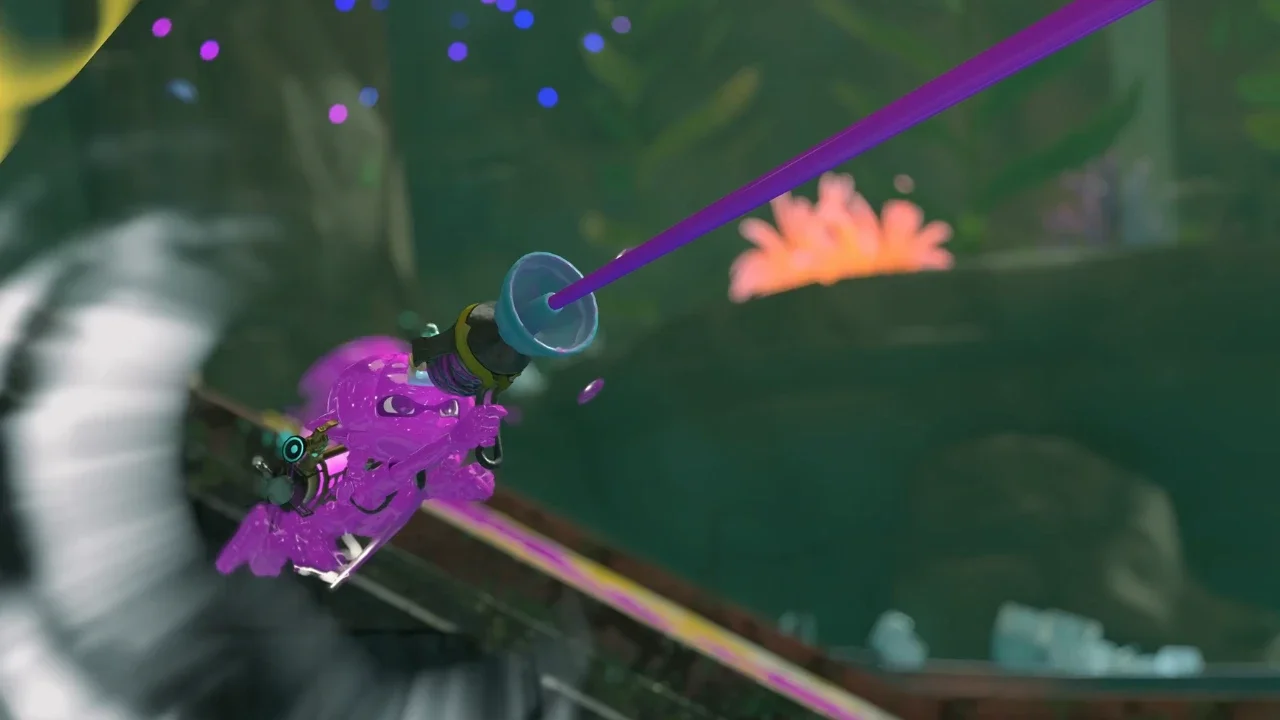
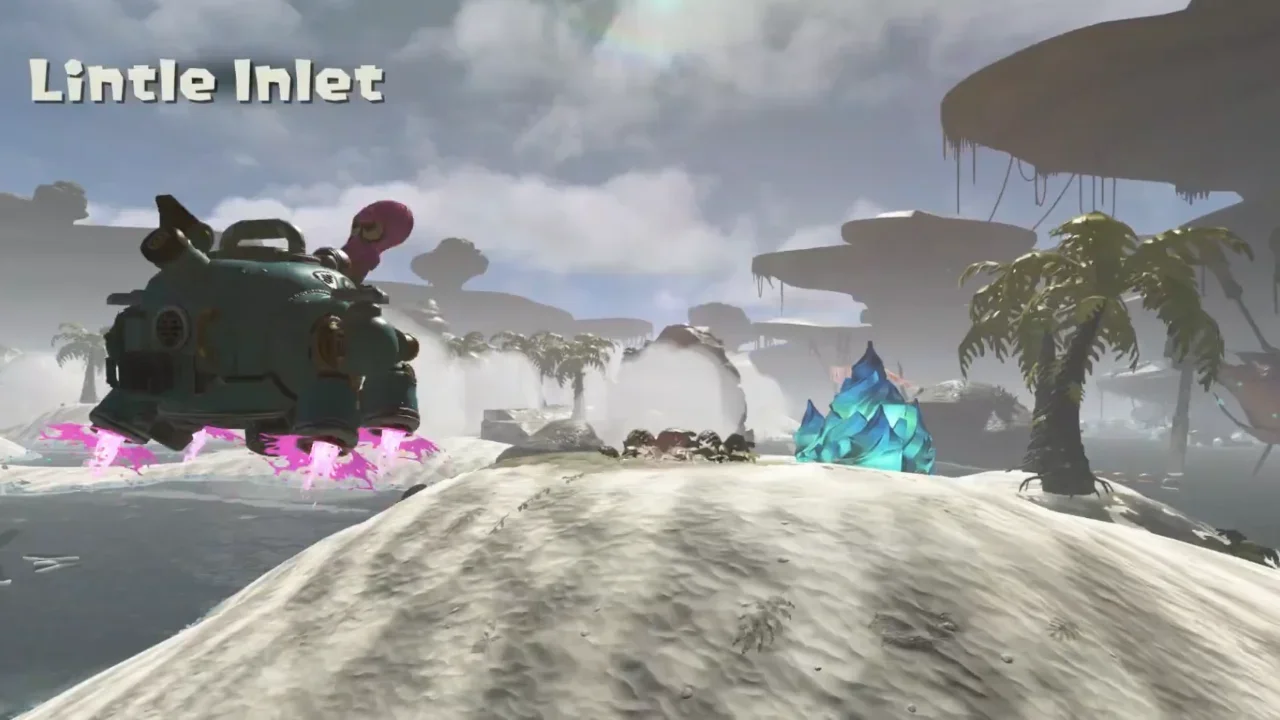
Deep Cut, the pop idol trio from the last mainline game, decide to go treasure hunting because apparently that's what pop stars with disposable income do. It goes about as well as you'd expect, meaning the ship crashes into the middle of nowhere, specifically the Spirhalite Islands, and now you're the Mechanic, stuck fixing an expensive boat by scavenging crystals and fending off Salmonid the whole way through.
There's no PvP here at all, which sounds like a strange move for a series that's leaned on competitive splatting since day one. But the regular games already cover that ground, and Raiders clearly isn't trying to compete with itself. It takes familiar pieces, Salmonid, ink mechanics, the weapon roster, and builds something that feels like its own thing rather than a spinoff padding out a release calendar.
The Loop That Keeps Pulling You Back
Weapons With A Scavenged Look
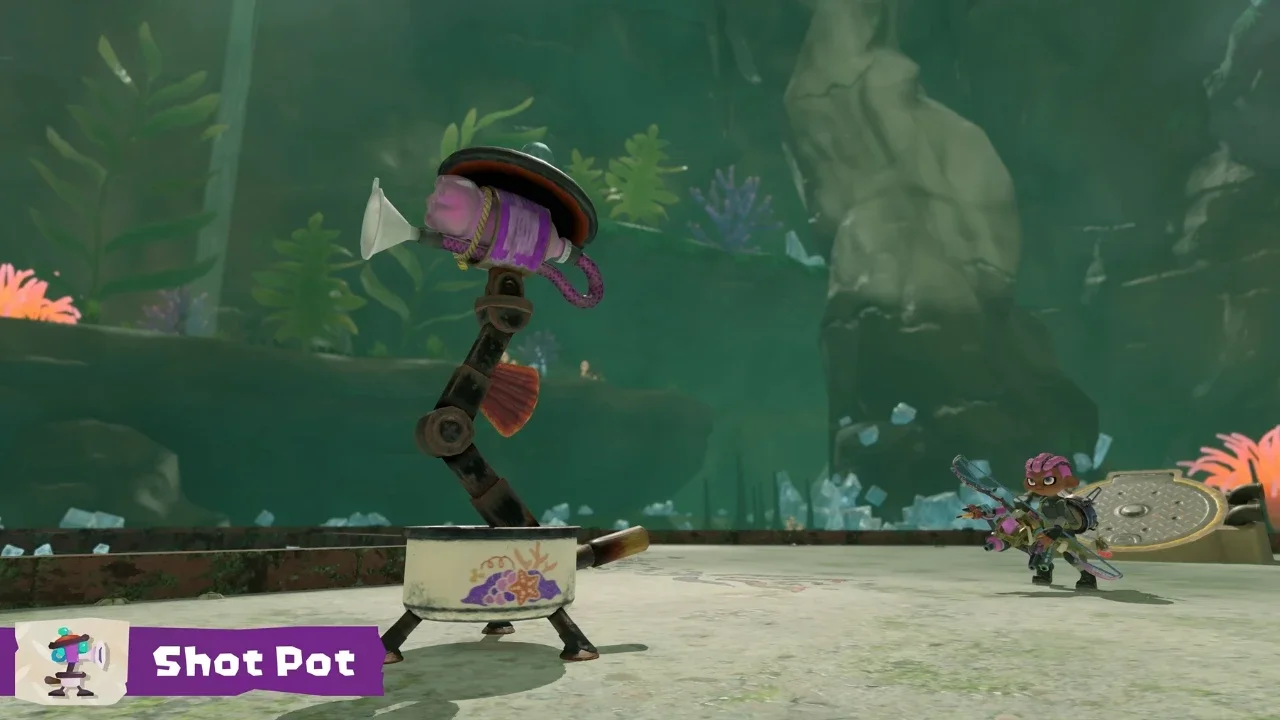
Every weapon type you'd expect returns, Splattershots, Rollers, Dualies, Brellas, Brushes, Stringers, all of it. But they've all been rebuilt with a scrappy, junkyard aesthetic that actually fits the story. A Splattershot running off an old soda bottle, a Stringer built from a busted tennis racket, a Slosher that's just a beach bucket with intentions. It's a small touch, but it makes the whole roster feel like it belongs to castaways instead of polished Inkling gear.
Gadgets And Tanks
The real shift though is Gadgets, and this is where Raiders separates itself completely from anything the series has done before. Instead of gadgets being locked to specific weapons, you now pick one of three Ink Tanks, Speed, Power, or Tactical, and each one opens up its own toolkit built around a distinct way of playing.
Speed leans into mobility, letting you dash in and out of danger without much risk. Power wants you charging into the middle of things and hitting hard, sacrificing some safety for damage. Tactical is all about controlling space with turrets and deployables, letting you manage a fight from a distance instead of getting swarmed. None of them feel like the "correct" pick either. Each one solves problems the others can't, so switching tanks based on what a mission's throwing at you ends up being part of the fun rather than a chore.
Building Your Character
Where this loop gets genuinely deep is in the customization sitting underneath it. Gadgets can be modified with attachments that change how they behave entirely, a turret that auto-deploys, a jump gadget that adds explosions on both the launch and the landing, and so on. On top of that, Relics stack extra passive bonuses, some tied to a specific tank, some universal no matter what you're running.
There's a real risk of falling into "one favorite build and never touching anything else" here, but the game actively pushes against that. Boss missions specifically reward you for beating them with all three tanks, which sounds like it could get repetitive on paper but doesn't in practice, since the fight plays out completely differently depending on what you've got equipped. And because gear, experience, and materials all carry over even after a failed run, every attempt makes you a little stronger heading back in, so losing never feels like wasted time.
Level Variety Keeps Things Fresh
Raiders doesn't lean on one mission type and stretch it thin. Standard stages are more about moving through distinct little biomes with some light platforming mixed in. Multi-level dungeons ask you to clear each floor within a time limit, which puts a real premium on efficiency over just surviving. Salmonid Dens hand you a very specific enemy type and often demand picking the right tool for the job rather than brute-forcing it. Crystal mining stages let you stop once you've filled the meter halfway, or push further for better rewards if you're feeling confident about getting out alive.
There's also a shrine-like puzzle mode built entirely around teaching you a single Gadget by handing you one of its best versions and letting the level design show you exactly why it's good. That's a genuinely smart way to get someone comfortable with a tool they might've otherwise ignored.
Difficulty And Failure Done Right
Three difficulty settings are on offer, and all they touch is how much damage you take, not enemy count, level layout, or rewards. That's a good call. It means picking the harder setting doesn't lock you out of anything, it just changes how much margin for error you're working with.
Failure itself feels fair too. Missions run short enough that dying doesn't sting much, and because everything you've earned sticks with you afterward, coming back to a fight you lost usually feels like genuine progress rather than a grind wall. Getting crushed by a stage you had no business attempting yet, then coming back stronger and finally breaking through, is a satisfying loop the game leans on constantly without it ever feeling artificially padded out.
Co-op Without The Stress
Bringing someone else along works better than expected. Up to four people can team up, and difficulty scales to however many are in the party, but here's the clever part, enemy strength scales to each individual's own level rather than flattening everyone to the host's progress. That means a low-level friend and a heavily geared one can share the same mission and both come away with a fair, appropriately scaled fight. Everyone earns their own loot too, and there's no scrambling to grab items first since anything picked up stays available for whoever else needs it.
If you're stuck solo, Call for Help brings in outside assistance once a cooldown clears, and there's a Go Help option for lending a hand to someone else's run in return for a bonus. It's a genuinely thoughtful system, low-pressure the whole way through, which fits the game's whole vibe of getting people through content rather than gatekeeping it.
Where It Falls Short A Little
Visually, Raiders plays it safe. The islands themselves look a bit flat and muted, especially compared to how vibrant the rest of the series usually gets, and it's honestly a strange note for a game this stylish elsewhere. The action itself picks up the slack once things get chaotic on screen, staying locked at a smooth 60fps even with a screen full of enemies, but the environments themselves won't turn any heads.
The camera can also get a little lost in tighter spaces, occasionally losing track of enemies that wander just off-frame. Nothing that ruins a run, but worth knowing going in. And if you were hoping for competitive multiplayer, that's simply not on the table here, this is built entirely around solo and co-op PvE, so anyone chasing a competitive fix will need to look toward the mainline series instead.
The Verdict
Splatoon Raiders takes a huge swing by stripping out the thing the series has always been known for, and it lands almost perfectly. The tank and gadget system alone gives it more build depth than I expected walking in, the mission variety keeps every session feeling different, and the co-op design is some of the most thoughtful I've seen in a while. The muted visuals and occasional camera hiccups keep it from being flawless, but none of that gets in the way of just how good the core loop feels to keep coming back to.
Score: 9/10 A scrappy, treasure-soaked action RPG that turns "just one more raid" into a permanent state of mind.