UMIGARI ENDINGS Explained: When the Fish Bite Back
If you thought Dredge was unsettling, wait until you play a fishing game where the trout have human legs and the "monsters" are just depressed reflections of ourselves.
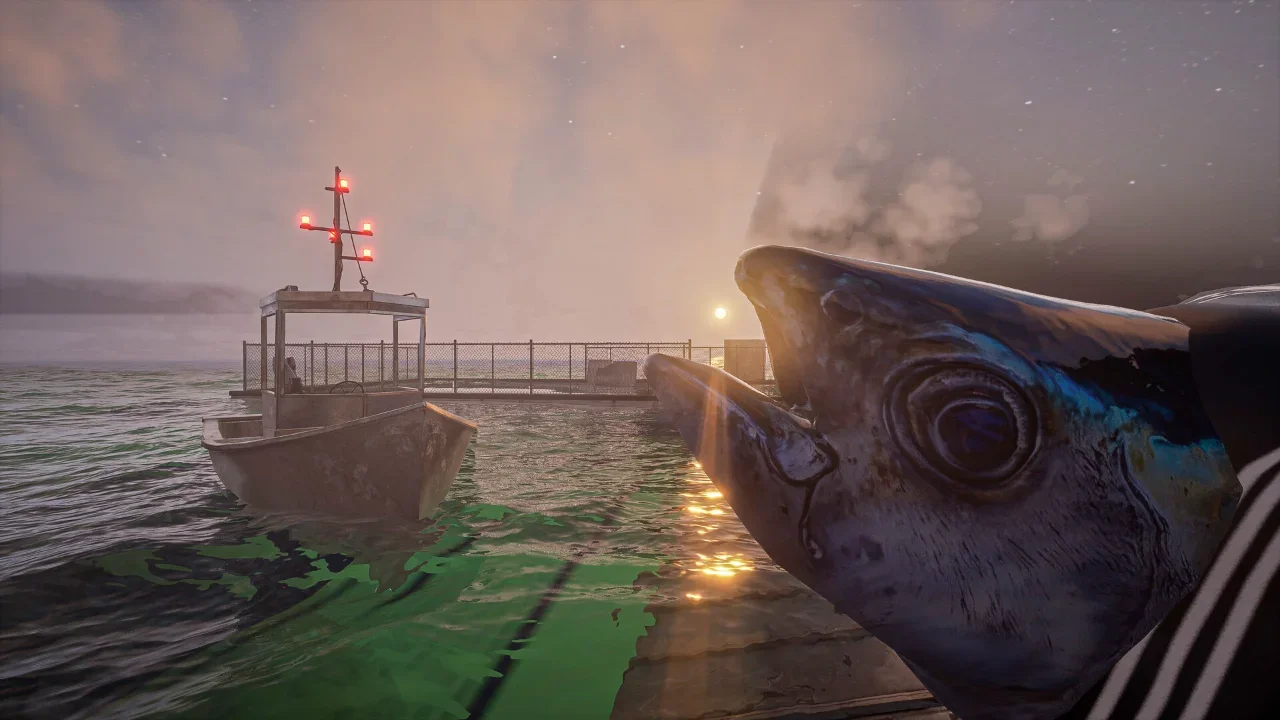
I went into UMIGARI expecting the usual Chilla's Art jank-horror experience. You know the drill: walk around a convenience store, get stalked, game over. Instead, I got a flooded, surrealist nightmare that feels like a PETA ad directed by David Lynch. The game presents a world where the food chain has been violently inverted, and honestly, trying to piece together the lore while dodging a giant woman-headed shark is a lot to ask.
The Curse of the Inverted World
The core premise is simple but gross.
A curse has struck the world. Humans have transformed into fish-like abominations, and fish have gained human sentience (and limbs). The world is flooded, covered in a thick fog, and you are a fisherman navigating this wet hellscape.
But it isn't just a body swap. It’s a transfer of suffering. The fish, now in humanoid forms, remember centuries of being hunted, gutted, and eaten. They are waking up with a deep, ancestral rage. Meanwhile, the "humans" (who are now fish) are mindless, violent, and hungry.
The game hints pretty heavily that you, the protagonist, aren't just a random guy. You were likely a fish who hated humans for their cruelty. But the moment you got hands and a boat, you picked up a harpoon and started slaughtering everything in the water. It’s a nasty little commentary on how power corrupts. You became exactly what you hated because it was convenient.
The Entities of the Deep
You spend most of the game collecting tablets to reach a shrine, but the real meat of the story is in the things trying to kill you. The ocean isn't just full of water; it's full of grudges.
The Endings Explained
The game concludes when you finally meet the Whale. This giant deity is basically the judge, jury, and executioner of mankind. He asks you a series of questions to determine the fate of the world.
There are two distinct outcomes, and neither of them is exactly "happy" in the traditional sense.
Ending A: The Cycle of Violence (Status Quo)
If you answer the Whale's questions by admitting that humans (and by extension, you) are evil, or if you choose to simply revert the world, the curse is lifted.
Everything goes back to normal. The water recedes. Humans are humans, and fish are fish. It sounds like a win, right? Wrong. The ending implies that nothing was learned. Humans go right back to slaughtering the ocean, and the fish go back to suffering in silence. You, the protagonist, forget the lesson and return to being a predator. It’s a cynical look at how humanity refuses to change even after facing an apocalypse.
Ending B: The Coexistence (New World)
This is achieved by answering "No" to the Whale's leading questions about humanity being irredeemable. You essentially argue that there is hope for intelligence and empathy.
In this ending, the curse remains, but it evolves. The fish-humans gain the "power to think" and develop a society. You see a cutscene where these hybrids are living in peace, running shops, and going to school. The cannibalism stops. The violence ends. It suggests that the only way to break the cycle of abuse is to fundamentally change the nature of the beings involved. It’s weird, it’s trippy, and it’s probably the "good" ending, even if it means humanity as we know it is gone forever.
What It All Means
UMIGARI isn't subtle. It hits you over the head with its message like a frozen tuna.
The game is screaming at us about greed. We see the Merchant willing to kill anything for profit. We see the Sister eating her own sibling out of hunger. We see the protagonist (us) killing our own kind just to upgrade a boat engine.
The horror isn't the giant lady-head in the water. The horror is that given the chance, the oppressed (the fish) immediately became the oppressors (the fishermen). It’s a grim view of nature, suggesting that violence isn't a human trait, it’s a survival trait. And that is way scarier than any jump scare Chilla’s Art has ever pulled off.