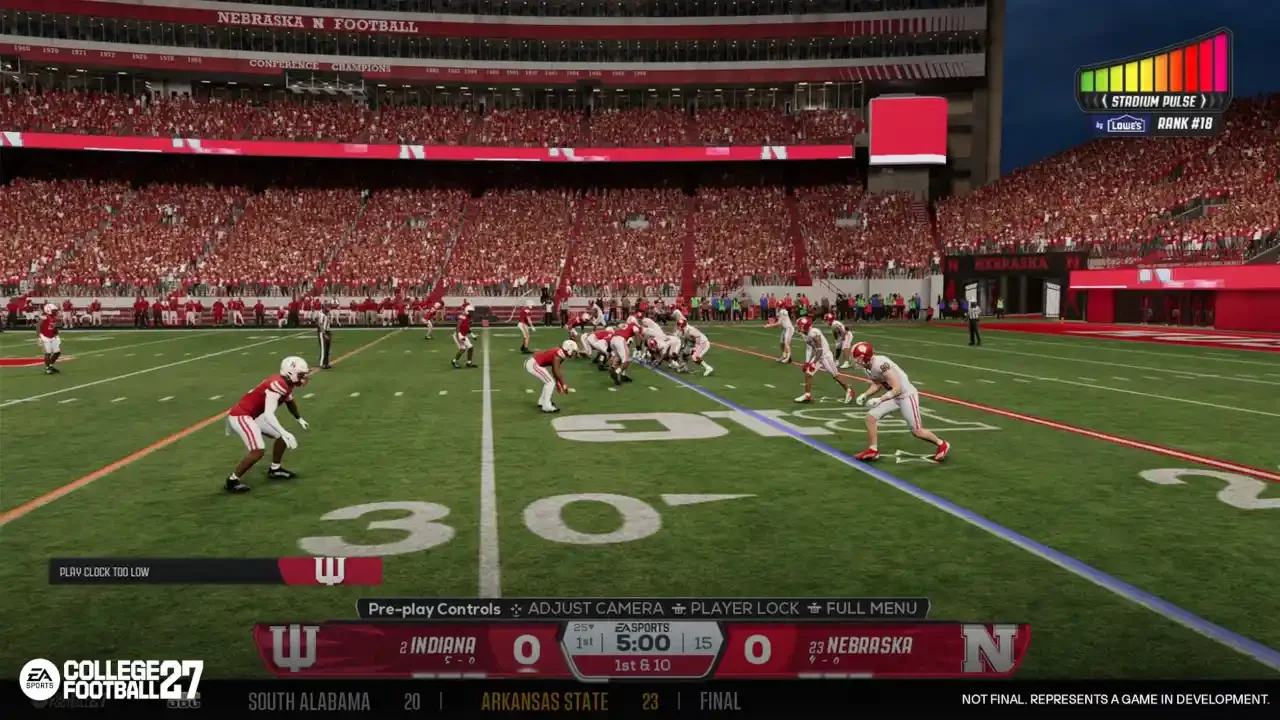
EA Sports College Football 27 Ultimate Team Giode: How To Navigate The Skill Points Lottery
Upgrading cards in Ultimate Team means dealing with a completely randomized progression system that behaves like a casino game rather than a standard sports simulation.
The Skill Points system provides a path to improve specific items in your collection, but the mechanical design comes with an aggressive catch. You don't get to choose which attributes to boost. The entire upgrade loop relies on blind luck, forcing you to manage a card-exclusive economy that can easily bankrupt your virtual wallet if you don't track your resource investments carefully.
Locating Your Upgradeable Cards
You can't apply upgrades to every item in your lineup. Finding eligible items requires sorting through your collection using specific filters inside the menus.
Head directly into the Item Binder, open the Quality tab, and switch the active filter over to Upgradeable. This interface adjustment isolates your view to display only the specific cards that feature a dedicated Upgrade tab.
Skill Points operate as an entirely isolated currency pool. They aren't universal like your standard coin balance. Every upgradeable card holds its own separate, locked point balance. If you secure four points for a starting quarterback, those points remain permanently anchored to that specific item. You can't transfer them to a wide receiver later. Cards also carry strict capacity limits that dictate their long term utility. A basic card might hit a hard developmental ceiling after absorbing just four points, whereas top tier items allow you to stack up to 28 points for deep stat progression.
Methods For Acquiring Skill Points
Building up your point balance requires balancing your time against your willingness to part with currency. You can choose between grinding out free points through live objectives, clearing out inventory space through the card exchange system, or purchasing points directly using premium currency.
Time-Stamped Challenges
Opening the Upgrade tab on an eligible card and selecting the Earn option drops you directly into dedicated gameplay challenges. These objectives are strictly time-stamped and will eventually expire from your menus, meaning you can't simply sit back and grind out a maxed-out item in a single afternoon. You're forced to wait for fresh challenge rotations to cycle into the game. Spotlight cards serve as the sole exception to this rule, handing you their entire challenge list the exact moment you add the item to your binder.
The objectives themselves shift based on the player's positioning. A basic defensive card generally requires you to play a set number of matches with the card in your active lineup. A wide receiver card forces you to hit specific yardage milestones during a live match. This positional variance can transform the free acquisition method into a tedious grind if you get stuck trying to clear a frustrating statistical milestone.
The Card Exchange Menu
The exchange menu offers a significantly faster route if you want to skip live gameplay requirements. This system gives you a functional way to purge useless BND items that are simply taking up space in your inventory.
Season 1 cards demand a separate approach. The menu won't accept standard player cards for these specific items, forcing you to rely on Skill Point Tokens instead. You can find these tokens in the store menu under the Season 1 tab by spending your accumulated Season Trophies. A single token card costs 900 trophies and converts directly into four Skill Points. You can repeat this purchase indefinitely, but you shouldn't overspend on these tokens because they're completely useless on any card outside of the official Season 1 program.
When exchanging standard items, the exact point payout changes based on the overall rating and rarity of the card you sacrifice. The structural exchange values and premium store pricing break down as follows:
The Attributes Lottery And The Respec Trap
Once you collect your points and prepare to apply them, you have to confront the most frustrating aspect of the progression design. Upgrades are handled inside the Attributes menu under the Upgrade tab, which displays the maximum potential overall rating for that card. Every single tier along this path demands a different point investment, and the price tags scale exponentially as you get closer to the card's maximum ceiling.
Randomized Upgrades
The core problem with this system is the complete lack of agency. You hand over your hard-earned points, click confirm, and the engine randomizes the attribute distribution. A single upgrade level might concentrate a massive boost into one key stat, while your subsequent attempt might fragment minor increases across five entirely different categories.
You're rolling the dice completely blind. If you're upgrading an elite wide receiver, you're obviously hunting for a speed increase. If the system decides to hand you a random bump to blocking stats instead, you're stuck with that result unless you want to pay to clear the entire board.
The All-Or-Nothing Respec Cost
If a series of random upgrades yields terrible results, you can press R3 or RS inside the Attributes menu to respec the card and reclaim your points.
This reset functionality requires checking your main coin balance first. The game charges a flat fee of 1,050 Coins for every single Skill Point you previously invested in that specific item. You can't just undo your most recent mistake. The respec mechanic functions as an all-or-nothing wipe that rolls back every single upgrade tier simultaneously. If you hit an exceptional speed boost on your first two upgrade levels but receive a terrible distribution on the third tier, triggering a respec nukes all three levels instantly.
Don't fall into the trap of repeatedly burning your coin balance to chase a flawless set of attributes. EA doesn't publish the underlying drop rates for these individual stat distributions. (Premium stats like raw speed almost certainly carry an incredibly low drop probability compared to less impactful utility metrics). Settle for a decent, well-rounded roll when it lands, and save your gold coins for purchasing actual players on the market instead of sinking them into a predatory progression money pit.