Everwind: The Ultimate Guide To Crafting Stations And Recipes
Trying to survive a hostile sky archipelago by duct taping twigs together is a miserable experience, which is why you need to automate your production immediately.
Crafting in Everwind is not a casual side activity. It is the absolute core of your survival. Every weapon you swing, every piece of armor you wear, and the actual airship you fly relies heavily on a deeply tiered production system. If you ignore your industrial progression, you will eventually hit a wall where enemies effortlessly crush you because your primitive gear cannot keep up. If you are entirely new to the game and struggling to figure out how to even gather the wood to start this process, you should read my Everwind beginner's guide first.
The most frustrating mechanic you need to understand right now is the inventory restriction. When you open a crafting menu, the game only registers the materials currently sitting in your personal backpack. It does not automatically pull from the storage chests sitting right next to you. If you need iron ingots for a sword, you have to physically move them into your pockets first. Forgetting this will cause you to run back and forth across your ship's deck for hours.
The Pocket Crafting Trap
When you first spawn, you have nothing but the lint in your pockets and access to the basic crafting menu in your inventory. You open this by clicking the pipe and hammer icon.
Pocket crafting is designed purely to keep you alive long enough to build real infrastructure. You can make simple tools, torches, and bandages. Your primary goal is to gather exactly twelve Forestwood Planks and three Ropes to build the Crafting Station. Everything else is secondary. Ropes are the absolute bane of your existence in the early game. They are required for almost every basic recipe, so you should be hoarding fibers constantly.
The Hub Of Innovation
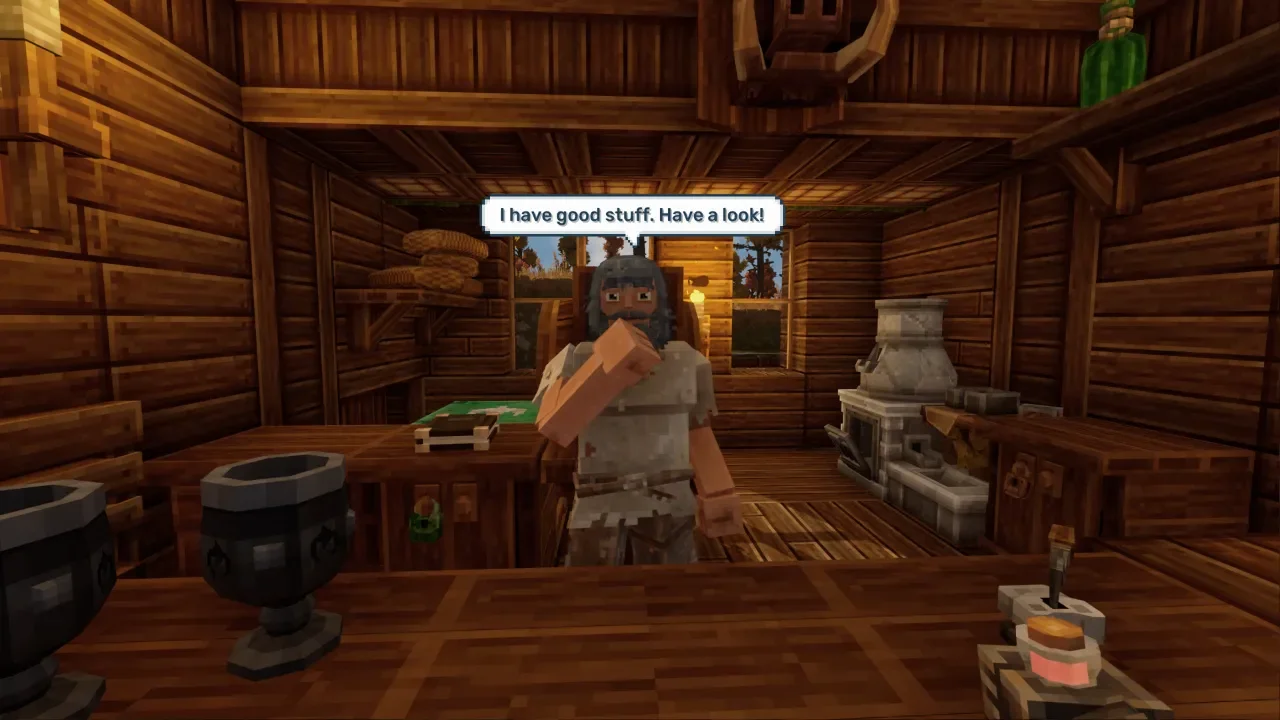
Placing your Crafting Station on the deck of your ship blows the entire progression tree wide open. This is where you actually start building the specialized tables that process raw materials into lethal weaponry.
You need to prioritize building a Furnace immediately. Raw copper ore is dead weight until you smelt it. Once you have a steady supply of ingots, you can slap down a Smithing Station and finally craft a sword that will not shatter after three swings. If you need help managing the grid required to run the later tier stations, I mapped out the mechanics in my Everwind airship building power guide.
Maintaining And Upgrading The Arsenal
Building the gear is not the end of the line. Everything degrades. Your expensive iron sword will eventually snap in half if you do not pay attention to the durability meter.
The Primitive Repair Station is dirt cheap to craft, requiring only a few rocks and logs. Make one immediately. Keep Repair Kits stacked in your cargo hold. If you want to dive deeper into the weapon skill paths that actually let you wield the advanced gear you are forging, review my Everwind combat and skills guide.
Eventually, you will outgrow your old armor. Do not throw it off the side of your ship. Build a Processing Station to melt obsolete equipment back down into base ingots. Once you have a stockpile of high tier materials, including Crystals of Force, you can build the Upgrade Station to permanently buff the stats of your endgame weaponry.
The Architecture Grind
Everwind handles building differently than most survival games. You cannot just cut down a tree and slap a raw log down to form a wall. You have to run raw resources through the Block Station to convert them into standardized building components.
If you want a roof over your head that actually keeps the rain out, you have to process the materials first.
If you are playing with friends, you can easily pool your resources together to speed this process up. I highly suggest delegating tasks so one person runs the Furnace while another focuses on building the ship. I cover that kind of coordination in my Everwind multiplayer co-op guide so you stop screaming at each other over missing copper ingots.