GRIME 2 Review - Painting With The Blood Of Your Enemies
This game wants to grind your bones into pigment, and honestly, I am perfectly fine with letting it try.
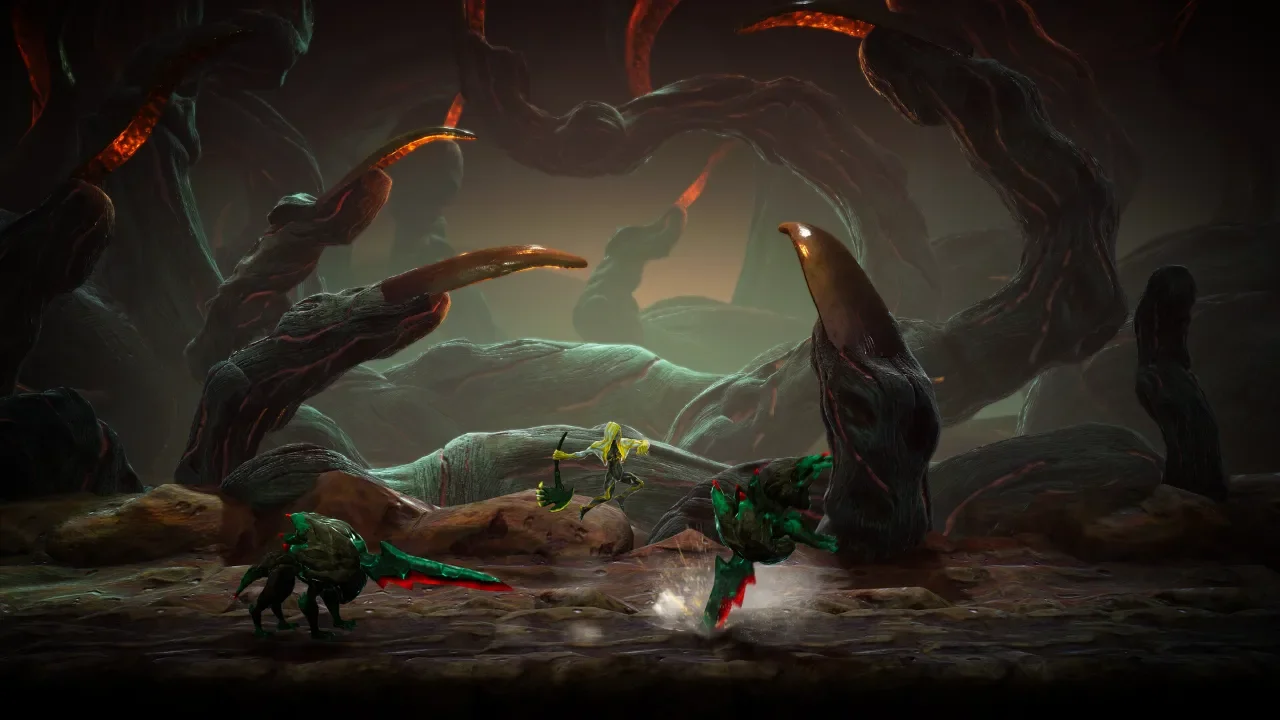
The gaming landscape is currently drowning in Metroidvanias. If a developer wants to stand out in a genre defined by backtracking and incremental upgrades, they need a hook that sinks deep into your skull. GRIME 2 manages to carve out a hyper specific, deeply unsettling niche by completely abandoning traditional fantasy tropes. You are not a knight or a bounty hunter. You are a Formless. You are essentially a walking void wrapped in art supplies, wandering through a hostile universe constructed entirely of painted nails, discarded clay, and mutated teeth.
It is a bizarre premise that translates into one of the most visually arresting games I have played in years. This sequel expands on everything that made the original title a cult classic while injecting a fresh layer of mechanical depth and visual horror. The onboarding process is undeniably brutal. You are going to hit a wall early on, realize you are constantly out of healing, and literally get chewed up by the floorboards. But if you have the patience to learn its cruel rhythm, GRIME 2 reveals itself to be an incredibly rewarding puzzle of violence and exploration.
The Art Of Violence
Combat in this universe is deliberate, heavy, and completely unforgiving. If you treat this like a standard action platformer and try to button mash your way out of a bad situation, you will spend your entire evening staring at a respawn screen.
The Weight Of The Swing
The game hands you a massive arsenal of weapons ranging from heavy axes to swift throwing daggers. Every single tool in your inventory has a distinct weight and moveset. You cannot just swing wildly. Your attacks are governed by the Force meter. This is essentially your stamina pool, but it comes with a brilliant twist. Performing actions over a specific threshold actually enhances your abilities. Your strikes deal more damage, your dodges refund their cost, and your defensive maneuvers become significantly more potent. It forces you to constantly balance aggression with resource management. You are not just looking for an opening to attack. You are waiting for the exact moment when your Force meter guarantees maximum devastation.
Parrying Is Mandatory
If you try to play this game purely by dodging, you are going to have a miserable time. Defensive interactions here are not just desperate fallback maneuvers. You have a standard parry, but the real star of the show is the Grasp counter. You literally use your head as a grappling hook to rip into an enemy and stun them. The timing window can feel incredibly tight on certain elite mobs, but pulling off a flawless Grasp counter and completely shutting down an aggressive combo feels intoxicating. The game actively rewards you for standing your ground and looking death directly in the eyes.
Molds And Stat Allocation
As an art mimic, you have the ability to absorb the essence of the creatures you slay. When an enemy is staggered, you can dash through them to steal their form. This unlocks Molds, which act as equippable special abilities fueled by a resource called Paint. You can summon spectral hands, throw projectiles, and completely alter your combat approach based on the local wildlife.
Building your character to maximize these abilities is a bit of a headache. The stat screen is filled with esoteric terms that the game barely explains. If you are struggling to figure out how to scale your damage, I highly recommend reading my complete guide on translating Diverging and Pliability stats before you waste your upgrade points.
Navigating A Hostile Canvas
Exploring this sequel is a constant psychological battle. The world is massive, gorgeously rendered, and actively trying to kill you at every turn.
Grotesque Architecture
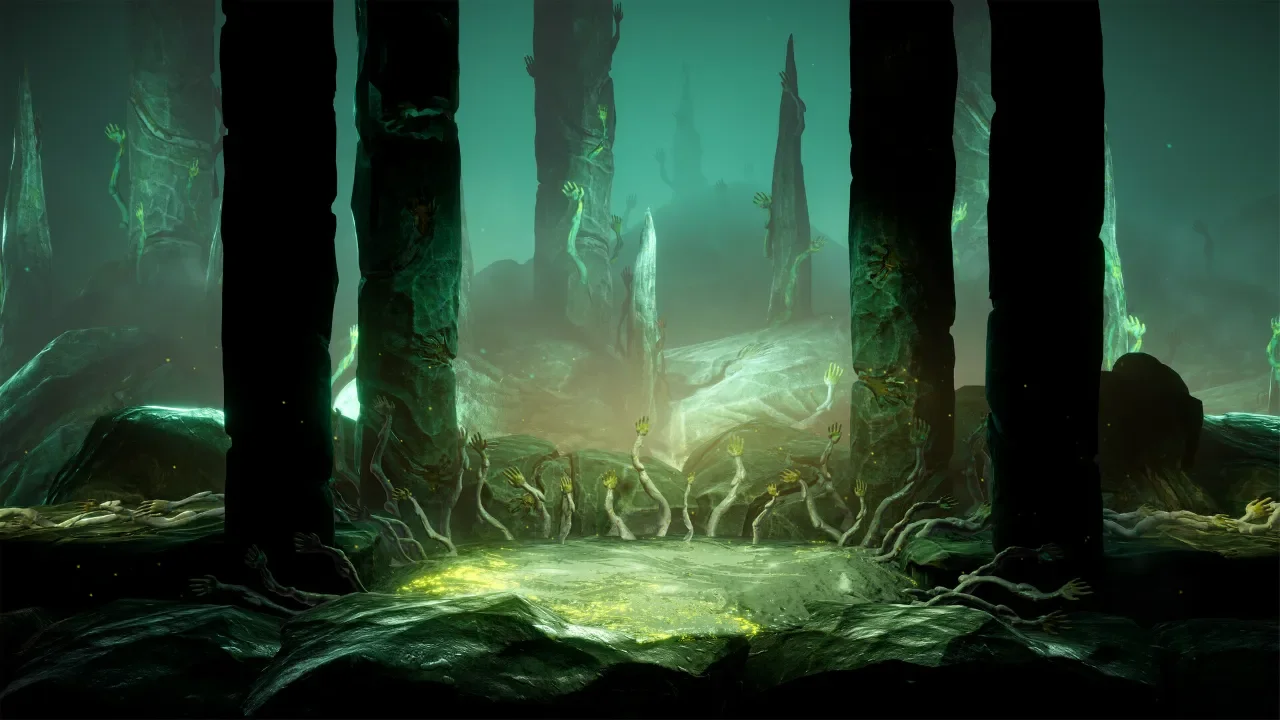
The art direction is absolutely staggering. The game avoids typical gore and instead leans into a surreal, expressionist nightmare. The enemies look like discarded sketches pulling themselves out of the mud to ruin your afternoon. When you finally break out of the cavernous early zones and step into areas like Marah's Orchard, the sheer vibrancy and creativity on display is jaw dropping. The NPCs you encounter are equally weird and charming. The Sib brothers in particular ooze personality and provide some much needed levity in an otherwise oppressive world.
The Map Hustle
Getting lost in a sprawling labyrinth is a rite of passage for this genre, but GRIME 2 turns cartography into a hostage situation. When you enter a new zone, you are completely blind. You have to hunt down specific environmental nodes just to unlock the blank map, and you have to find a second hidden node to enable fast travel. It is a terrifying way to force exploration. If you are tired of losing hours of progress because you missed a checkpoint, check out my guide on tracking down the Seals to unlock fast travel.
Platforming Pains
This brings me to the game's biggest flaw. The platforming feels noticeably clunky compared to the razor sharp combat. Navigating environmental hazards is often an exercise in pure frustration. The hitboxes on certain spike pits feel wildly inconsistent, leading to cheap deaths that feel completely out of your control. You eventually unlock abilities that let you slide down walls and grapple across chasms, but the inputs required to chain these moves together can feel awkward and unresponsive. The platforming gauntlets are decent in theory, but the execution lacks the necessary polish.
Progression And Pain
The final piece of the puzzle is how you actually grow your Formless into a god killing machine. The RPG systems are deep, but they often feel entirely disconnected from one another.
Disjointed Leveling
You level up your core stats using currency dropped by enemies, but you also have a completely separate skill tree governed by Pigments. You earn Pigments by hunting down optional sub bosses. It feels strange that these two systems do not interact in any meaningful way. Leveling up your base health early on feels remarkably unrewarding, and it takes a long time before your stat allocations actually start making a noticeable dent in enemy health bars.
The Boss Fights
If the platforming is the weakest link, the boss fights are the absolute pinnacle of the experience. GRIME 2 features some of the best encounter design in the genre. Every boss is a massive, multi phase puzzle that tests everything you have learned. They will crush you repeatedly. But the game respects your time. Death does not strip you of your currency. Instead, the enemy that killed you is marked on the map. If you return and perform a specific counter against them, you shatter your previous death into a floating replica. Absorbing that replica heals a massive chunk of your health. It is an incredibly generous mechanic that makes throwing yourself against a difficult boss feel empowering rather than punishing.
The Verdict
GRIME 2 is a grotesque, magnificent masterpiece that takes the bizarre foundation of the original and refines it into a top-tier Metroidvania. The deliberate, weighty combat and incredible boss designs easily overshadow the occasionally clunky platforming and disjointed progression menus. It demands absolute perfection and punishes carelessness, but the generous death mechanics respect your time just enough to make the suffering completely worthwhile. If you have the patience to master the Grasp counter and learn the map, this is easily one of the most rewarding soulslikes I have played in ages.
Score: 8.4/10 - A beautiful, punishing nightmare that lets you beat enemies to death with their own biology.
We at NLM received a key for this game for free, this however didn't impact our review in any way.