Mewgenics Beginner’s Guide: How to Stop Your Cats From Dying (Mostly)
Edmund McMillen and Tyler Glaiel built a tactical RPG that actively wants your cats to suffer, and the sooner you accept that, the sooner you'll stop losing runs.
Mewgenics doesn't play like Fire Emblem, and treating it that way gets cats killed fast. There's no saving everyone here. Boon County rewards a colder, more calculating approach, and once you stop trying to protect every kitten in your roster, the game starts to click.
Death Is Part of the Loop, Not a Failure State
The instinct after losing a level 10 mage to a lucky crit is to reload and pretend it didn't happen. Don't. This is a roguelike, and the resources a failed run brings home still feed into house upgrades, which in turn improve the kittens you breed next. Early generations of cats exist to be spent, not preserved. Treat them as stepping stones toward a stronger bloodline rather than pets you're obligated to protect, and the whole game gets easier to stomach.
Positioning Wins Fights, Not Damage Numbers
The tutorial explains the buttons. It doesn't explain the physics engine, and that's where most early deaths come from.
Every cat automatically faces whatever direction it just walked, which sounds harmless until an enemy lands a backstab for triple damage on an exposed unit. Fixing this costs one click: at the end of a turn, choose which direction your cat faces and point them toward the nearest threat. That single habit is the difference between shrugging off a hit and watching your tank drop in two turns.
The flip side works in your favor too. Flanking an enemy and hitting their back does the same inflated damage back at them, so positioning for a backstab is almost always worth more than just piling on frontal damage. Pair it with a crit passive and fights end quicker than they should. A few skills even force enemies to turn away, opening them up for a follow-up hit, and there's no reason not to use every dirty trick available.
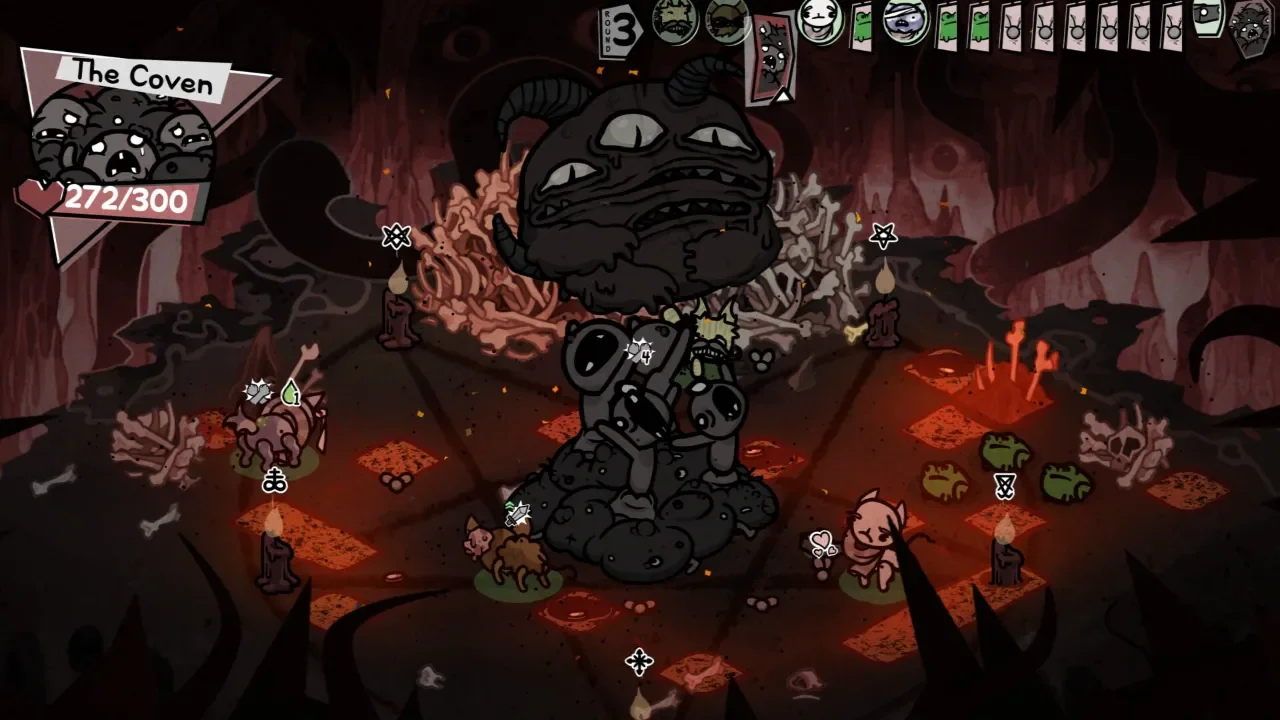
The turn order bar in the top right isn't decoration either. It tells you exactly who acts next, and ignoring it means wasting a big attack on something that won't move for three turns while your healer gets stabbed. Hovering over enemies in that timeline and killing (or stunning) whoever's about to act denies them a turn entirely, which matters more than raw damage most fights.
Run Three Cats Instead of Four
The roster caps at four slots, and filling all of them feels like the obvious move. It isn't.
Experience gets split across every surviving cat in a battle, so a full squad levels up slower than a smaller one. Running three cats instead of four means fewer bodies splitting the same pool of post-battle upgrades, and the squad ends up meaningfully stronger, faster. It does make individual fights harder since you've got fewer actions per turn, but the power spike is worth the added risk once you're comfortable with the combat.
That same logic applies to recruiting. New strays and kittens show up with random skills and stats, and a bad one isn't worth feeding. Food is capped and limited, so a cat that doesn't contribute in a fight is just eating into resources better spent on cats that do.
The Map Is a Weapon, Use It
The terrain does more work than it looks like it should. Grass tiles give a 50% dodge chance, so ending a turn standing in one is close to a free coin flip against incoming damage. Grass can also be grown on command: wetting a sprout tile, whether by walking a soaked cat over it or spitting a wet hairball, turns it into full cover. Building a defensive line out of nothing has bailed out more than one rough fight.
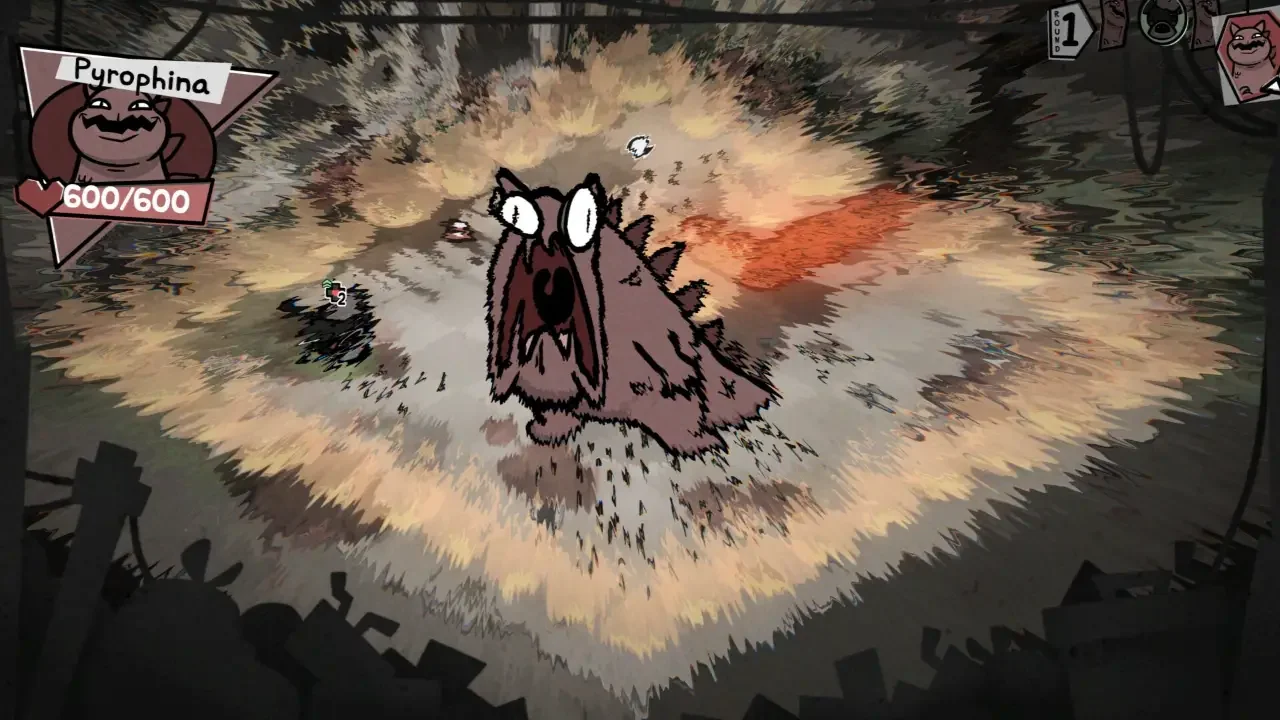
The elemental interactions stack on top of that. Water connected to electricity shocks everything standing in it, fire spreads through grass and burns out anyone hiding there, and a burning cat can put themselves out by walking into water (or getting hit with a wet hairball if there's no puddle nearby). That last ability looks like a throwaway basic attack, but it puts out fires from range, which matters against bosses that lob bombs, and it can shove enemies into hazards on top of that.
Spend Everything, Every Time
Money and food both cap at 100 units, so sitting on a full stockpile before a run just wastes potential gains. Spend down to make room, whether that's furniture to cut stress or upgrades that stick. There's no reward for hoarding in this economy.
Small wildlife on the map matters more than it should too. Pigeons, chickens, and other random critters drop loot or cash and fly off if left alone too long, so it's worth breaking off from a fight to chase one down. Crates and garbage bags are worth the same attention. Cracking them open with a spare action regularly turns up gear or money, sometimes better than what's dropping from actual enemies.
Surviving the Desert's Heatwave
Act 2 introduces Heatwave, a status that guts mid-battle healing and strips out the passive recovery cats normally get after a fight. Walking into a boss room at low HP because of it is an easy way to lose a run that was otherwise going fine.
Water bottles found on the map help, but the real fix is a skill called Number One, which lets a cat pee to create a water tile. Standing in it (or in a puddle a squadmate made) hydrates a cat and clears Heatwave temporarily, and it also refills empty water bottles for later. It's an undignified solution, but timing a pee break right before a fight ends secures the post-battle heal that Heatwave would otherwise block.
Don't Skip the Tactical View
With four cats, up to six enemies, spreading fire, and puddles everywhere, the board gets messy fast. Holding Y on Steam Deck (or the equivalent toggle on PC) pulls up Tactical View, which highlights enemies, health bars, hidden loot, and even money stashed inside rocks. Starting a turn without checking it means missing threats that are easy to see once the clutter's filtered out.
None of this makes Mewgenics forgiving. It just makes losing less random, and in a game built around cats dying constantly, that's about as close to control as it gets.