Mewgenics Guide: How to Maximize Your Retired Veterans
A crown icon shows up next to a cat's name the moment it survives enough runs to get forced into retirement, and what happens after that determines how the rest of the game goes.
Retirement in Mewgenics isn't a reward screen. It's a management problem. Retired cats can't go back out on standard runs, which means they just sit in the house eating food, taking up floor space, and picking fights with furniture. The obvious move is to clear them out and start fresh with a new litter. That's a mistake. These cats are the actual foundation of everything that comes later, and figuring out what each one is for takes some cold-blooded sorting.
Retired Cats Are Your Best Breeding Stock
A cat that survives an entire run usually has the highest base stats in the house, precisely because it lived through a gauntlet that killed everything around it. Pairing two strong retired cats together gives their kittens a solid shot at inheriting those stats, along with whatever weird specialized abilities the parents picked up along the way. The genetics behind this get into real Mendelian territory, dominant and recessive traits included, and there's a full breakdown of how that system actually works in the breeding guide if the mechanics aren't clear yet.
Setting aside one room specifically for top breeders is worth doing early. Furniture placed in that room can be chosen entirely around function rather than looks, stacking whatever elemental affinities or base stats are worth passing down. Nobody's judging the interior design of a room built to produce increasingly unhinged kittens.
The House Isn't Big Enough for Everyone
Space runs out fast, and not every surviving cat is going to make the cut as a breeder. The overflow needs somewhere to go, and that somewhere is the cast of NPCs scattered around town, each with specific and occasionally strange demands for what kind of cat they'll take off your hands.
Tink's out of the running here since he only takes kittens, not retired adults. For everyone else, matching the right cat to the right NPC actually matters:
Baby Jack wants injured cats and pays out in breeding furniture. This is the priority NPC early on, since better furniture directly improves kitten quality and makes the whole genetics grind easier.
Frank takes any retired cat, no conditions, and rewards new room expansions. He's the right dump for solid-but-unremarkable veterans that don't fit anywhere else.
Butch wants cats that have visited specific biomes and pays out inventory upgrades, which matter a lot for carrying more loot out of increasingly dangerous zones.
Tracy takes cats aged five or older in exchange for blank collars and food storage upgrades, making her a clean landing spot for cats aging out of the breeding rotation.
Dr. Beanies wants mutated cats and hands back side quest items, though those items often carry negative modifiers that need extra cleanup work. He's more of a last resort than a first stop.
Baby Jack is worth clearing out first, since decent breeding furniture compounds every generation after. Frank comes next once the breeding room's sorted, with Butch's biome quotas tracked on the side for whenever the right cat shows up. Dr. Beanies mostly gets used when a cat is born with something genuinely unpleasant attached and the goal is just getting it out of the house.
Act Two Turns Retirement Into a Draft
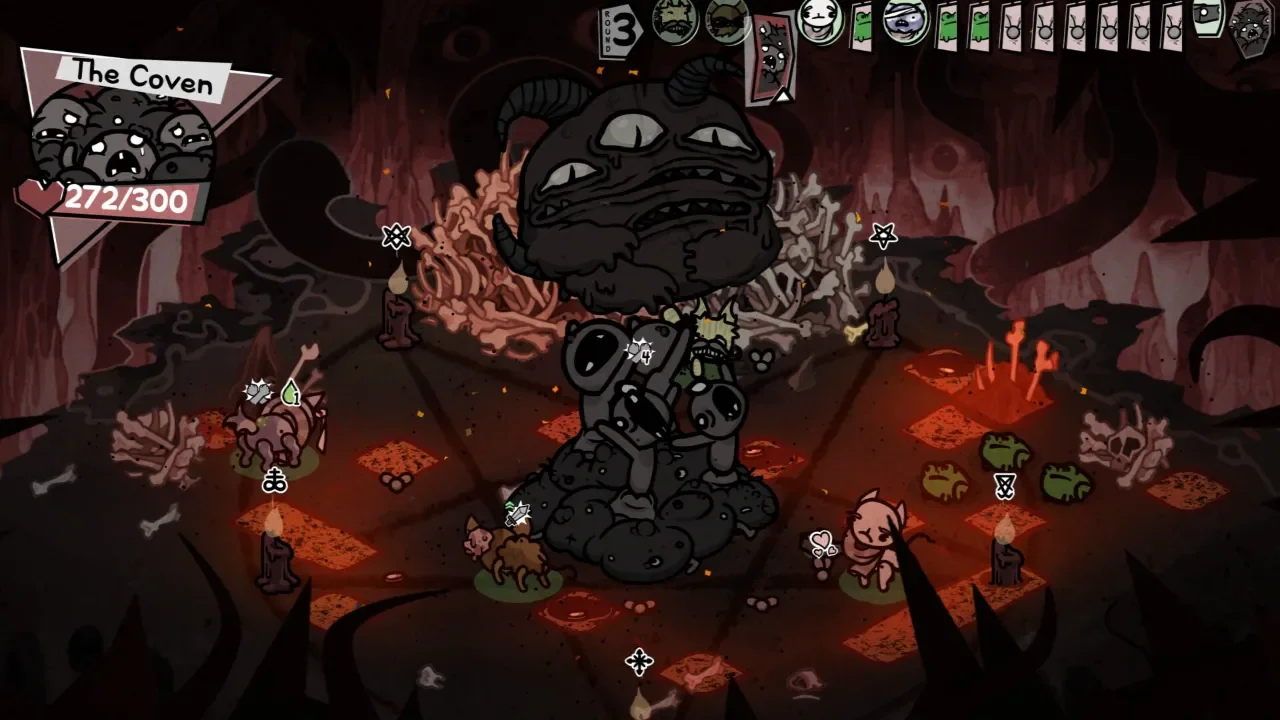
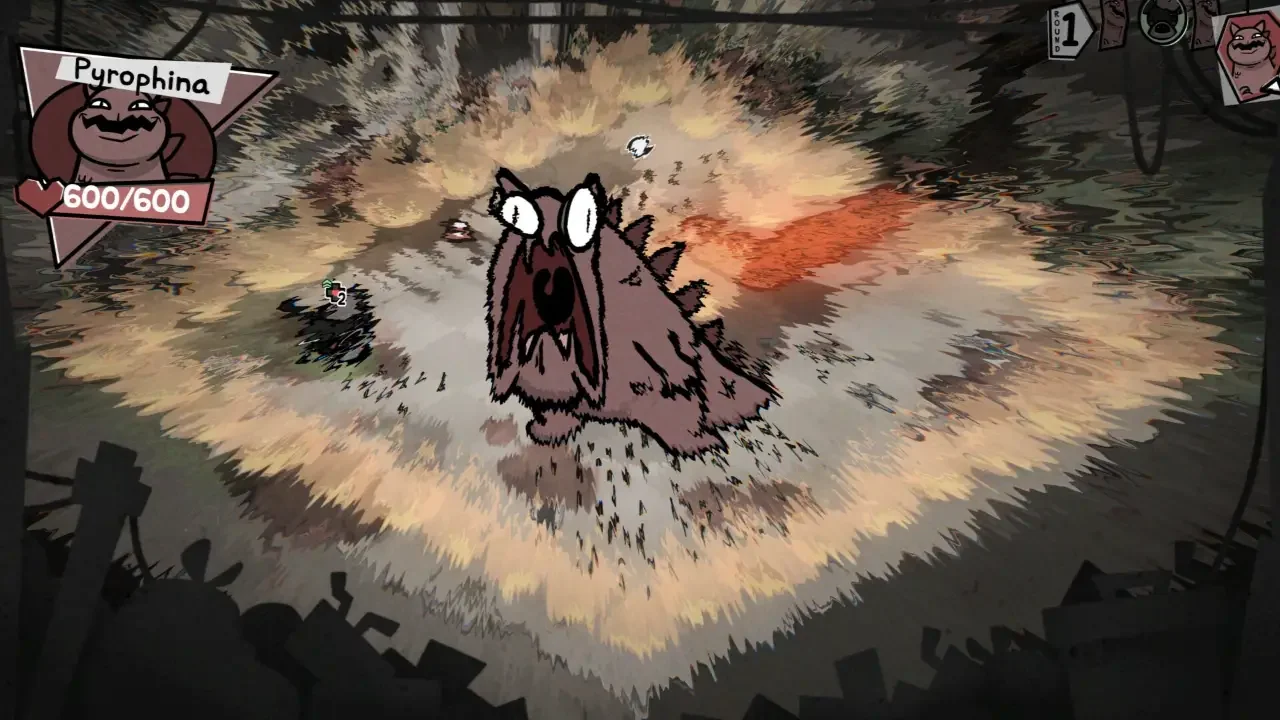
Peace doesn't last. Act Two introduces home invasions, and suddenly every retired cat sitting around the house is a potential soldier whether it wants to be or not. A one-week warning arrives before a boss like Guillotina or Pyrophina shows up to kick the door down, and active adventuring cats can't be pulled back to defend. Retired cats are the only option.
That changes the math on donating cats away. Emptying the roster to NPCs stops being free once there's a defense to staff, and the warning week is usually better spent breeding a few backup kittens in case things go badly. Specific tactics for these house invasion fights, including how Pyrophina and the rest behave in combat, are covered in the boss and combat guide. Losing a defense doesn't end the run, but every retired cat involved in that fight dies permanently, which can gut a breeding program built around a handful of top-tier veterans in one bad week.
Winning a Defense Comes With Its Own Cost
Cats that survive a successful house defense get upgraded to Super Retired, a status that locks them out of combat entirely, including any future defenses. From that point on they're breeding stock or donation fodder and nothing else.
That single rule keeps the same four overpowered veterans from just defending the house forever. New cats have to keep moving through the run pipeline, get retired, take one shot at a home defense, and then get put out to stud if they survive it. It's a constant cycle rather than a one-time setup, and ignoring it eventually leaves the house without anyone capable of answering the door when something enormous knocks on it.