Vampire Crawlers Utility Stats: The Duration Trap and Magnet Myths
Assuming you know how the utility mechanics work just because you played the original game is a fantastic way to ruin a perfectly good run.
The transition to a grid-based card battler completely rewired the DNA of the underlying math. You can stack all the offensive power in the world, but if you mismanage your utility stats, your engine will stall out before you even reach the second floor. I constantly see veterans walk into these dungeons, confidently draft the wrong utility buffs based on pure nostalgia, and get completely flattened.
Stats like Magnet and Duration do not function the way you remember. Furthermore, modifiers like Curse have transformed from a simple challenge toggle into a mandatory progression tool. If you want to survive the deepest maps, you have to unlearn your old habits. Here is exactly how the utility economy actually operates in this game.
Magnet: Not What You Remember
In the old days, boosting your Magnet stat simply increased the radius for sucking up experience gems off the ground. It was a lazy way to level up faster without moving. If you pick Magnet in this game expecting the floor loot to fly toward you, you are wasting a draft pick.
Redefining Card Advantage
Magnet has been entirely repurposed for the deckbuilding format. It now directly enhances your card draw effects.
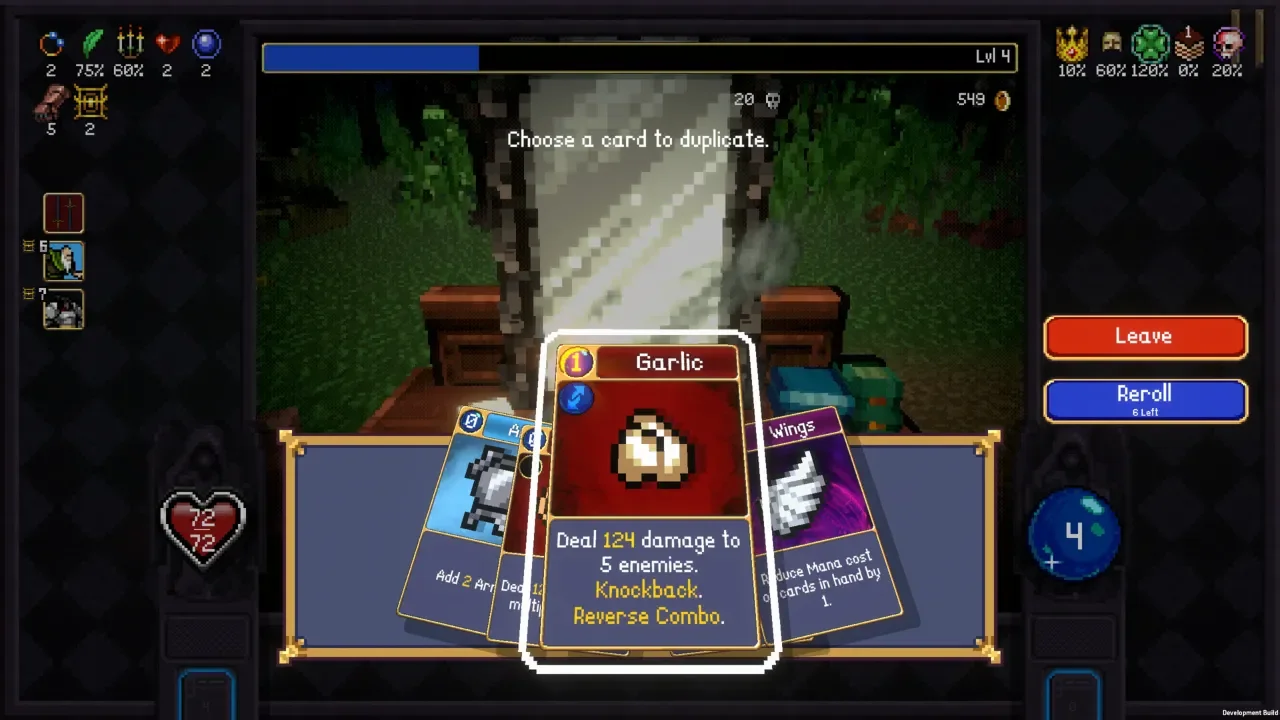
Card advantage is the undisputed king of this game. If you have a standard utility card like the Attractorb, playing it normally allows you to draw exactly one extra card into your hand. If you have secured +1 Magnet through your village upgrades or specific character passives, that exact same Attractorb now draws two cards.
Creating Infinite Draw Loops
This sounds like a minor bump, but when you factor in the ascending combo multiplier, it becomes completely broken. Chaining high-draw cards allows you to physically hold half your deck in a single turn, giving you endless options for building maximum damage chains. If you want to see exactly how broken infinite card draw can get, check my Vampire Crawlers Infinite Combo guide.
The Duration Trap
This is the biggest pitfall in the entire drafting pool. Duration specifically interacts with how long your Crawlers stay active on the field, and stacking it is incredibly dangerous.
The Dual Function of Crawlers
Every Crawler in your party has two distinct functions. They have a primary "on-play" effect that triggers the exact moment you cast their card, and a secondary passive effect that triggers whenever you play a specific card type while they are active.
For example, O'Sole Meeo grants an immediate +3 Amount when played, and then grants a passive +5% Luck every time you cast a red attack card while he remains on the field. Normally, O'Sole has a base duration of 4, meaning you can trigger his passive effect four times before his card expires and shuffles back into your deck.
Why Extending the Clock Kills You
If you draft a Spellbinder card or purchase the Duration Power Up in the village, you increase that timer. This allows O'Sole to stay on the field longer, granting you more passive Luck generation.
So why is this a trap? Because extending the duration prevents the Crawler from returning to your deck. If you desperately need O'Sole's massive +3 Amount entrance buff to survive an impending boss attack, you want his card to expire quickly so you can draw him again. Stacking too much Duration locks your Crawlers on the board, suffocating your ability to trigger their explosive on-play abilities. You have to balance your Duration stat based entirely on whether your current build relies on passive triggers or burst effects.
Curse: The Mandatory Risk
Curse is the ultimate double-edged sword. Buying this Power Up in the village actively makes the game harder. It increases enemy health, boosts their damage output, and causes swarms to spawn much more frequently. Normally, you would avoid this entirely until you wanted a late-game challenge.
The Level 40 Requirement
However, you are mathematically forced to use Curse if you want to unlock the complete roster.
As I outlined in my Vampire Crawlers Relic Locations guide, unlocking the elusive Pentagram card requires you to reach Level 40 in a single dungeon run. You need the Pentagram to unlock Christine Davain. The problem is that a standard, highly successful run through the final dungeons will usually cap out your experience around Level 35. The game simply does not spawn enough baseline enemies to feed you the XP required to hit 40.
You have to toggle Curse on to artificially inflate the enemy density. More enemies hitting harder means massively increased raw experience points. You take the risk, farm the bloated swarms in the Gallo Tower, and pray your armor holds out long enough to hit the Level 40 threshold.
Sculpting the Draft Pool
Relying purely on Luck is a great way to end up dead. You need to assert dominance over your draft pool using three highly specific mechanics.
Growth and Greed Foundations
If you are wondering how you afford all these expensive village upgrades in the first place, you need to understand the fundamental difference between Growth and Greed.
Growth is a strict multiplier applied to your experience points. It ensures you level up faster, securing more cards early in a run so you do not get overwhelmed on the first floor. Greed simply increases the volume of coins you extract from the dungeon. As I broke down in my Vampire Crawlers Early Game Priority guide, maximizing Greed is the single most important action you can take in your first few hours of playtime.