Mastering Tides, Rain Catchers, And The 50 Meter Rule In All Will Fall
Managing the ocean in this game is an absolute nightmare until you learn to exploit the geometry of your own rooftops.
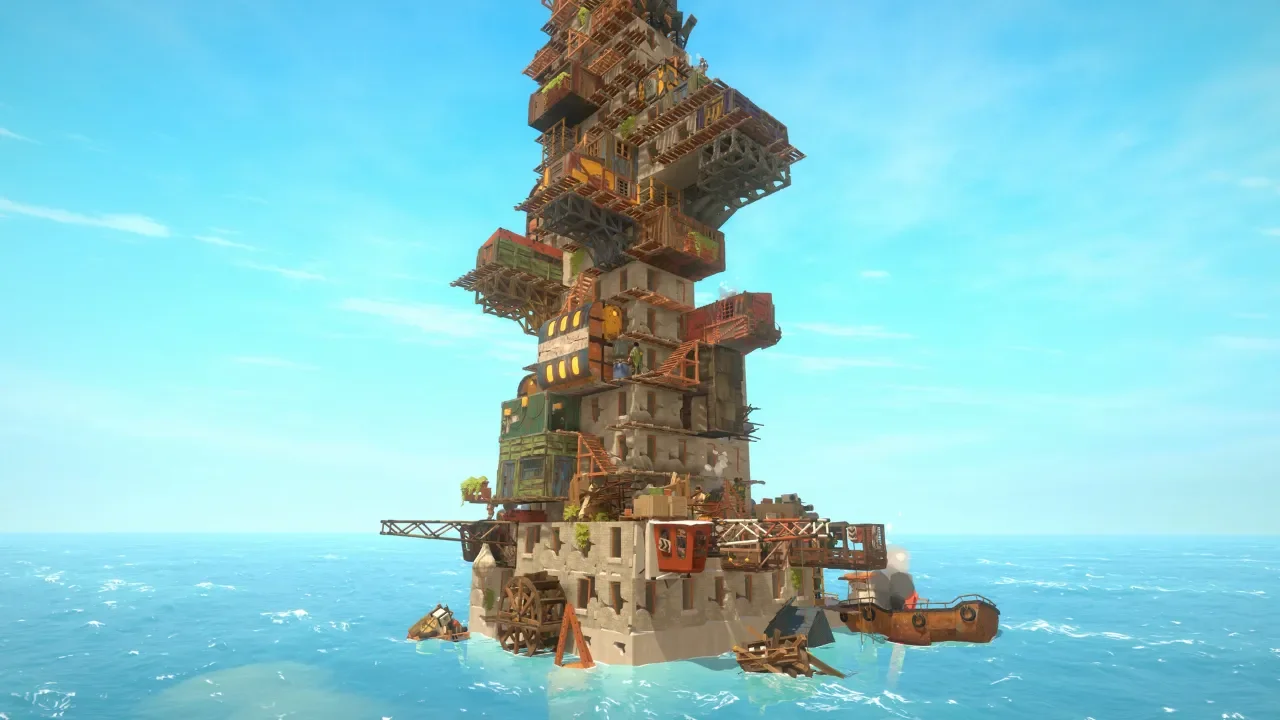
Water is the most deceptive element in All Will Fall. You spend half your time desperately trying to collect enough of it to keep your citizens alive, and the other half praying it does not swallow your newly built production sectors. The game drops you into a drowned world and expects you to intuitively understand how fluid dynamics and weather patterns affect structural integrity. When you fail to grasp it, you are punished with drowned citizens and collapsed scaffolding.
I spent an embarrassing amount of time rebuilding the exact same fishing huts because I refused to learn how the tide actually functions. Once I stopped fighting the ocean and started paying attention to the game's hidden visual cues, my entire survival strategy shifted. You can completely trivialize water gathering and flood damage if you understand the underlying engine mechanics and exactly how to place a simple piece of wood over a storage tank.
The Truth About Tides And Sea Levels
The first major hurdle is realizing that the daily tide and the permanent sea level are two completely different systems running simultaneously.
Fluctuating Tides
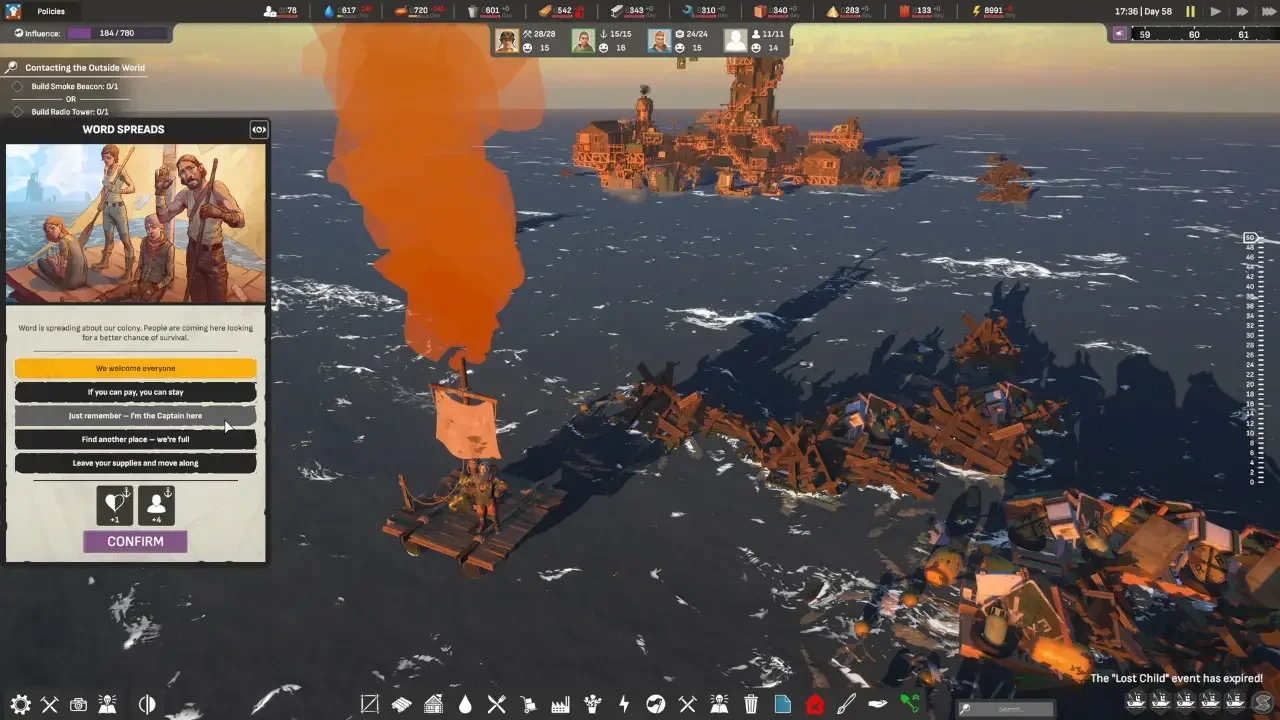
The tide goes up and down on a set schedule. You can track this in the top right corner of your screen where the weather forecast lives. High tide brings trade ships to your colony, which is your primary window for crucial mid game resources. Low tide recedes to reveal the submerged ruins below your base.
When low tide hits, you have a very strict, limited time window to assign your workers to scavenge the exposed ground. You need to act instantly. Send them down to grab everything they can carry before the water rushes back in. If they get caught when the tide rises, they can lose their pathfinding, panic, and drown.
The Permanent Sea Level Drop
Here is the mechanic that confuses everyone. As you survive longer, the baseline sea level permanently lowers. The water physically drains from the map over the course of weeks. This reveals massive new sections of underlying architecture that you can build on.
This sounds like a blessing, but it actually creates a massive logistical headache. As the water drops, your fishing huts and water dependent structures are suddenly left hanging in the dry air, completely useless. You are forced into an awkward loop of constantly tearing down your lower structures and rebuilding them further down the scaffolding to chase the receding ocean.
Reading The Green Moss
You cannot just build anywhere the water recedes. You have to look at the texture of the environment. If an area of the map is coated in a green, mossy texture, the game is explicitly warning you that this is a flood zone. The moss means the area is currently dry due to low tide, but it will absolutely be submerged when high tide returns.
If you build permanent, load bearing structures on green moss, you are actively choosing to destroy your own colony. The moment the water rises, those structures take massive damage or collapse, taking everything built vertically above them down into the abyss. You only build permanent foundations on clean, moss free textures. Those areas are permanently above the current sea level and are safe from the daily tidal shift.
The 50 Meter Engine Limit
If you want to completely ignore the ocean forever, there is a hard coded engine limitation you can exploit. The water level in All Will Fall cannot rise above 50 meters.
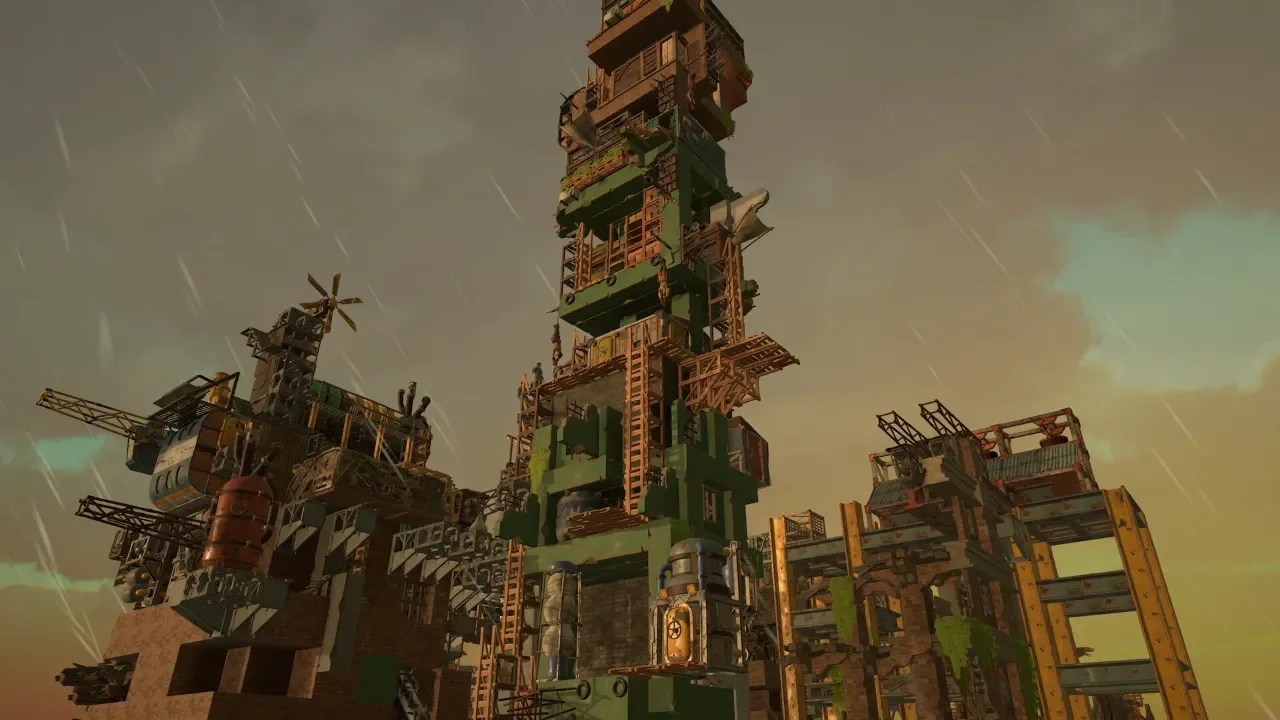
If you build your primary city platforms above that 50 meter mark, the water will never reach you. It is physically impossible. I highly recommend keeping your cheap, easily replaceable fishing and gathering outposts near the water line, but moving your main housing and critical infrastructure high into the air. Once you clear that 50 meter threshold, you can completely ignore the flood warnings.
Exploiting Rain Catchers
Gathering water from the ocean is tedious. Harvesting it from the sky is where you actually secure your colony's future, but the game is terrible at explaining how the plumbing works.
The Required Connection
You cannot just slap a rain catcher on a roof and expect it to generate water. It has to be physically anchored to a storage unit. You must build your water storage first. Then, you place a square rain catcher directly on top of it, ensuring at least one tile is touching the top of the tank. Alternatively, you can build a side catcher that touches the wall of the storage unit.
The visual connection might look a little janky, usually a weird metal pipe clipping into a cloth tarp, but you have to wait a few seconds for the game to register the link. Once the warning sign disappears, the catcher will automatically funnel rainwater directly into the tank.
The Angled Roof Exploit
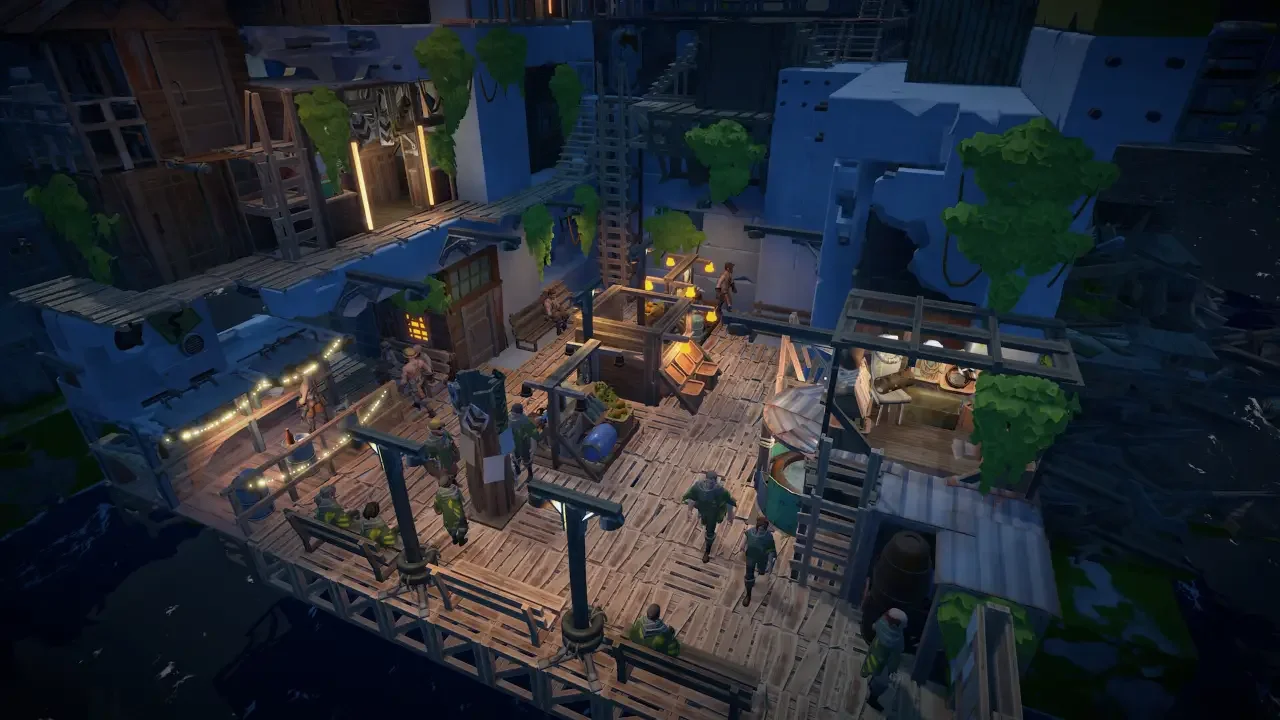
A standard rain catcher is fine, but you can manipulate the architecture of your citizen housing to supercharge your water production. Rain catchers have an efficiency rating, and you can boost it by redirecting water from nearby angled roofs.
To pull this off, you build an angled roof on top of a house and manually redirect the slope so the runoff pours directly into the rain catcher. Holy shit, the amount of time I saved once I started doing this was staggering.
In the early game, you can put two square houses next to each other and angle both roofs into a single catcher for a massive boost. By the late game, you should be building massive apartment blocks, two or three floors high, with four connected roofs all funneling into a central square catcher sitting above a massive reservoir.
Equalizing Your Storage Grid
Once your 500 percent efficiency catchers start working, you will run into a new problem. Your primary tanks will fill up instantly and overflow, while the tanks on the other side of your colony stay bone dry.
To prevent this, you have to utilize the pipe system. You place pipes between your different water storages to connect the entire network. The game will automatically equalize the water volume across every connected tank. This ensures your high efficiency roof catchers can constantly gather new water without hitting a hard storage cap, distributing the surplus across your entire grid. Set this up correctly and you will never have a citizen die of thirst again.