5 Beginner Traps And Misunderstood Mechanics To Avoid In All Will Fall
Survival in this flooded post apocalypse is hard enough without falling for easy logistical traps and UI misunderstandings.
The learning curve in All Will Fall is less of a gentle slope and more of a sheer, rain slicked cliff face. The game demands absolute perfection from your logistics and architecture. Because the systems are so deep and intricate, it is incredibly easy to assume a feature works one way when the underlying simulation is doing something completely different. I lost my first few colonies not because the game was unfair, but because my assumptions were entirely wrong.
If you are struggling to keep your head above water, there is a very high chance you are falling victim to a handful of common traps. These are features or strategies that look incredibly helpful on the surface but are actually bleeding your colony dry or just currently acting a bit janky. You have to unlearn some of the basic habits you brought over from other city builders. I am going to save you the headache and walk you through the five biggest mistakes to avoid.
1. The Multiple Research Lab Trap
This is arguably the easiest resource sink to fall for in the early game. In almost every other colony simulator on the market, building a second research lab doubles your technology progression. You naturally assume the same logic applies here.
You gather your scarce scrap, dedicate a large chunk of your precious horizontal foundation space, and assign your citizens to a second or third research lab. You expect the tech tree to suddenly unlock at light speed. Instead, the difference is practically unnoticeable.
The speed boost you receive from stacking multiple research labs is mathematically so small that it is absolutely not worth the investment. You are paying a massive upfront material cost and tying up your citizens in jobs that are providing no tangible benefit. Those people could be gathering water or reinforcing load bearing pillars before a storm. Never build more than one lab. Put those citizens to work somewhere that actually matters.
2. The Buggy "Send To Safety" Button
If you hover over your citizen controls, you will spot a "Send to Safety" command. When the permanent sea level mechanics shift and the tide starts rushing into your lower gathering zones, you will naturally panic. You will spot your workers wandering around in a flooded area and hit that button, assuming they will immediately drop their tasks and run for higher ground.
Right now, that button does not really seem to function as intended if your citizens are already standing in the water. They essentially lose their pathfinding logic once the water hits their ankles. They will just stand there and work until they drown, completely ignoring your commands.
I assume this is meant to do something specific and will likely be repaired in a future patch. Because of that, keep an eye on the patch notes, as this behavior could change rapidly between updates. But for now, the only reliable way to save them is to manually recall them home long before the water actually arrives.
3. The Map Switching Confusion
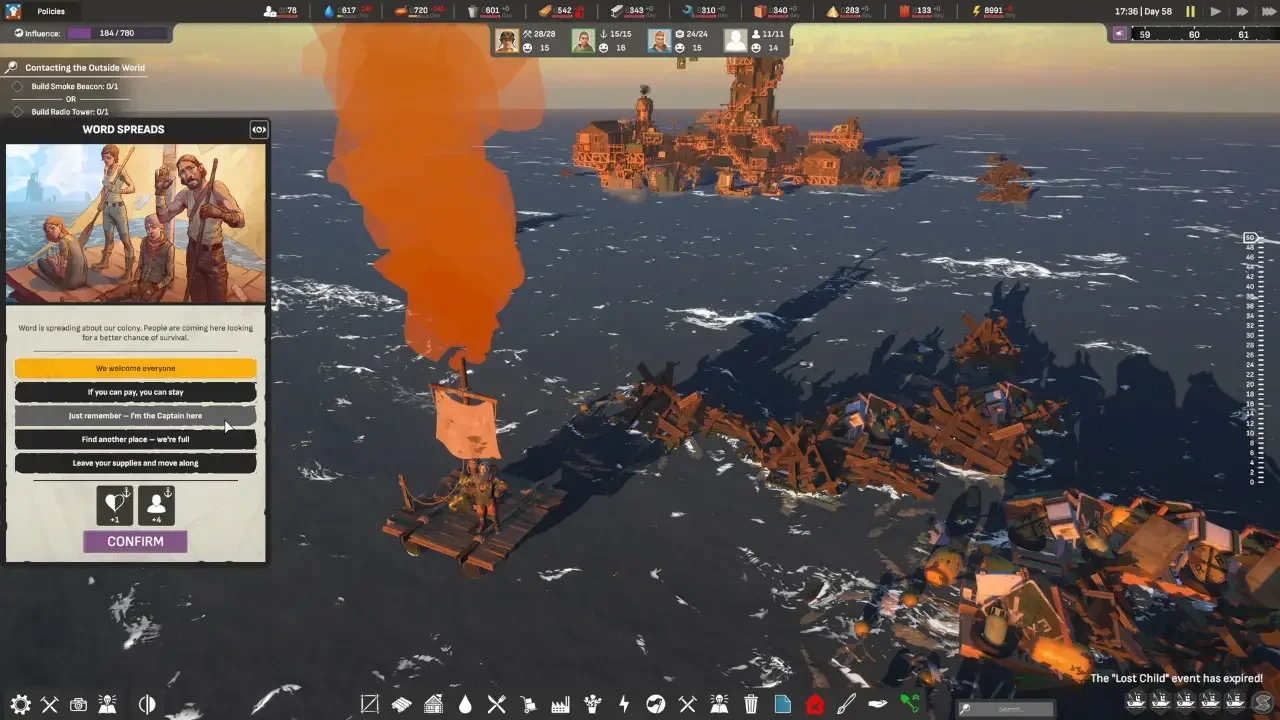
The tutorial in All Will Fall is a bit vague about a lot of things, and the map system is one of them. It does not outright lie to you, but it leaves just enough unsaid that I definitely got confused for a second.
You might get the impression that you can just switch maps or open up a world view to move your colony around at will. I spent an embarrassing amount of time clicking through the HUD looking for the button to open a world map and transition to a new area. Looking online, I noticed a lot of other people tripped up on this exact same thing.
There is no map switching button in your current run. To play on a different map, you have to exit to the main menu, start a completely new game, and select the desired map from the starting screen. The only exception is the specific tanker scenario where you spend massive amounts of fuel to physically sail the ship. For standard sandbox and campaign progression, you are locked into the map you chose.
4. The High Tech Starvation Trap
I covered this extensively in my economy breakdown, but it is so crucial that it warrants repeating here. The game presents you with an extensive technology tree filled with electric greenhouses and industrial energy grids. It is very easy to convince yourself that starvation is a technology problem.
It is actually a logistics problem.
If you rush tier five energy production while your people are hungry, they will starve while you are still hooking up the power lines. The basic, low tech loop of damp wood, manual labor, and mushroom farming yields almost the exact same amount of food per citizen as the massive, thirty person electric setup. The advanced tech is a trap for anyone who thinks machinery will magically multiply their food output. Save the electricity for manufacturing late game construction materials like steel and tools. Keep your people fed with basic mushroom farms.
5. The Vertical Skyscraper Death Wish
The most common way I killed my own colonies early on was by ignoring gravity.
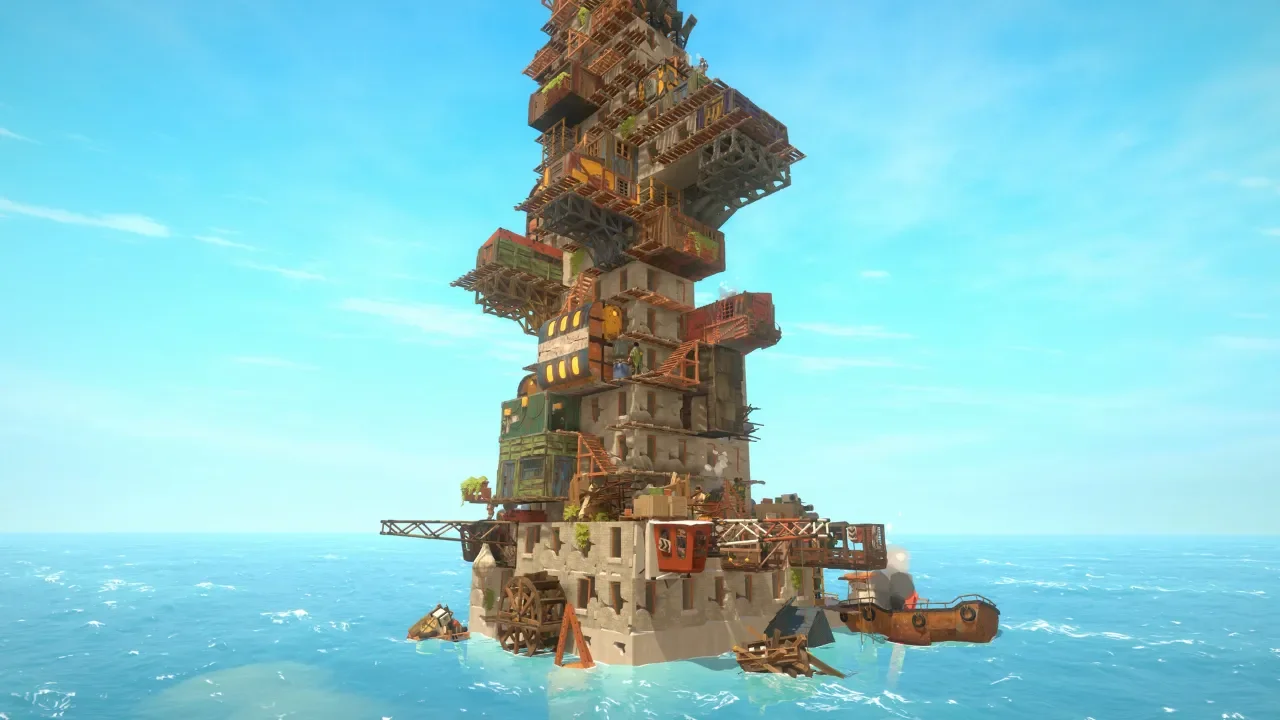
Space is severely limited when you first start. You drop onto a tiny platform surrounded by a hostile ocean. The immediate, logical response is to build upwards. You stack a water reservoir on top of a housing block, and then you put a production facility on top of that.
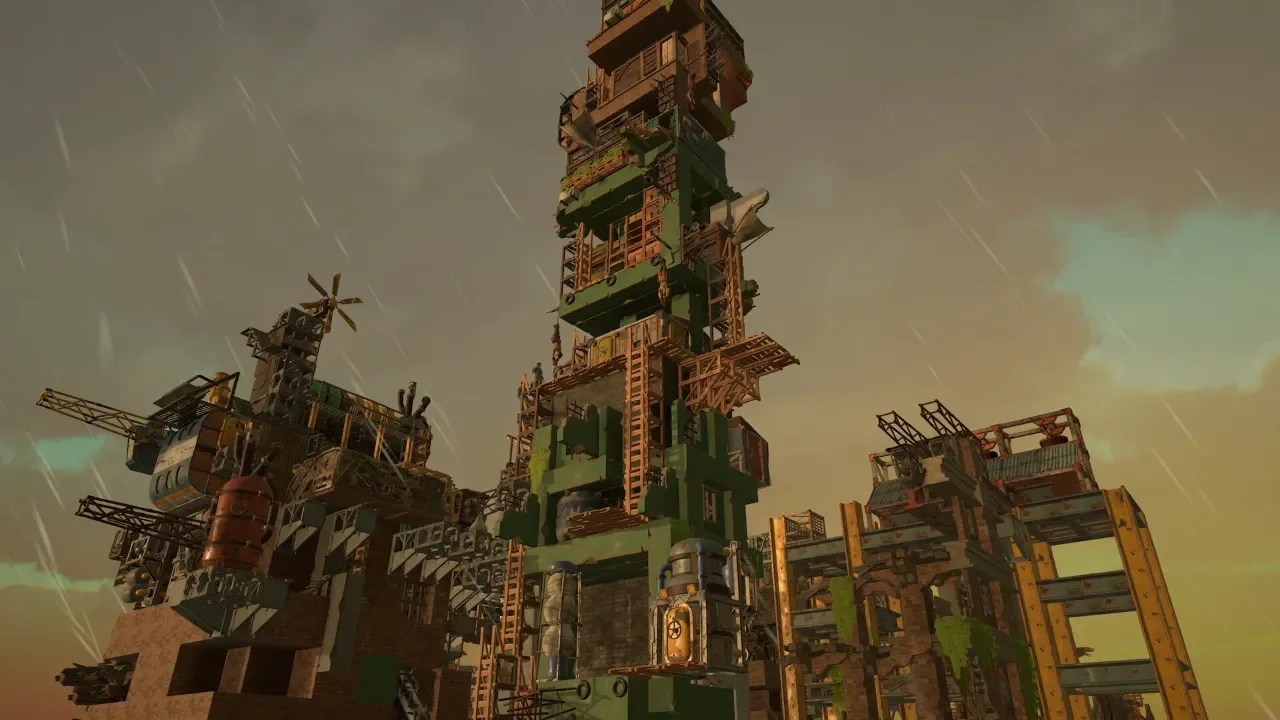
The physics engine is always running in the background, calculating the crushing weight you just placed on a single, flimsy wooden support pillar. The moment a storm rolls in and applies lateral wind pressure, that bottom pillar will snap. When it does, your entire skyscraper comes down in a catastrophic physics simulation, instantly wiping out hours of progress.
The game allows you to build vertically, but you have to earn the right to do it. You must establish a massive, perfectly distributed horizontal foundation first. You need multiple load bearing columns sharing the weight before you even think about adding a second floor. Discard the urge to build a tower right away and start building a stable, wide grid. Your citizens will thank you by not plummeting into the sea.