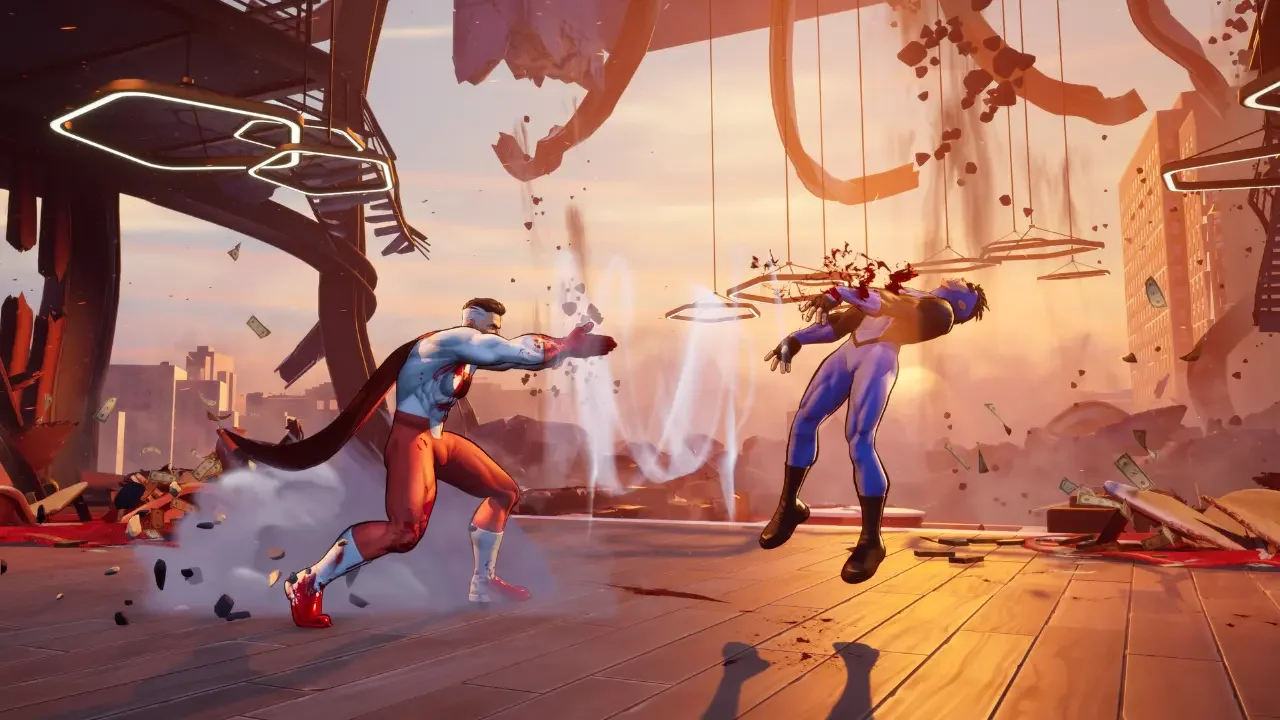
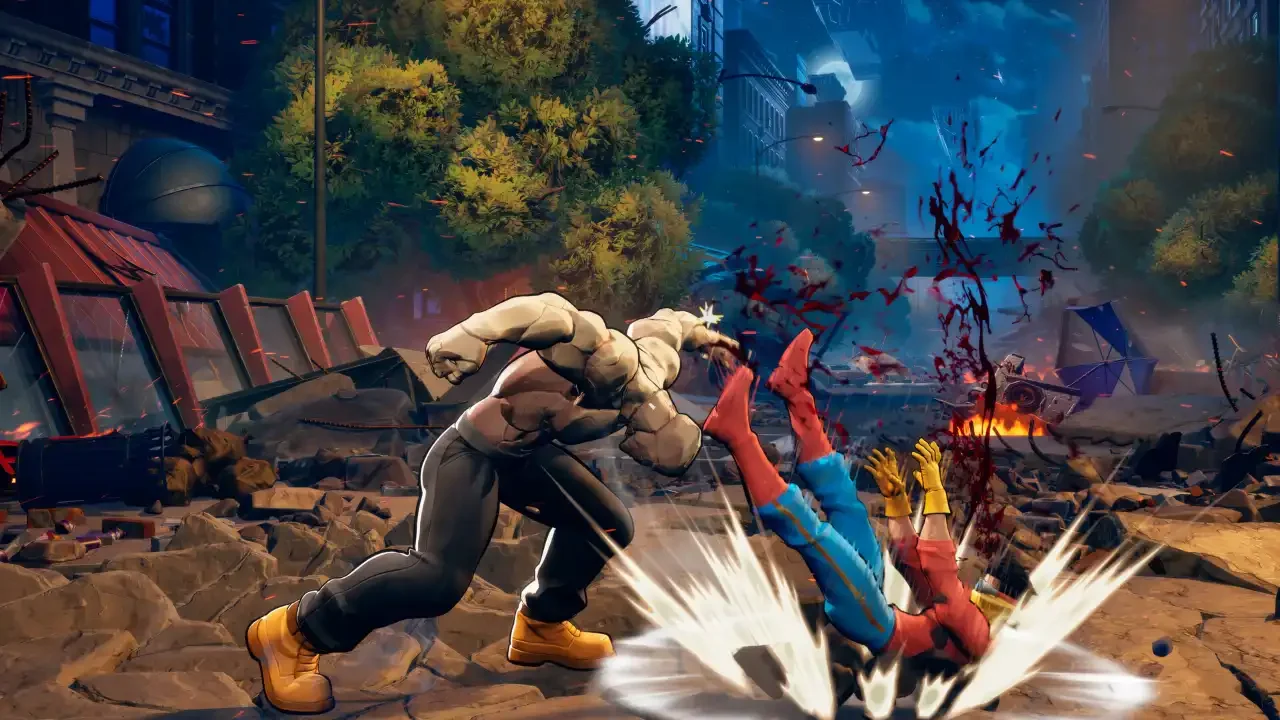
Invincible VS Beginner's Guide: Everything You Need to Know Before Going Online
If you treat this tag fighter like a standard 1v1 brawler, you are going to get dismantled in record time.
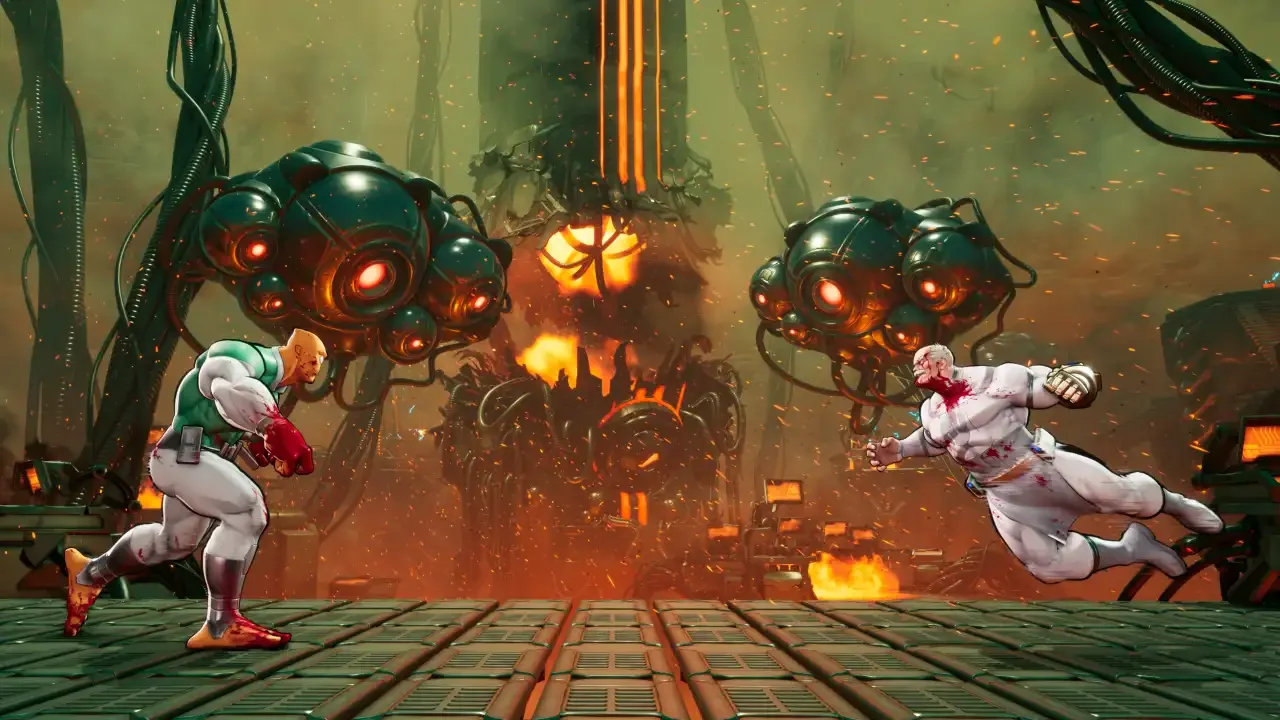
This is a 3v3 tag fighter built around the kind of over-the-top violence that made the show famous, and it plays accordingly. Every character you face has access to tools that look borderline broken on paper, every system has counterplay baked in that you will absolutely miss on your first five attempts, and the ranked ladder is full of people who figured all of this out before you did. The good news? The foundations here are solid, and once you understand how the game's systems connect to each other, what initially feels like chaos starts feeling like one of the best tag fighters in years. This guide covers everything you need to know before you take the fight online.
Start in Training Mode, Not Online
The single most important thing you can do when you boot up Invincible VS for the first time is resist the urge to jump straight into a match. The game ships with a dedicated Training mode accessible from the main menu, and it is genuinely one of the more comprehensive tutorial systems you will find in a modern fighter. Before you go anywhere near ranked, or even casual online play, run through it completely.
The tutorial is split into two tiers: Beginner and Intermediate. The Beginner track covers ten distinct lessons, walking you through movement, normal attacks, special moves, supers, throws, basic combos, assists and tags, blocking, Assist Breakers, and Counter Tags. Each one builds on the last. Skipping them to "figure it out" in real matches is how you develop bad habits that take twice as long to undo.
Once the Beginner track is done, go straight into Intermediate. This is where the game opens up. The Intermediate tutorial covers Active Tags, Tag Feints, Delays, Snapbacks, Heroic Strikes, Push Blocks, and meter burn in combination with special moves. These are not optional extras for advanced players. They are the tools that separate someone getting steamrolled from someone who can hold their own in a real match.
Understanding the Three-Button System
Invincible VS is what fighters call a three-button game. Your basic attacks are Light, Medium, and Heavy, and they link into each other in ascending order. Lights cancel into Mediums, Mediums cancel into Heavies, and Specials can be cancelled into from anything. That chain is the backbone of every combo you will ever run.
Before you start looking at character-specific routes, learn the universal string that works across the entire roster:
Light > Medium > Heavy > Special Move
From there, you can extend into the air by using your launcher, which is Down + Heavy by default. That sends your opponent skyward and lets you follow up with an aerial combo before spiking them back down:
Light > Medium > Heavy > Down + Heavy > Light > Medium > Heavy > Down + Heavy
That string alone will carry you through a significant chunk of your early matches. Once it feels natural, you can start experimenting with Specials mid-combo and working Assists into the flow.
Standard vs. Motion Inputs: Which Should You Use?
Invincible VS gives you two control options. Standard replaces traditional motion inputs (the classic fireball quarter-circle, for example) with simplified directional inputs. Instead of Down, Down-Forward, Forward plus an attack button, you just press Forward plus an attack button. It is accessible, functional, and perfectly viable.
The tradeoff is a ten percent damage reduction across all your Special Attacks. That number sounds small, but it compounds over a long match. If you are playing on a stick or a leverless controller, switching to Motion Inputs is worth the adjustment period as it feels far more natural on that hardware. If you are on a pad and new to the genre, Standard is fine. The goal is to get comfortable with the game's systems first, and you can always migrate to Motion Inputs once your combo structure is solid.
Assists Are the Whole Game
If there is one system in Invincible VS that separates curious beginners from people who are actually learning the game, it is the Assist system. Every character on your team has three Assist options, and understanding how to use them is what transforms your offense from a predictable string of buttons into something your opponent genuinely cannot read.
Know Your Three Assist Types
Your Forward Assist and Neutral Assist are your fastest options with the shortest cooldowns. Your Back Assist is slower to come out and carries a much longer cooldown, but it is usually your most potent option. The key thing to understand is that once you use an Assist, that character cannot be called in again until the cooldown resets. That includes using them for Counter Tags or Combo Breakers. Burning a Back Assist recklessly does not just cost you one tool, it locks out your character entirely for a meaningful window.
How to Actually Use Assists in a Match
The tactical application is where it clicks. Say your Back Assist launches a projectile that bounces the opponent on contact. Because it has a slower startup, you can weave it into the middle of a combo string:
Light > Medium + Back Assist > Heavy > Down + Heavy > Light > Medium > Heavy > Down + Heavy
Alternatively, if your Forward Assist hits low, you can call it in first and then jump over your opponent, creating a high-low mix that forces a guessing game. If either option lands, you continue the combo. That is real pressure.
The short version: use Forward and Neutral Assists to extend pressure and cover your approach. Use Back Assists for high-reward combo extensions when you know the timing and the situation calls for it. Do not use Assists randomly.
The Combo Limit Gauge: Stop Mashing
As your combo grows, a small gauge fills beneath your hit count. When that gauge maxes out, the next hit ends your combo entirely and your opponent recovers. Watch for it flashing white and red, because that is your warning that you have exactly one hit left
What you do with that final hit matters. Ending on a strong knockdown keeps your opponent grounded and gives you time to set up your next approach. Ending with a Super is even better. Letting the gauge expire on a weak normal means your opponent gets up ready to go, and the momentum shifts to their side in an instant.
The gauge can be managed, though. Boosted Special Attacks pause the meter where it currently is rather than advancing it. Boosted Dashes reduce it. The main tool for dramatically extending a combo is the Active Tag, which swings the meter down significantly when you call in a teammate mid-combo, letting the incoming character start their own sequence with room to work.
Active Tags and the Counter Tag Mind Game
Active Tags are how you extend your most damaging combo sequences beyond what any single character could do alone. Hold an Assist button mid-combo and you tag in your next character, resetting the Combo Limit Gauge in the process. On paper that sounds simply powerful. In practice, it is the center of the game's deepest mind game.
Your opponent can Counter Tag. Timed correctly as your incoming character arrives, pressing Medium and Heavy (Medium plus Assist 1 on Standard controls) neutralizes the tag completely. If you get Counter Tagged, your incoming character's momentum is killed, your assists go on a three-second cooldown, and you are suddenly the one on the back foot.
To counter the counter, you can delay your Active Tag by pressing Heavy just before the tag lands, which throws off your opponent's timing. You can also feint the tag entirely, pulling it back at the last moment. If your opponent Counter Tags a feint, they are left completely exposed with a fresh combo meter reset in your favor.
There is no objectively correct answer about when to tag, when to delay, and when to feint. Mix up your approaches. Pay attention to what your opponent is responding to, adjust accordingly, and accept that occasionally you will get read. That is just the nature of the game.
Assist Breakers: Use Them Sparingly
Getting caught in a combo is disorienting, and the temptation to immediately burn your Assist Breaker to escape it is real. Before you do that, know what it actually costs: two bars of Boost Gauge, fifty percent of the saving Assist character's health converted to recoverable red health, and a ten-second cooldown on both Assists. That cooldown means you cannot Counter Tag if you get hit again in that window.
The deeper problem is what happens next. A smart opponent Snapbacks immediately after, dragging your wounded Assist character back into the active slot and burning off all that recoverable health before it has a chance to regenerate. What felt like an escape suddenly costs you a character anyway.
Use the Assist Breaker when the alternative is outright losing someone, particularly against opponents sitting on three bars of meter with a history of high-damage solo routes. When you commit to it, do it early in the combo, never at the tail end of a Special where a Super cancel is likely. A Breaker eaten by a Super is the worst trade in the game: full resource cost, zero result.
Your Defensive Toolkit
Offense in Invincible VS is relentless, and that means you need to understand your defensive options just as well as your combo routes.
Push Block: Create Space
Push Block costs half a bar of Boost Gauge and is performed by pressing and holding two buttons while blocking. It shoves your opponent back and creates space, interrupting their pressure and occasionally baiting them into a whiff you can punish.
Heroic Strike: Turn the Tables
Heroic Strike costs one and a half bars and is performed with Medium plus Assist 1 while blocking. It is an armored reversal that stops incoming offense dead and leaves you at a slight frame advantage. Your opponent's character will flash just before it lands, giving them a window to counter it, so do not lean on it blindly. When it does land, get into Training Mode and practice the follow-up conversion. The combo potential off a successful Heroic Strike is substantial enough to completely flip a round.
Rolling on Wakeup: Escape the Corner
This is the mechanic most beginners never learn until they have been corner-trapped for ten minutes. When you are knocked down, holding Left or Right causes your character to roll in that direction with brief invulnerability. If your opponent has driven you into the corner, holding toward them on wakeup rolls you through and back into open space. Without this option, the corner is a death trap. If your opponent lands an attack that causes a Hard Knockdown, the roll option is unavailable, so watch for the text indicator on screen.
Managing the Boost Gauge
The Boost Gauge underpins almost every powerful action in the game. Boosted Specials (Directional Input plus Heavy) consume one bar and add enhanced properties to your Special Attack, whether that is additional hits, a ground bounce, or a launch that opens up further combo potential. Boosted Dashes cost meter but give you a burst of movement that can close distance, extend combos, or escape far-reaching attacks in an instant.
The mistake most beginners make is hoarding the Boost Gauge for the perfect moment that never comes. Meter that sits unused while you lose a character is wasted meter. Use it to finish off a character, push through a tough blockstring, or set up a combo extension that takes a round. A dead opponent character means one less Assist, one less tag option, and one step closer to the win.
Pick a Team That Makes Sense, Not a Tier List Team
Before you build your team, check out my Invincible VS character tier list to get a sense of where the roster stands competitively. But here is the honest advice: tier lists matter a lot more once you understand the game. Right now, clarity matters more.
The roster sits at eighteen characters with a meaningful range of playstyles. Omni-Man is a relentless offensive powerhouse built for getting in your opponent's face and staying there. Ella Mental and Atom Eve lean into varied ranged attacks. Pick a character whose game plan you can actually articulate. Rushdown if you want to apply constant pressure. Ranged if you prefer controlling space. A brawler if you want simple, impactful damage. Once you have a main, build two supporting characters around them rather than trying to learn three unrelated character styles simultaneously.
One last thing: do not treat the tag system like a panic button. Tag to extend combos, to bring in a healthier character, to change a bad matchup, or to shift the pace of the fight. Tagging blindly because the screen feels chaotic is how you get both characters punished. The team synergy is the game. Once that clicks, Invincible VS stops feeling like a chaos simulator and starts feeling like exactly the kind of fighter it was always trying to be.