Raccoin Mechanics Explained: Decoding The Fine Print
Trying to parse the tooltip descriptions in this game feels like reading a badly translated legal contract while a casino alarm blares in your ear.
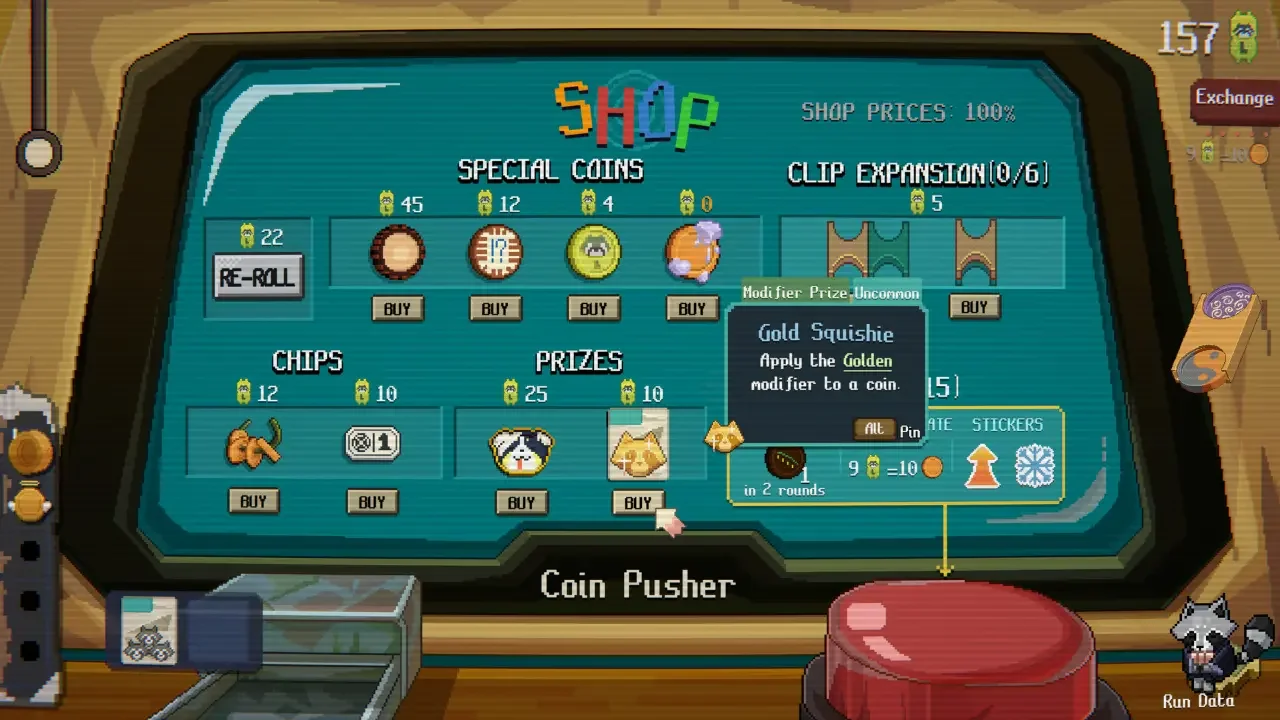
I genuinely love the chaotic physics engine of Raccoin, but the developers made some truly baffling decisions regarding how they communicate complex mechanics to the player. The game throws hundreds of unique items at you, and a staggering amount of them rely on ambiguous text descriptions. You will inevitably find yourself staring at an expensive shop item, completely unsure if buying it will break your run or secure a massive high score.
The community forums are currently flooded with players asking the exact same questions. People think certain chips are totally bugged, or they assume the game is actively cheating them out of points. I spent a ridiculous amount of time testing the math and isolating these specific interactions. If you are still struggling to keep your basic ticket economy afloat, you need to step back and read my Raccoin Beginner Tips Guide first.
If you are ready to start manipulating the underlying code of your board state, here is exactly how the three most confusing mechanics in the game actually function.
The Conversion Rate Reality
You will see the term "Conversion Rate" plastered across a variety of items, most notably the Cloveroin. The tutorial completely fails to explain what this stat actually governs, leaving most players to assume it is just a generic multiplier. It is not.
Conversion Rate directly dictates the likelihood of your standard, low value copper coins magically transforming into a higher tier currency the exact moment they drop from your clip into the machine. It is an incredibly powerful stat, but the scaling is incredibly deceptive.
That hard cap is where the game aggressively lies to you by omission. You might aggressively stack Conversion items thinking you can achieve a 100 percent Gold drop rate if you push your stat to 200 percent. You cannot. The maximum threshold limits your Gold spawns to a 50 percent probability. You will always be dropping a heavy mix of Silver alongside your Gold, no matter how much you invest in the stat.
If you want to learn how to properly exploit those Gold drops once they hit the board, I highly recommend studying my Raccoin Advanced Scoring Strategy guide.
Understanding Debt And The Credit Coin
The Credit Coin introduces a mechanic that feels entirely counterintuitive to everything the game has taught you up to that point.
Most coins hold a positive sales value. You buy them in the shop, and if you realize they are cluttering your deck, you can sell them back to recoup a fraction of your spent tickets. The Credit Coin operates on a system of Debt. It has a negative sales value.
When you initially acquire the Credit Coin from the shop, it actually gives you an influx of tickets. The game essentially loans you the currency. The trap activates when you try to get rid of it. If you attempt to manually sell the Credit Coin out of your inventory, it will actively drain tickets from your wallet to pay off the negative balance.
The mechanic becomes deeply frustrating during actual gameplay. The Credit Coin possesses a unique trait where it automatically sells itself the moment it scores and falls off the board. This means you do not escape the debt just by playing the coin. It will leech your tickets as it scores.
There is a brilliant, highly specific strategy here though. The negative sales value has a hilarious interaction with the Golden modifier. Applying the Golden modifier to a Credit Coin completely inverts the math, turning a massive liability into a bizarre economic engine. If you decide to experiment with this setup, make sure you are using a character capable of handling volatile economies. Check my Raccoin Character Unlock Guide to find the best fit for that chaotic playstyle.
The Origin Modifier Misconception
I thought my game was completely bugged the first time I bought the Origin modifier. I slapped it onto an expensive giraffe coin, expecting it to do something spectacular on the board, and absolutely nothing happened. The community forums are currently full of players experiencing this exact same frustration.
The confusion stems from players assuming the Origin modifier acts like the Return modifier. The Return modifier brings a coin back to your clip immediately after it scores. Origin does something entirely different, and it operates on a massive delay.
Origin spawns a physical duplicate of the modified coin directly into your clip at the very start of the next round.
There are three massive caveats to this mechanic that the game refuses to clarify. First, you must have an empty slot available in your clip when the new round starts, otherwise the duplicate simply fails to spawn. Second, the duplicated coin you receive will be completely stripped of any modifiers. It is just the raw, base version of the coin.
Third, and most importantly, the original modified coin must physically be sitting inside your clip when the new round begins.
This creates a massive strategic bottleneck. If you want the Origin modifier to trigger, you cannot actually play the coin during the current round. You have to let it burn a hole in your clip, effectively reducing your available ammo capacity, just to secure a free duplicate for the future.
Bypassing The Bottleneck
Early in the game, managing a dead coin in your clip feels impossible. You will instinctively want to drop it just to keep your combo meter alive.
There is a mechanical workaround for this. You can actually use your mouse scroll wheel to manually cycle through the coins currently loaded in your clip. If your Origin coin is sitting at the very top of the stack, simply scroll down to select the next coin in line. This allows you to continue shooting and scoring without accidentally deploying the coin you are trying to save for the duplication trigger.
It is a clunky interface solution, but it saves the strategy. If you find your UI acting up or locking onto targets while you are trying to scroll through your ammo, you probably triggered the auto shoot function by accident. I detail exactly how to disable that feature in my Raccoin Troubleshooting Guide.
The developer has stated they are actively working on improving the localization and text descriptions in future patches. Until then, you have to treat every vague tooltip with extreme suspicion. Trust the math, manage your debt carefully, and stop throwing your Origin coins onto the board if you want them to multiply.