Roots Devour Review: How I Learned To Stop Worrying And Eat My Friends
I have killed a lot of things in video games, but I have rarely felt this guilty about eating an owl.
When I first booted up Roots Devour, I expected another generic roguelite deckbuilder trying to ride the coattails of Slay the Spire. I was wrong. This isn't a game about building a deck to fight a boss. It is a game about being a sentient, hungry root system that views the entire world as an all-you-can-eat buffet. It is Carrion meets Cultist Simulator, wrapped in a layer of gothic horror and served with a side of questionable English translation. It is weird, it is janky, and I absolutely love it.
This Is Not A Roguelike (And That Is Good)
Let's clear the air immediately because the Steam tags are lying to you. This is not a roguelike where every run is a new, procedurally generated adventure. This is a strategy puzzle game disguised as a card game, and once you accept that, it clicks.
The Geometry of Murder
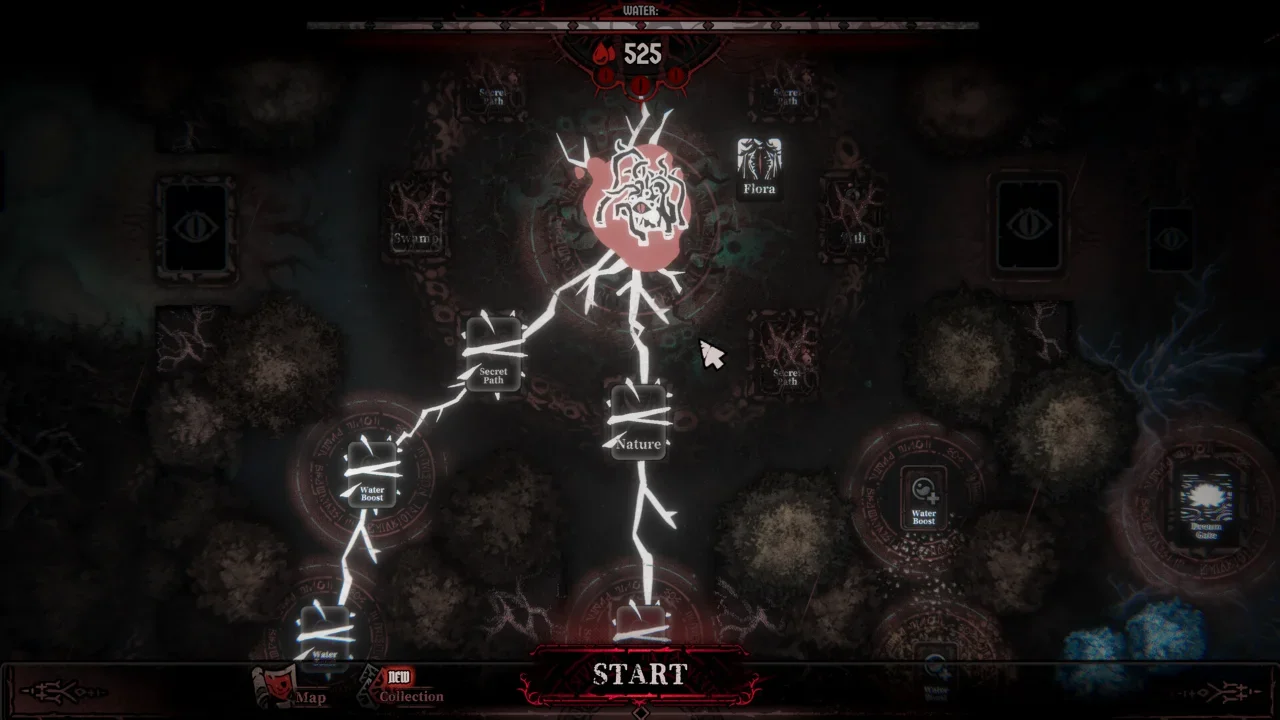
Your goal is to drag your roots from node to node, connecting cards to expand your influence. You have two main resources: Blood and Water. You get Blood by consuming living things (people, deer, the occasional cultist), and you use Water to keep your roots hydrated as they stretch across the map. It sounds simple, but it quickly becomes a game of "geometry management." You are constantly calculating the most efficient path to the next blood bag, I mean, human, while trying not to dry out.
Linear Puzzles
The maps are fixed. If you die and restart, the enemies and nodes are in the exact same spot. For some, this kills replayability. For me, it turned the game into a solvable puzzle. I wasn't praying for good RNG; I was learning the layout. I knew exactly where that one annoying rock was and exactly how much blood I needed to bypass it. It rewards planning over luck, which is a breath of fresh air in a genre saturated with dice rolls.
The Morality Of A Weed
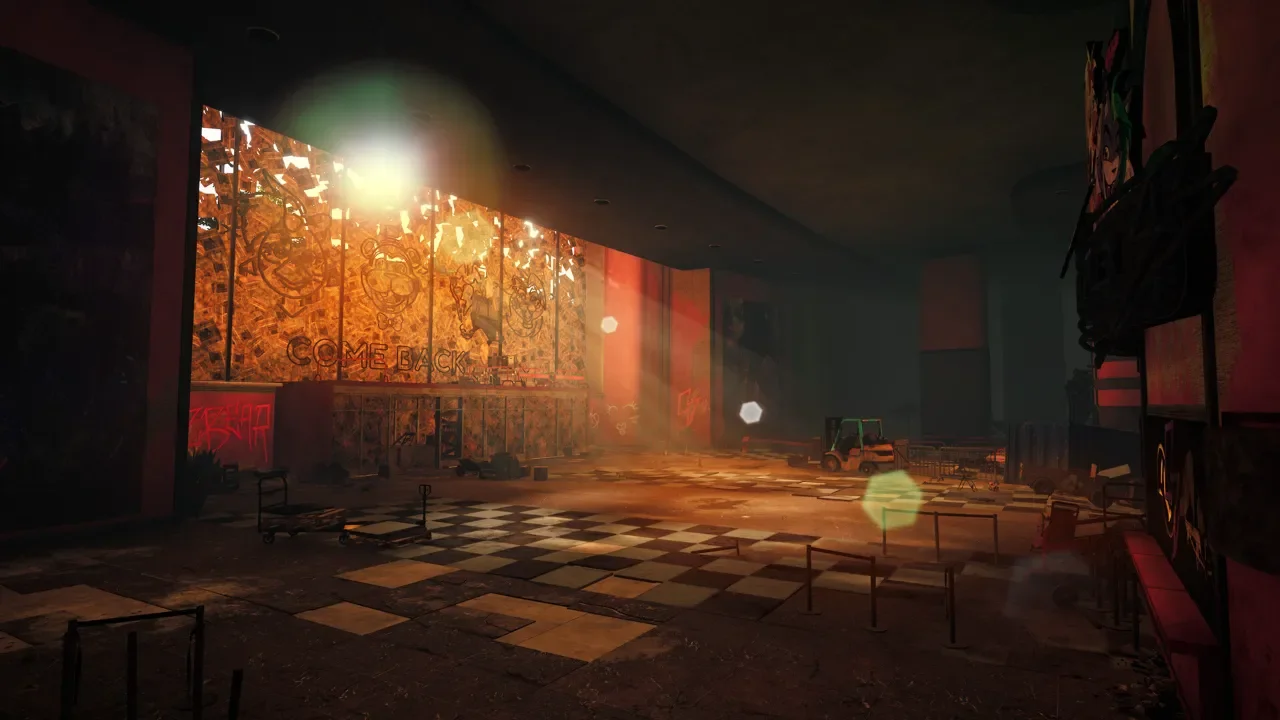
The atmosphere in this game is thick enough to cut with a machete. The art style is a gorgeous mix of grey, black, and sickly green, perfectly capturing that "I am an abomination against nature" vibe. You aren't a hero saving the forest. You are the thing hiding in the forest that eats the hero.
The "Accidental" Evil
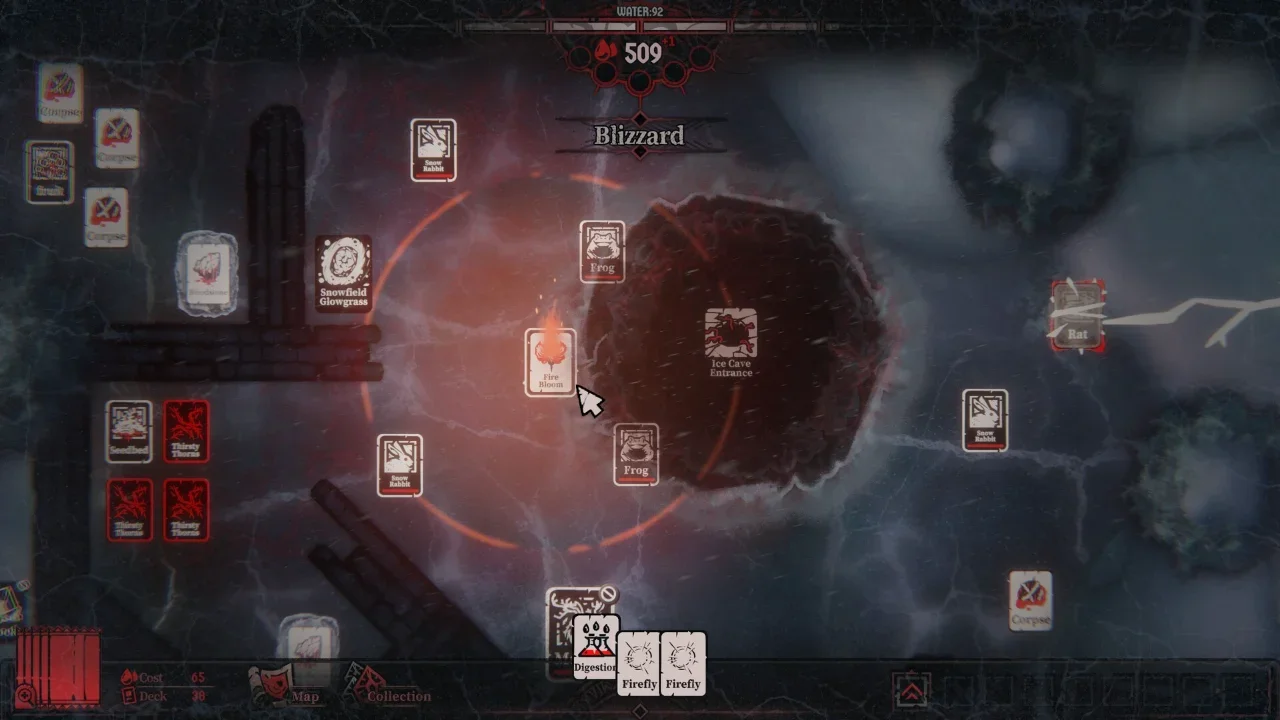
The game does an incredible job of making you feel like a monster without being edgy for the sake of it. You don't just kill enemies. You digest them. You absorb their memories. You turn their bodies into fuel for your next expansion. But then there are the accidents.
I mentioned the owl earlier. The game has "companion" characters that give you lore or help you out. The problem is, to an eldritch horror, a friend looks a lot like food. I accidentally clicked on a friendly NPC while trying to move past them, and my roots just consumed them. No warning. No "Are you sure?" prompt. Just a squelch and a massive boost to my blood count. I felt terrible. I also reloaded my save immediately. It is a harsh lesson in the fact that you are a force of destruction, whether you intend to be or not.
Lost In Translation
Now we have to talk about the text, because holy hell, it is rough. The game was clearly developed by a Chinese team, and the localization feels like it was run through Google Translate about five years ago.
You will see sentences that make zero grammatical sense. You will see raw Chinese text pop up in tooltips. You will see the "Game Over" screen tell you that you have been "Evacuated," which makes it sound like I had a bowel movement rather than died. For some people, this is going to be a dealbreaker. For me? It almost added to the charm. There is something inherently funny about an ancient, terrifying god speaking in broken English. It breaks the immersion, sure, but the gameplay loop is strong enough that I found myself ignoring the text just to get to the next puzzle.
The Late Game Rot
While the first few hours are a gripping power fantasy, the game does start to wilt near the end.
Technical Gremlins
Around the third map, I started hitting some nasty lag spikes that felt like a memory leak. Restarting the game fixed it, but it is annoying to have your frame rate tank just because your root system got too complex for the engine to handle.
Upgrade Fatigue
The upgrades you buy with your harvested blood are mostly just stat bumps. "10% more blood from humans" is useful, but it isn't exciting. Once you figure out the core loop, get blood, spread roots, repeat, it doesn't evolve much. You just get better at doing the same thing.
The Verdict
Roots Devour is a diamond in the rough. Actually, it's more like a ruby in the mud. It is messy, unpolished, and occasionally frustrating, but it is also one of the most unique strategy games I have played in over a year. If you can look past the broken English and the linear structure, there is a deeply satisfying puzzle game here that lets you indulge your inner monster. Just try not to eat the owl.
Score: 8.0/10 - A glorious, messy, and addictive descent into madness.
We at NLM received a key for this game for free, this however didn't impact our review in any way.