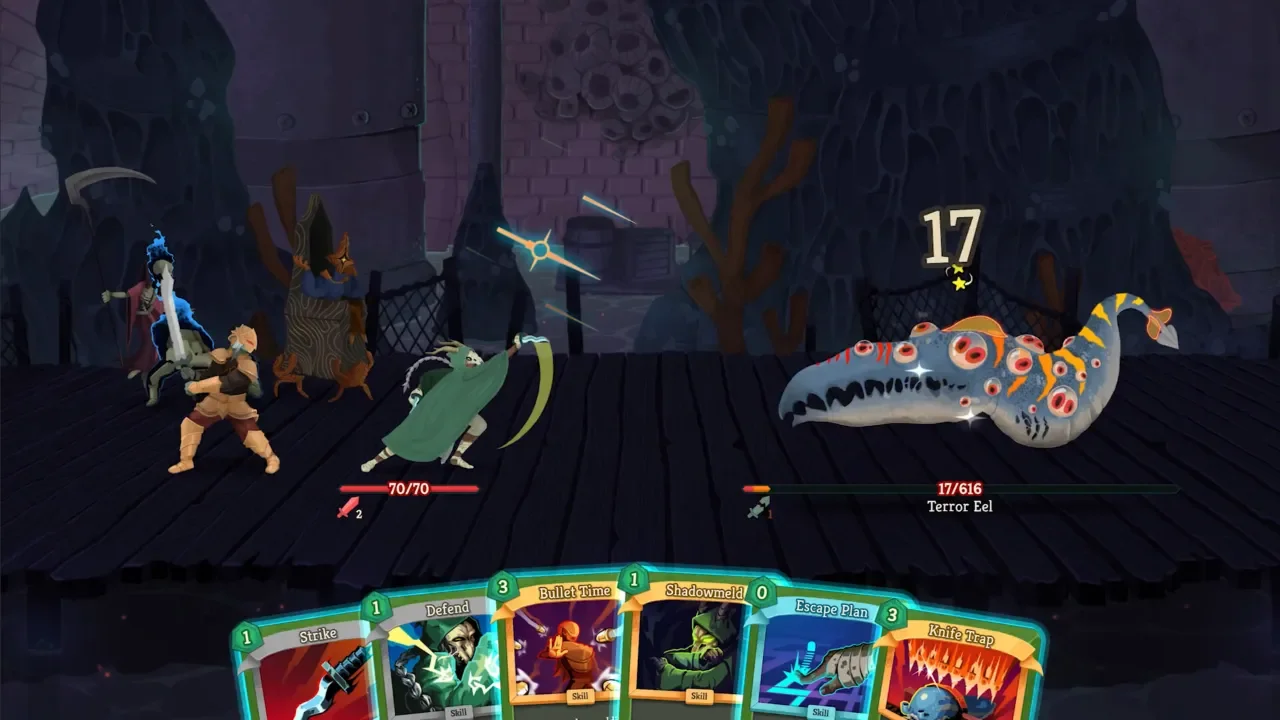
Slay the Spire 2 Regent Guide: How to Master Stars and the Sovereign Blade
Half of what makes the Regent frustrating to learn has nothing to do with his cards and everything to do with players trying to run two builds at once.

Before anything else about this character: commit to one win condition early and stay there. Trying to generate Stars while also Forging the Sovereign Blade in the same deck produces a bloated mess that's mediocre at both, and it's the single most common mistake people make once they unlock him. He topped my tier list for a reason, but that ceiling only shows up once a run actually settles into one identity instead of chasing two.
If you're still getting a feel for how enemies telegraph their attacks, this probably isn't the character to learn on. My Ironclad and Silent guides are a gentler place to start. The Regent unlocks after a Silent run and immediately hands you two separate resource pools, delayed payoffs that take several turns to pay off, and situations where passing a turn on purpose is the correct play. None of that is intuitive on a first attempt.
Surviving Long Enough to Matter
He starts at 75 HP with Divine Right, granting 3 Stars at the beginning of every fight. The temptation in Act 1 is drafting slow, expensive scaling cards because their late game upside looks incredible on paper. Resist that. If a deck can't reliably block and deal damage by turn two, the first Elite of the run ends things regardless of how good the late game plan is. Grab one or two simple Star generators, secure a real defensive option, and leave the deeper build decision for the middle of the act once there's actually a sense of what's being offered.
The Forge Path: Building One Enormous Sword
This is the more straightforward of his two identities, and probably the better entry point if the Star economy sounds like too much bookkeeping at first.
The Forge keyword builds and strengthens a single card called the Sovereign Blade. It costs two energy, it's Retained so it never disappears from the hand between turns, and every Forge card played adds permanently to its damage for the rest of the fight. Wrought in War is the card to prioritize early, dealing damage while Forging 5, and it doubles as a solid replacement for the basic Strikes clogging up the opening deck. Bulwark covers the defensive side, granting 13 Block while also Forging 10 in the same card.
Deck size matters enormously here. A lean deck means the Forge pieces show up consistently, so cutting anything that doesn't contribute, including unplayable dead weight like Quest Cards, keeps the plan on schedule. Once the Blade's sitting around 50 or 60 damage, Conqueror closes the fight: it Forges 3 more and doubles the Blade's damage for that turn. Follow it with Know Thy Place for a free Vulnerable application and the boss is gone in a single swing. It's a satisfying finish, and it asks for a lot less mental math than something like the Necrobinder's Doom mechanic.
A few relics make this build considerably smoother if they show up in a run. Fencing Manual Forges 10 automatically at the start of every combat, giving the Blade a head start before a single card's been played. Dying Star costs 1 energy and 3 Stars, dealing AOE damage while cutting enemy Strength by 9, which is worth grabbing even in a Forge-focused run as a panic button against aggressive multi-enemy rooms.
The Star Path: Once the Bookkeeping Clicks
Stars don't reset at the end of a turn and there's no cap on how many can be held, which throws a lot of new players toward just hoarding them for one big attack like Seven Stars. That's leaving most of the character on the table. The actual depth here is in conversion: generate Stars, convert them back into energy, spend that energy drawing more cards, and repeat until the whole deck's been played in a single turn.
Gather Light and Solar Strike are the early, common ways to start building that secondary economy, and Hidden Cache sets up a small delayed payoff, granting 1 Star immediately and 3 more the following turn. If Genesis shows up, take it without hesitation. For two energy it passively hands over 2 Stars at the start of every turn afterward, which effectively automates the whole engine.
The actual conversion pieces are what turn this from a resource pile into a functioning loop. Alignment costs nothing but 2 Stars and returns 2 energy outright. Big Bang is close to a perfect card for this build: zero energy, draws a card, grants energy, grants a Star, and Forges 5 before Exhausting, meaning it even feeds the other archetype a little on the side. Convergence secures energy and a Star for the following turn while keeping the current hand intact, which is useful when a big turn needs setup rather than immediate payoff.
Once the loop's running, Seven Stars is the finisher, dealing AOE damage seven separate times for two energy and 7 Stars, and any Strength stacked beforehand gets multiplied across every one of those hits. Black Hole deserves a mention too. It's a one energy Power that deals 3 damage to everything on the field every single time a Star is gained or spent, and since the entire loop revolves around constantly gaining and spending Stars, it ends up quietly clearing the room while the actual plan is just cycling resources.
A couple of relics push this build considerably further. Lunar Pastry grants a free Star at the end of every turn with zero setup required. Mini Regent grants a stack of Strength the first time a Star is spent each turn, which scales the Seven Stars payoff well past what the base card would otherwise hit for.
Controlling the Pace, Regardless of Lane
Whichever path gets picked, the Regent has genuinely strong draw manipulation available that neither Ironclad nor Silent get access to in quite the same way. Cosmic Indifference is a Block card that also pulls a card from the discard pile straight back to the top of the deck, useful for looping a Star generator or immediately re-drawing the Sovereign Blade right after it's been swung. Glimmer draws three and places one back on top, handing over a level of control most other characters just don't have over what shows up next turn.
That control is really the throughline connecting both builds. Whether the plan is one enormous sword or an engine that plays the entire deck in a single turn, the Regent wins by dictating the pace of a fight rather than reacting to it. Getting there just means resisting the urge to build both at once, and trusting that the version of him who commits to one plan is considerably scarier than the version trying to do everything.