MIO Combat and Movement Guide: How to Fly Through the Vessel Like a Pro
If you’re still touching the floor during combat in MIO, you’re doing it wrong and probably dying way more than you need to.
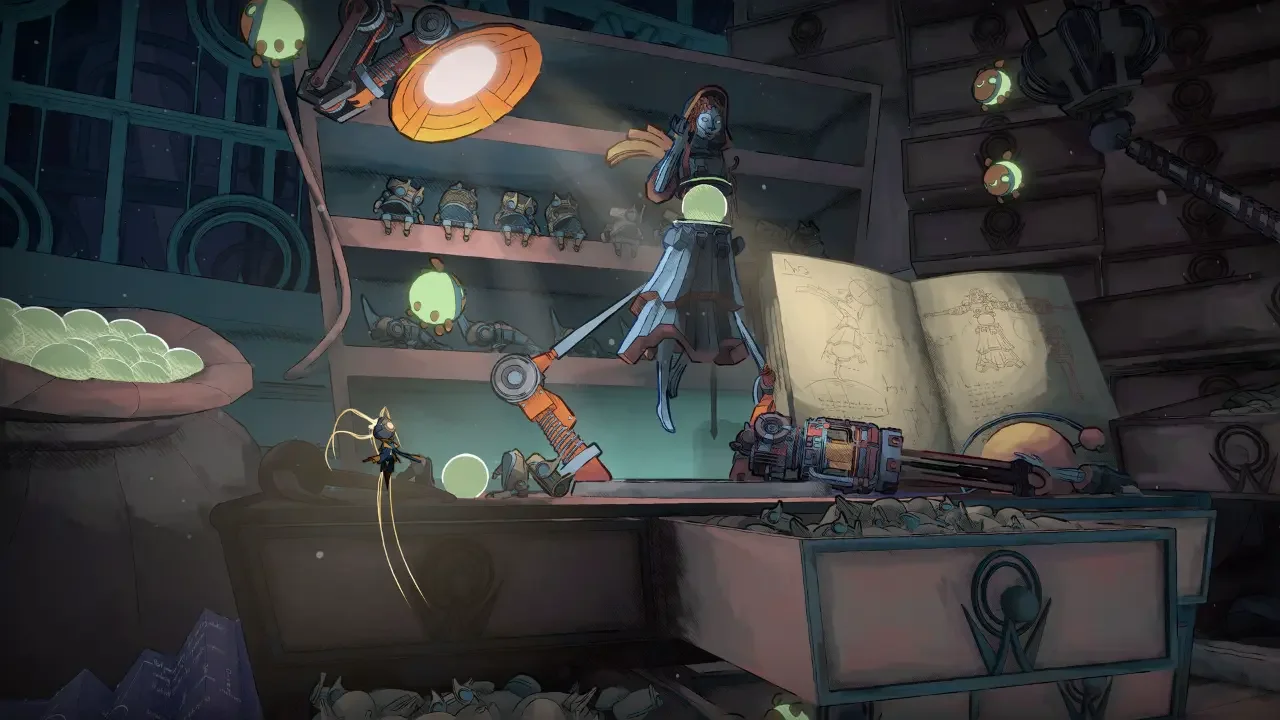
Look, I get it. The first few hours of MIO feel like any other platformer where gravity is your worst enemy. But once you realize that the floor is essentially a trap, the whole game changes. The Vessel isn't just a map; it's a playground for momentum, and if you aren't abusing the physics engine, you're leaving half the fun on the table. Between the Hairpin Grapple and the way the game handles jump resets, you can basically turn Mio into a flying death machine. You just have to stop playing it like it's 1994.
The Holy Grail: The Aerial Jump Reset
This is the single most important mechanic to tattoo onto your brain. In MIO, your double jump isn't a one-and-done deal. It’s a resource that you can steal back from the environment whenever you want.
Any time you land a hit on anything while in mid-air, your double jump resets. I’m not just talking about enemies, either. You can smack those lavender plant bulbs, environmental debris, or even those annoying purple growths. If your blade connects, your jump count goes back to zero. This turns every combat encounter into a series of stepping stones. I’ve cleared entire vertical shafts without ever touching a platform just by pogo-ing off the heads of flying drones. If you're struggling with a gap, stop looking for a ledge and start looking for something to hit.
Mastering the Hairpin Grapple
You pick up the Hairpin Grapple early, and it’s the key to making the Vessel your bitch. But don't treat it like a standard "pull me to point A" tool. This thing is built for momentum conservation.
Momentum is Your Best Friend
When you hook onto a point, the game preserves your velocity. If you swing at the right angle and let go at the peak of the arc, you can launch yourself across massive gaps that the devs definitely thought would require a late-game upgrade. Skilled players don’t just grapple once; they chain them together. Practice finding the rhythm of grapple, release, jump, and grapple again. It’s the fastest way to travel, and it makes dodging boss projectiles feel like a choreographed dance instead of a desperate scramble for survival.
Directional Combat and Ground Bouncing
Combat in MIO is surprisingly tight, and it’s heavily tied to your positioning. You can attack up, down, sideways, and diagonally, which is crucial because your movement is directly affected by where you’re swinging.
The Downward Strike
While attacking down doesn't always deal the most damage, it's your best defensive tool. Hitting an enemy from above allows you to "bounce" off them, resetting your double jump (as mentioned before) and keeping you out of reach of their ground-based attacks. This is mandatory for some of the tankier bosses. If you stay above them and keep pogo-ing, half their move-set becomes completely irrelevant.
Finding Secrets with Your Blade
Finally, stop walking past walls just because they look solid. MIO is absolutely stuffed with hidden paths that are cleverly obscured by the environment. If a room feels like a dead end but the map shows empty space behind a rock or some foliage, smack it.
The game rewards curiosity, and often the best upgrades, like those precious Modifier Extensions for your Allocation Matrix, are tucked behind a breakable wall that requires a bit of platforming finesse to reach. Take your time, look for subtle visual tells in the background, and remember: if you can see it, you can probably reach it with a well-timed grapple chain.
Got a hot take on this? I know you do. Head over to r/neonlightsmedia to discuss it.
YOU MIGHT ALSO LIKE