The Walking Trade Review - Retail Hell Just Got Literal
Managing a convenience store is already a nightmare, but adding a daily undead horde to the mix really puts things in perspective.
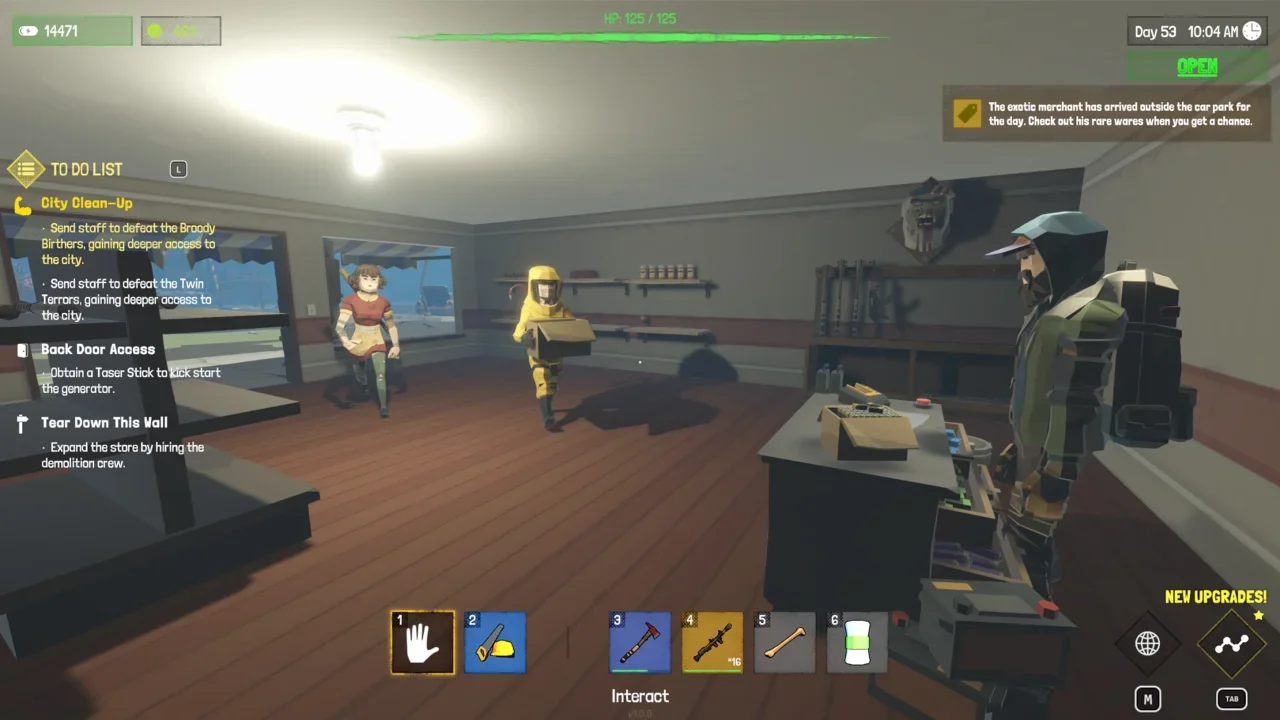
I have a massive soft spot for the low-poly art style infecting the indie community the past few years. Games like SurrounDead and Rise of Gun manage to hook me with their simple charm and addictive loops. I also have a deep, slightly embarrassing love-hate relationship with what I affectionately call "simulator slop." You know the exact type of game I am talking about. You buy a ruined building, sweep up the trash, purchase cheap shelves, and slowly build a capitalist empire out of nothing.
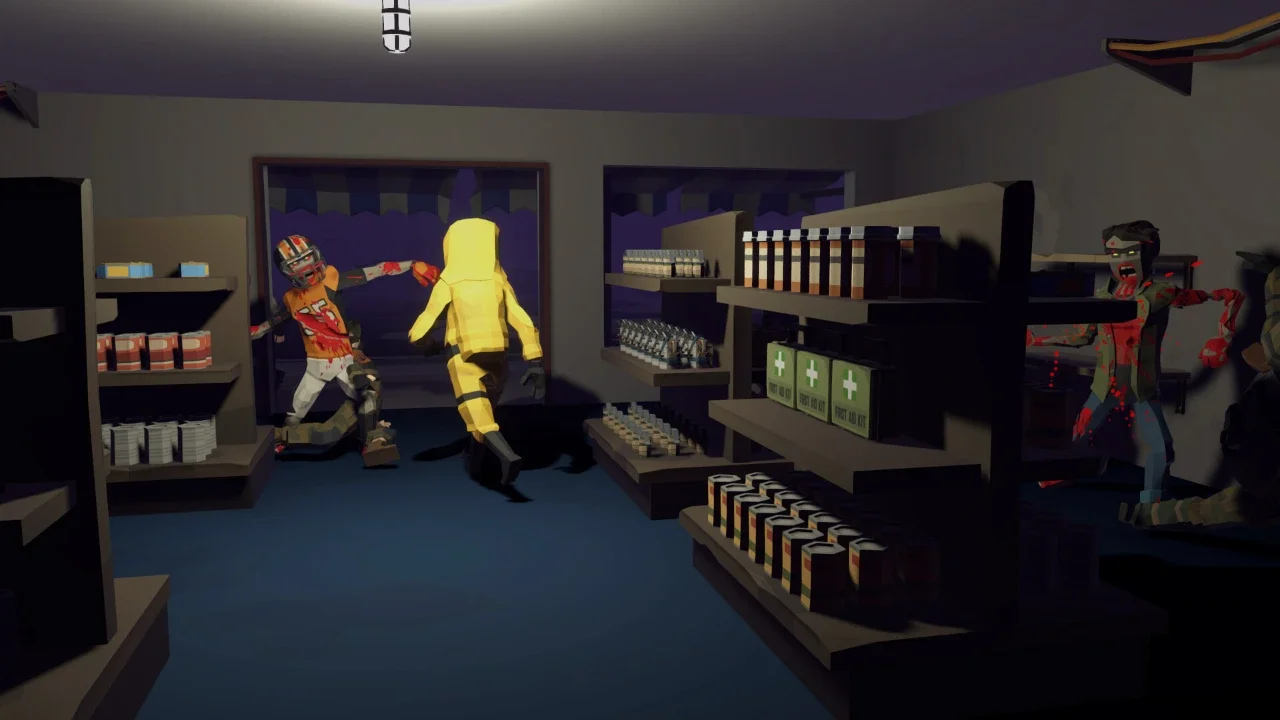
The Walking Trade attempts to smash that specific flavor of simulator into a post-apocalyptic zombie survival game. The concept is pure gold. It is sometimes chaotic, frequently buggy, and undeniably janky. But honestly? I am having a great time with it. It scratches a very specific itch, even when the game engine actively tries to ruin my day.
The Apocalyptic Economy
You start with absolutely nothing but a decaying storefront and a dream. The world has ended, but people still need canned beans and spiked baseball bats.
Sweeping the Wastes
The early game is exactly what you expect from the genre. You spend your first few in-game days clearing out garbage, moving debris, and setting up your initial retail space. It is boring, monotonous work, yet incredibly satisfying in the way only these management games can be. Once the floor is clean, you start crafting. The crafting system is incredibly manual. If you want a shelf, you are physically placing planks onto a workbench. It borders on tedious, but it grounds you in the world.
Physics and Shelf Space
This brings me to one of my favorite, yet most infuriating, mechanics in the game. You have total freedom when it comes to stocking your store. You can just mix products on the shelves however you see fit. Almost everything in the game has physical weight and collision.
This is incredibly cool when you are tossing items around a stockroom. It becomes a massive liability the second your store opens. You will spend ten real-world minutes carefully stacking boxes of ammo and canned goods on a wooden rack. Then a customer walks by, clips the corner of the shelf, and your precious inventory explodes across the room like a fragmentation grenade. It is maddening. I find myself holding my breath every time an NPC walks down an aisle.
Human Resources and Horde Nights
You cannot run an empire alone. Eventually, you need to hire staff to handle the registers, clean the floors, and keep the walking corpses out of the parking lot.
Brain-Dead Employees
The AI is incredibly rough. You hire drifters based on a star rating system and assign them roles. The execution, however, is deeply flawed. Cleaners are supposed to keep the shop tidy, which is vital because customers lose their minds if they see a dead body. Yet, half the time, my highly paid janitor just stands in the corner staring at a wall while the shop floor looks like a slaughterhouse.
Guards are arguably worse. A three-star security guard will heroically charge point-blank into an exploding zombie, dying instantly and taking your financial investment with them. You end up having to babysit the people you hired to lighten your workload. You can also send scavengers out to find loot. It takes hours, and they usually bring back garbage. You will be sitting there desperate for scrap metal to build a recycler, and your team returns with a dozen unlabelled cans. It is a grind, but it forces you to keep pushing outward.
The Combat Problem
Every few days, a horde wave attacks your business. The combat is incredibly clunky. Ranged weapons have ridiculous bullet drop. You aim for a zombie a few yards away and the bullet hits the dirt. You are honestly better off grabbing a melee weapon and kiting them in circles. Boss zombies are massive bullet sponges, but the enemy pathing is so easily manipulated that you can just stand on top of an abandoned car and swing away in complete safety.
Customer Service and War Crimes
The absolute best part of The Walking Trade is the sheer, unhinged freedom it gives you to be a terrible person.
The Refund Policy
This is where the game truly shines. A heavily armed survivor walks into my store. He buys an AK-47. He hands over a massive stack of batteries, which serves as the local currency. He turns to leave. I immediately pull out a lead pipe, beat him to death in the doorway, take the batteries, loot the AK-47 off his corpse, and put the gun right back on the display shelf. It is a flawless business model. The game lets you be a benevolent community pillar or an absolute psychopath.
Managing Reputation
Actions have consequences in this world. If other customers see you committing murder, or if they simply see a dead zombie bleeding out next to the cash register, your shop reputation plummets. A bad reputation means no foot traffic. No foot traffic means bankruptcy. You are constantly juggling the desire to steal high-tier loot with the need to maintain a pristine, welcoming shopping environment. Hauling corpses to the dumpster out back becomes just another part of the retail grind.
Fighting the Engine
I expect a certain level of technical issues from solo-developed indie projects, but you need to know exactly what you are signing up for here.
The Void Boxes
Inventory management is currently the true final boss. You use cardboard boxes to carry multiple items around. This sounds great until the physics engine decides to have a meltdown. If you put more than eight items in a box, go to sleep to save the game, and wake up the next morning, half of your items will simply vanish into the ether. Items clip through the floor. Rare loot drops get stuck in the ceiling. It makes hoarding resources terrifying for all the wrong reasons.
The Save System
The game only saves when your character goes to sleep at the end of the day. If the game crashes, you lose an entire day of grueling, meticulous work. Re-doing an entire shift of stocking shelves, organizing boxes, and fighting zombies because the engine gave out is a uniquely painful experience.
The Verdict
The Walking Trade has the skeleton of an incredible game. The mix of low poly aesthetics, base building, and retail management hits a very specific itch that few games even attempt to scratch. When everything clicks, it is a blast. But right now, you are fighting the physics engine just as often as the undead. If you have a high tolerance for bugs and love the simulator genre, it is absolutely worth the asking price. Just remember to keep a baseball bat handy for the shoplifters.
Score: 7.0/10 - A brilliant concept held together by duct tape, broken AI, and flying cardboard boxes.
We at NLM received a key for this game for free, this however didn't impact our review in any way.