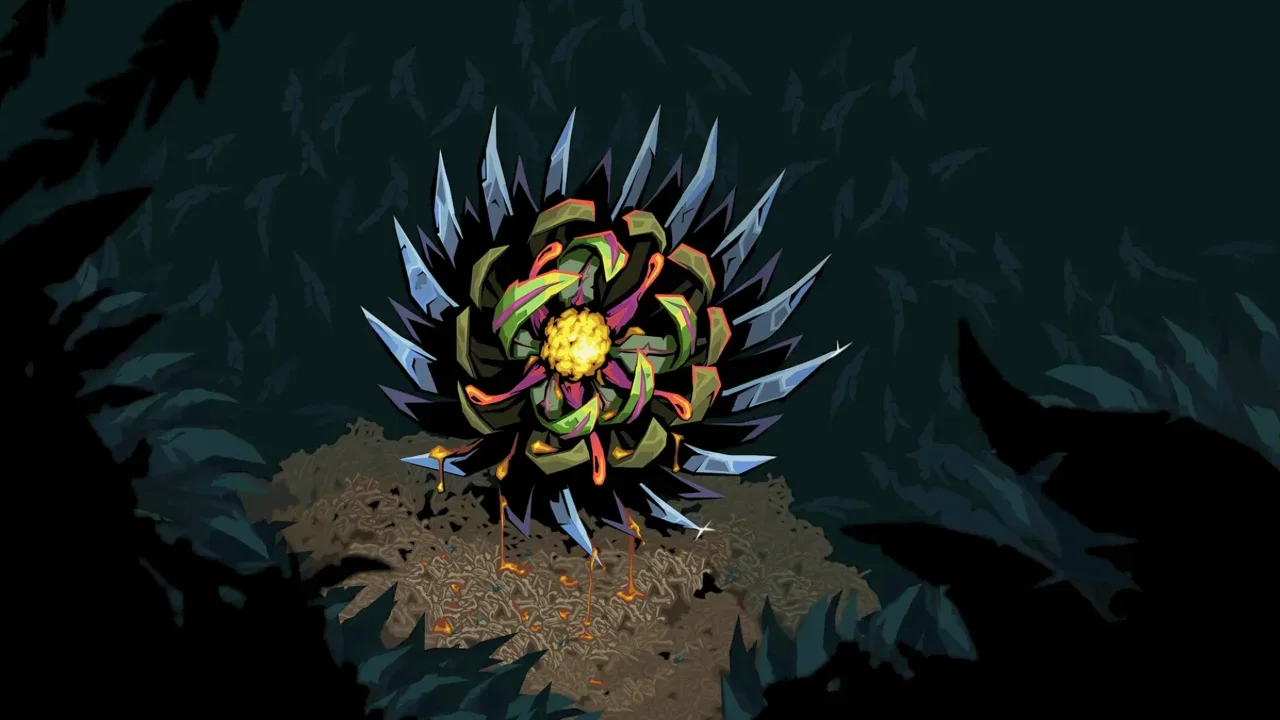
A three-headed mutant that resurrects itself twice is exactly the kind of finish line the Spire would design.

Test Subject C8 doesn't just have a big health bar, it's three separate fights stitched together, each one demanding a completely different approach from the last. Getting walled here after cruising through the rest of Act 3 is common enough that it's worth understanding the mechanics before walking in blind. Anyone still working out early-game fundamentals should probably look at my survival guide first, since none of this matters if the run's already shaky by the time it reaches the final arena.
Phase One Looks Like a Joke. It Isn't.
The boss opens at a deceptively low 100 HP, which makes it tempting to play it slow, drop some scaling powers, and settle into a normal fight rhythm. That instinct gets punished immediately. Enrage is active here, and every skill card played hands the boss two Strength permanently. Spend the opening turns drawing through the deck and stacking block, and the damage output waiting on the other side of that setup becomes catastrophic. The correct read on this phase is closer to a sprint than a fight, burning through that first health bar with straightforward attacks before the Strength scaling has a chance to spiral.
Phase Two Turns Every Missed Block Into a Liability
Killing the first form drops the boss dead on the spot, and it comes back with 200 HP and a second head. Enrage disappears, replaced by something that punishes a different bad habit. Painful Stabs inserts a Wound into the discard pile every time unblocked damage lands, and Wounds are dead cards that just sit there clogging draws. Face-tanking a hit here to save energy feels fine in the moment and turns into a real problem two turns later when the deck's full of garbage and the win condition's buried somewhere underneath it. Full block, every attack, no exceptions.
Phase Three Is a Patience Check
The third revival brings 300 HP and drops both previous modifiers in favor of something slower and more grinding. The boss goes Intangible every other turn, reducing all incoming damage to exactly 1 regardless of source. That effectively doubles the length of the fight, since half of it is spent surviving while dealing next to nothing, and the other half is the actual window to do real damage. It's less a mechanical puzzle at this point than an exercise in staying consistent on defense long enough to capitalize the moment the shield drops.
Why Damage-Over-Time Decks Struggle Here
Worth flagging early if a run's built around Poison or Doom: every phase transition fully cleanses the boss's status bar. Stacking 90 Poison, watching the health bar melt, and then seeing the next head come back with a completely clean slate is a genuinely painful thing to experience mid-run, and it means restarting that entire buildup from zero three separate times. If setting up enough Poison or Doom to matter eats four turns each time, those setup windows are exactly when the boss is doing the most damage back. There's some debate about specific Doom interactions slipping past the cleanse, but building a run around a niche edge case isn't a reliable plan at higher Ascensions. Direct, immediate damage is the safer bet.
What Actually Gets You Through
A pure glass cannon build dominates phase one and then falls apart the moment phase three's Intangible turns show up, so the decks that clear this fight consistently are the ones that can pivot between both states.
Scaling powers earn their keep here specifically because the fight runs long enough to pay off the setup cost. Demon Form on the Ironclad is the clearest example, an early investment that turns basic Strikes into serious damage by the time phase three's tangible turns roll around. The Regent's Sovereign Blade works on the same principle, spending Stars early to keep sharpening the blade so that whatever window phase three offers gets used to full effect.
Passive defense matters just as much, especially given how easily Wounds can clog a hand in phase two. The Defect gets particularly strong here if Frost Orbs and Focus are already established, letting block generate on its own while energy goes toward lining up Lightning for the tangible windows instead. Barricade or Calipers on the Ironclad accomplish something similar, letting armor carry over between turns so it can be stockpiled through the Intangible stretches and cashed in the moment the boss becomes vulnerable again.
Consumables are worth saving specifically for this fight rather than burning early. A Cultist Potion or a Ghost in a Jar held in reserve can genuinely swing the outcome, and showing up under-prepared usually traces back to skipped side objectives earlier in the run. My Epoch progression guide is worth a look if the relic and potion count feels thin heading into Act 3.
None of the three phases reward the same instincts, and that's the entire point of the encounter. Keep skills limited early, block everything in the middle, and hold steady through the patience test at the end, and this fight stops being a wall and starts being just another boss with a trophy attached.