Timberborn Badtide Guide: Automating Sluices and Surviving Toxic Water
The moment that red toxic sludge rolls down your pristine river, your survival timer drops to zero.
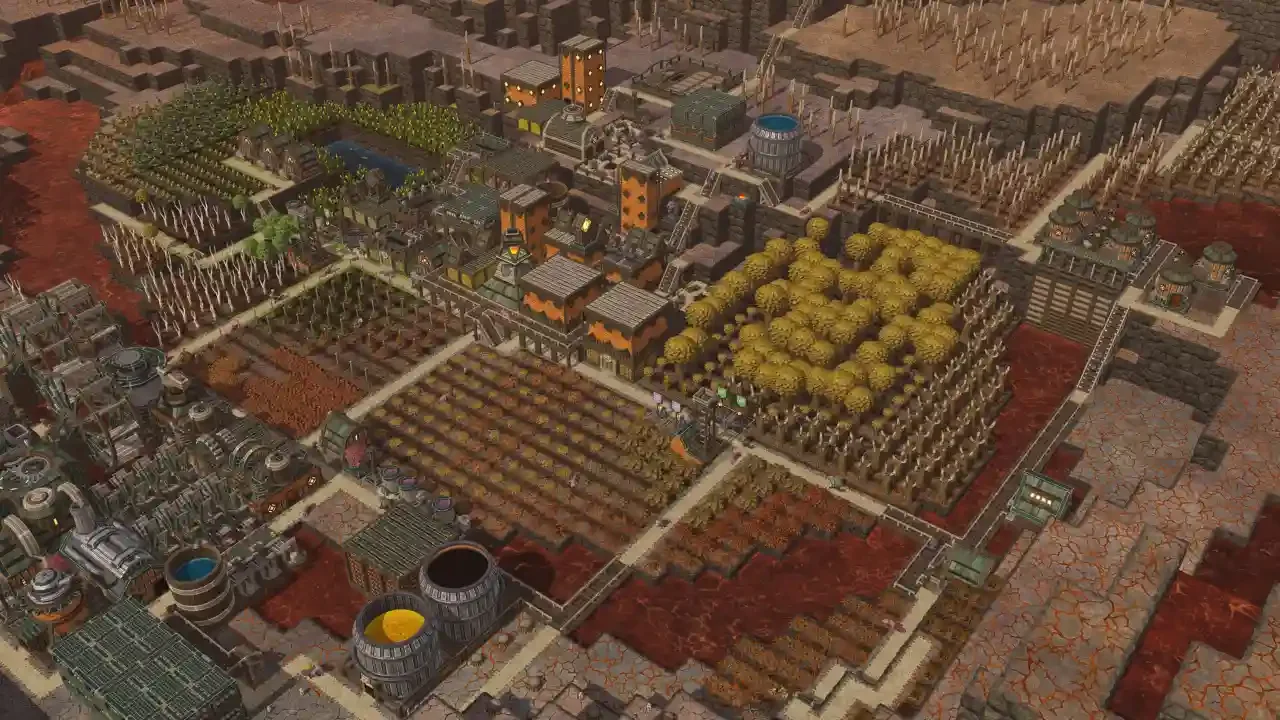
If you survived the initial dry seasons using my beginner survival blueprint, you probably felt pretty confident. You built a basic dam, stored some water, and your beavers were happily chewing on carrots. Then, usually around cycle seven, the game decides to humble you. The water sources stop producing fresh water and start spewing Badwater. This is the Badtide.
It is a merciless mechanic. Badwater kills your crops instantly, poisons any beaver that swims in it, and ruins the fertile green land you desperately need for agriculture. Players often watch in complete horror as a single wave of red sludge wipes out hours of careful planning. I have been there, watching my entire potato harvest wither in seconds because I did not understand fluid dynamics. You cannot just block the water entirely, because it will eventually overflow and drown your settlement in poison. You have to learn how to control the flow.
The Physics of Dam Building
Before you can fight the toxic sludge, you need to understand the tools at your disposal. Throwing random blocks into the river is a great way to accidentally flood your own town.
Levees and Floodgates
Levees are your foundational walls. They block water completely. If you build a solid wall of levees across a river, the water will rise until it finds a lower point to escape or spills right over the top. You use levees to build the deep basins of your reservoirs.
Floodgates, on the other hand, sit on top of your levees and let you manually adjust the overflow height. In the early game, these are your best friends. You can raise them to trap water during a standard drought, and lower them to prevent your town from turning into an underwater grave during the wet season. However, manually clicking floodgates every time the weather changes gets exhausting, and if you forget, your beavers pay the price.
Constricting the Current
Water in this game follows basic pressure rules. If you have a wide, lazy river and you use levees to choke it down into a narrow one-block gap, the water is going to shoot through that gap with significantly more force. This is how you optimize your power grid. Do not just place water wheels in the middle of a massive lake. Force the river into a tight canal, drop your water wheels into the rapids, and watch your power generation skyrocket. It is an incredibly satisfying way to fuel your lumber mills.
Surviving the Badtide: The T-Valve System
This is the holy grail of Timberborn water management. If you want to survive a Badtide without micromanaging your settlement, you need to build an automated T-Valve.
Splitting the River
The concept is straightforward. You need to split your main water source into two distinct channels. One channel flows directly into your settlement to feed your reservoirs and crops. The other channel acts as a garbage chute, directing water completely off the edge of the map or into an isolated wasteland where it cannot hurt anyone.
During a normal, temperate season, you want the clean water flowing into your town while the garbage chute is closed. When the Badtide hits, you want the town channel slammed shut and the garbage chute thrown wide open.
Automating with Sluices
This is where the 1.0 update completely changed the game. Instead of manually operating floodgates, we use automated Sluices. Sluices are a type of dam that allows water to flow through in one direction only, and they can be programmed to open or close based on contamination levels.
Place a row of Sluices at the entrance to your settlement channel. Click on them and set the automation condition to close when contamination is above 5%. Next, place a row of Sluices at the entrance of your garbage chute. Set these to close when contamination is below 5%.
Holy shit, watching this work for the first time is a revelation. The moment the red water hits the junction, the gates to your town automatically slam shut, protecting your drinking supply. Simultaneously, the garbage chute opens, safely flushing the toxic waste off the map. When the season changes back to fresh water, the system reverses itself. You have officially beaten the Badtide.
Flushing the Leftovers
Even with a perfect T-Valve, you might still get a tiny bit of badwater trapped near the gates due to the "water hammer" effect, where a sudden surge of fluid temporarily spikes the water level as it hits a closed door.
To mitigate this, ensure your diversion canal is built as close to the actual water source as horizontally and vertically possible. If your diversion is miles away from the spring, that entire stretch of river will fill with badwater. When the temperate season returns, it will take days of fresh water flow just to dilute and flush the leftover poison out of the riverbed. Build your defenses as far upstream as you can physically manage.
Securing the Future
Once you have automated your water supply and neutralized the Badtide threat, your colony is going to experience a massive population boom. You will have more food and water than you know what to do with, which means it is time to expand.
Creating new settlements requires a solid grasp of hauling routes, which is why I recommend reading my breakdown on Timberborn district management and migration next. If you are already running a massive, multi-district empire and want to know what to do with all your excess resources, you can skip straight to my guide on building the Earth Recultivator.