Windrose Weapons and Armor Guide: Build Your Arsenal
Gear scaling in Windrose runs on hard math, not vibes.
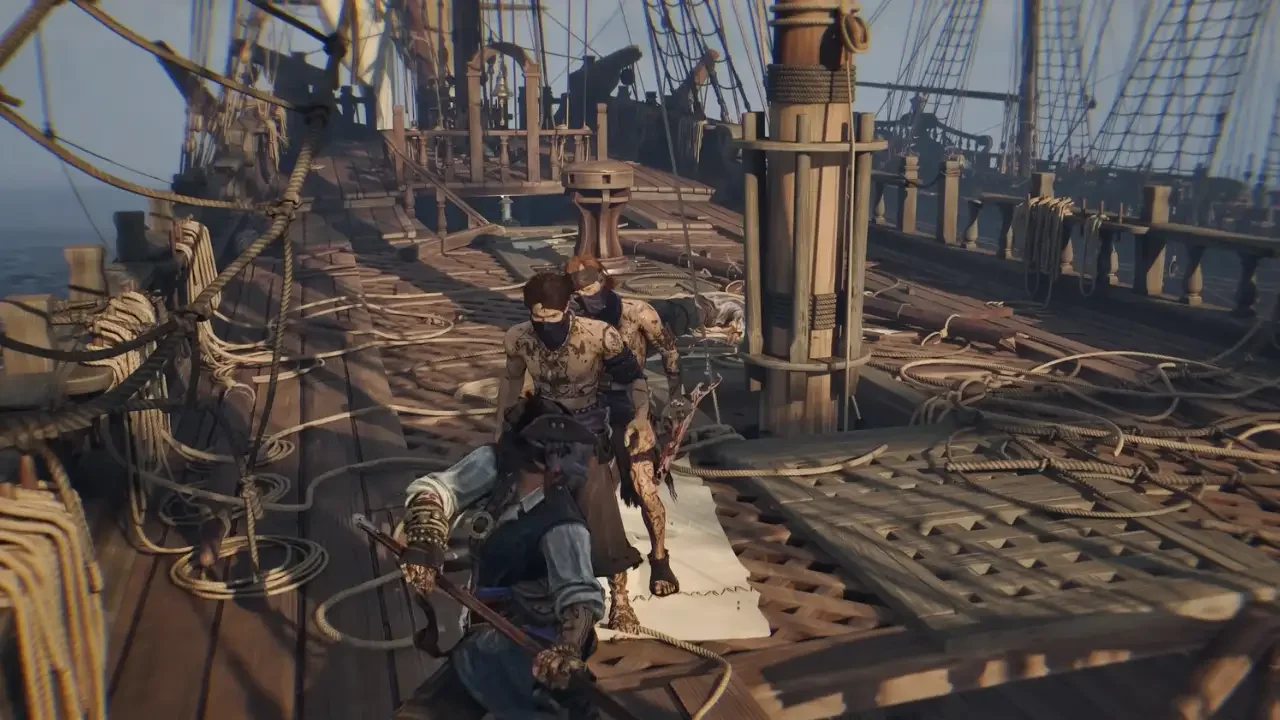
Every weapon carries a letter grade, D through S, tied to a specific stat. Ignore that grade and even a rare drop performs like starting gear. The stat and comfort fundamentals get covered in our earlier survival breakdown, this one's about turning those points into an actual loadout.
Reading the Letter Grades
Three stats govern weapon damage. Precision scales Rapiers, Pistols, and Muskets, built around single-target damage and ranged play. Agility scales Sabers, Greatswords, and Blunderbusses, built for fast combos and clearing groups. Strength scales Clubs and Halberds, heavy blunt damage with real stagger potential but nothing at range. Mastery sits outside all three, raising critical hit chance regardless of weapon type.
The scaling isn't linear. Damage per point drops by roughly half once a stat crosses 20, which means dumping 50 points into Precision to chase a Rapier build burns points that would do more spread across Vitality and Endurance instead.
Going One-Handed Keeps a Hand Free
Sabers, Rapiers, and Clubs all leave an off-hand slot open for a pistol, letting melee strikes and ranged bursts run without ever swapping the primary weapon. The tradeoff is stat allocation, a Saber scales Agility while the pistol in the off-hand scales Precision, so investing in both means splitting points instead of maxing one. Greatswords, Halberds, and Blunderbusses take both hands and trade that flexibility for straight stopping power.
Ascending Uniques Instead of Scrapping Them
Epic-tier weapons found in ruins or off bosses come with passives that change how a fight plays out. The Rapier of a Thousand Cuts stacks bleed that spreads to nearby enemies on a kill. The Executioner Halberd grants damage resistance and crit chance on every kill secured. The Bonebreaker Club scales its own damage off current stamina, rewarding staying mobile rather than turtling.
Finding a Common or Rare version of any of these is worth keeping rather than scrapping. Tumbaga Ingots let a lower-tier copy get ascended into its Epic form at base, unlocking the passive that the base version doesn't have.
Armor Built Around a Role
Rare armor comes in sets, and wearing two or four pieces from the same collection unlocks bonuses that dictate what the build is actually for.
For anyone taking hits on purpose, the Conquistador's Set grants 15% damage resistance at two pieces, and at four pieces makes every action uninterruptible, no staggering out of a swing or a potion mid-fight. That alone makes it a strong pick for boss encounters where getting knocked out of an animation usually means eating a second hit. The Pikeman's Set leans two-handed, adding 160 max health at two pieces and 15% two-handed damage at four.
For anyone building around dodging instead of blocking, the Flibustier's Attire cuts attack stamina cost by 20% at two pieces and adds 15% one-handed damage at four. The Marksman's Rig cuts sprint and dash stamina cost by 30% at two pieces and adds 15% ranged damage at four. The Privateer's Regalia adds 10% crit chance at two pieces, and at four pieces stacks 10% crit damage per enemy standing nearby, capped at 30%, which rewards fighting in the middle of a crowd rather than picking targets off one at a time.
Mixing Sets Instead of Committing to One
None of this requires locking into a single four-piece set. Two-piece bonuses from different sets stack, and early on that mixing usually outperforms going all in on one collection.
Pairing two pieces of Conquistador with two of Pikeman stacks 15% damage reduction with the flat 160 health boost, a solid baseline for anyone building a heavy brawler around surviving hits rather than avoiding them. Pairing two pieces of Flibustier with two of Conquistador trades some of that survivability for lower stamina cost per swing, useful for a build that still wants to trade blows but needs to throw more of them. A full four-piece set built around healing effectiveness and damage reduction covers the support role in a group, letting one person keep everyone else standing instead of contributing damage directly.
Two Builds Worth Knowing
The Iron Wall build leans entirely on Strength, built around the Plague Halberd or Soul Eater with a Plague Pistol in the off-hand for its damage-to-health conversion. A full Pikeman's set is close to mandatory here, halberds can't parry, so the flat health boost is what actually survives the hits that are coming regardless. Eating Meaty Croc Kebabs and running the Major Warrior Ring pushes special attacks hard enough to one-shot standard enemies while healing back a chunk of health on the hit.
The Bleed and Breach build asks more of actual timing. It runs the Rapier of Devastation alongside Drake's Double-Barreled Pistol, stacking Plague Marks with light attacks before swapping to the pistol for a Vulnerability debuff and finishing with a heavy attack. A full four-piece Flibustier's set edges out a mixed loadout here once stats are capped, the flat one-handed damage boost adds up more than splitting bonuses across sets. Sustain comes from the Rapier's own mark consumption rather than raw Vitality, which frees up points elsewhere, though it also means the build has less room for error if a parry gets mistimed.
Building the Workshops to Craft Any of This
None of this gear comes off a basic wooden table. Epic weapons require a Weaponsmith Workshop built up with anvils and bellows, and Rare armor sets need an Armor and Clothing Workshop fitted with mannequins. Fitting both into a base without wrecking the existing layout is worth planning out before dropping either one down.
The Ship Has Its Own Gear Slots
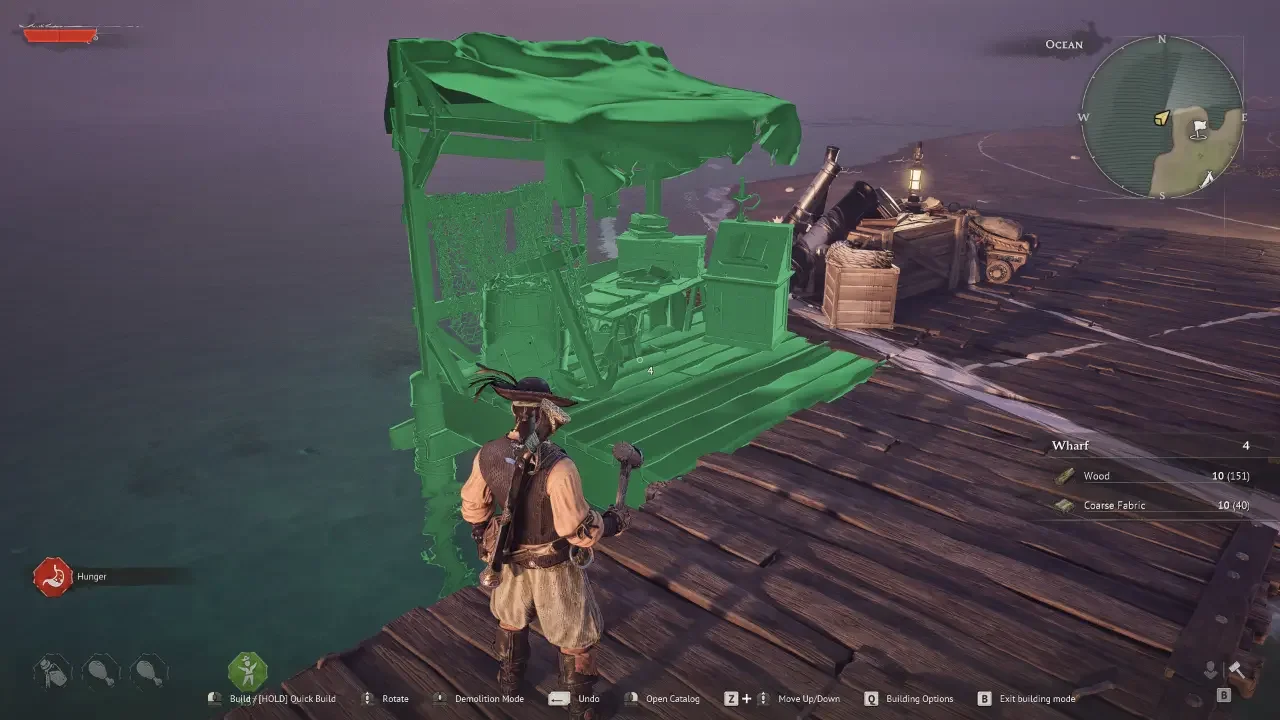
A greatsword does nothing when an enemy galleon opens fire from a distance. The ship carries its own weapon slots for 12, 24, or 36-pound cannons, and getting those upgraded at the Wharf before picking a fight at sea matters just as much as anything equipped on deck.