Retro Rewind Guide: Surviving the 90s Retail Grind
Running a video store in 1990 is a grueling test of patience, inventory management, and your tolerance for incredibly stupid customers.
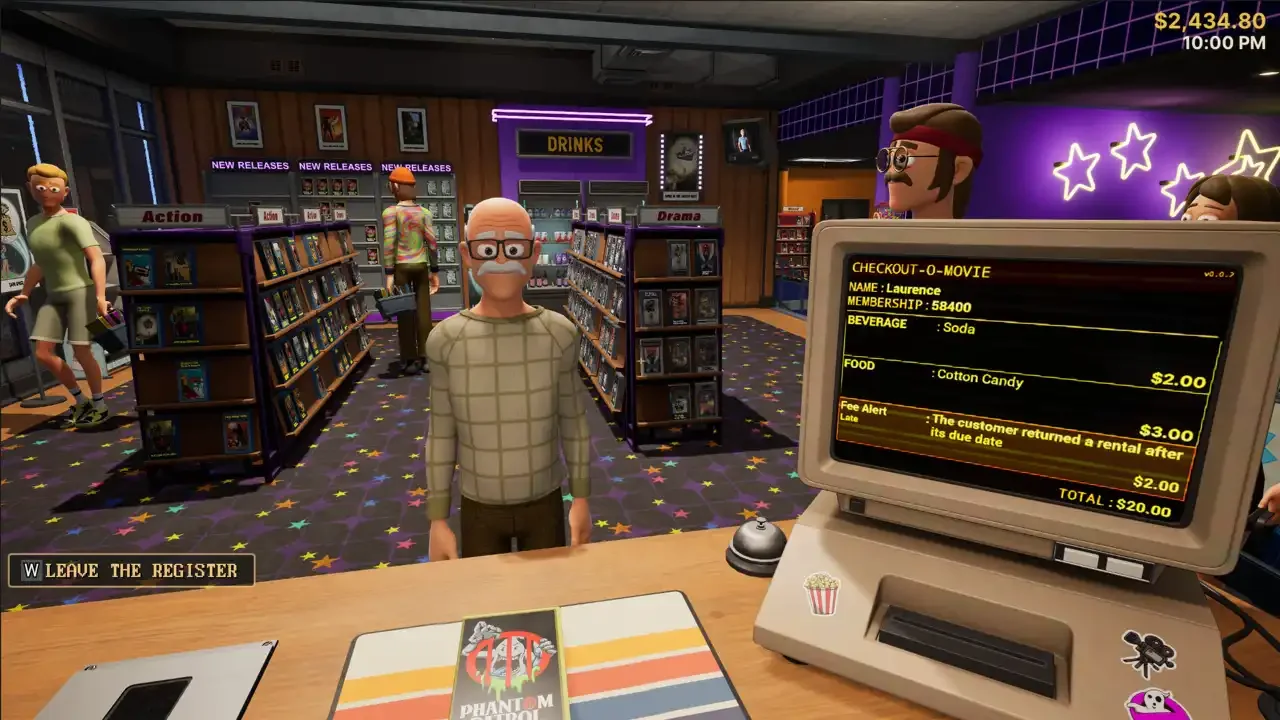
When I first booted up Retro Rewind, I had visions of kicking back behind a counter, popping in a VHS tape, and watching the cash roll in while neon lights hummed in the background. The reality is far more authentic to actual retail work. You are going to be on your feet, arguing over two dollar late fees, and fixing shelves that your own employees ruined. The game does not hold your hand, and it certainly does not hand out free money. If you want to turn a dingy little room into a booming entertainment empire, you have to embrace the grind. Here is everything I wish I knew before I opened my doors to the public.
The Financial Reality of 1990
Before you start tearing your hair out over your daily profit margins, you need to set your expectations. I see players constantly complaining that their income plateaus around 250 to 300 dollars a day during the week.
This is not a bug. It is a feature. You are running a local, physical storefront in the year 1990. You do not have an infinite pool of customers. Fridays and weekends are your primary moneymakers, where you can easily clear 500 dollars or more. The weekdays are for maintaining stock, dealing with the tedious administrative work, and hustling for scraps. Do not blow your entire bank account expecting a massive, immediate return on investment. Growth is slow, deliberate, and requires you to actually work the floor.
Playing the Weather and Events
Every morning, the very first thing you need to do is look at your calendar. The weather and local events completely dictate your strategy for the day. If it is raining on a Friday, prepare for absolute chaos. People want to stay inside and watch movies when the weather is garbage. Make sure your shelves are packed, your snacks are topped off, and your fastest employee is scheduled. Furthermore, pay attention to genre specific holidays. If there is an action movie event, make sure those specific tapes are prominently displayed.
Shelf Management and the Employee Menace
If you want a store that actually functions, you must organize your movies by genre. Customers will frequently walk in and ask for a specific category.
If your action movies are mixed in with your horror and romance tapes, you are going to waste precious time hunting down the right box. Buy dedicated shelving units for each genre. It makes visual sense, it helps you track inventory at a glance, and it makes restocking infinitely less painful. However, you need to watch your hired help very closely.
The "Mixed" Shelf Disaster
You will eventually hire staff to handle returns, and they are aggressively stupid. If you have a dedicated Horror shelf, and that shelf gets completely filled, your employee will not hold onto the extra horror tape. They will not put it in a box. They will violently shove it onto your neatly organized Comedy shelf. The moment they do this, the game labels that entire unit as a "Mixed" shelf, ruining your sorting system.
To prevent this nightmare, you have to aggressively manage your inventory limits. If a genre is overflowing, you need to sell off your older duplicates immediately to make room for the new returns. If an employee does taint a shelf, you can fix it by removing the offending tape and manually resetting the shelf label, but it is an annoying chore you should try to avoid.
Hiring and Firing
Treat your staff exactly how a ruthless 90s retail manager would. Spend the extra cash to hire an employee with a fast checkout speed. Do not settle for the sluggish applicants just to save a few bucks. If an employee calls in sick two days in a row, fire them immediately. There is no room for sympathy when you have a line of angry customers waiting to rent Die Hard.
Inventory Cycling and Dead Stock
You are going to end up with way too many copies of movies once they are no longer fresh releases.
When a highly anticipated movie drops, you naturally buy five or six copies to meet the initial demand. Two weeks later, nobody cares about it anymore, and those tapes are just taking up valuable real estate on your shelves. You need to be ruthless about cycling your stock. Keep one or two copies of older movies for the occasional rental, and dump the rest.
The Clearance Bin
Once you unlock the Clearance Bin, it becomes your best friend for liquidating old stock. Toss your excess duplicates in there to free up space. Fair warning, the customer pathing around the clearance bin can be slightly buggy. Sometimes you will go three in game days without a single person touching it. If it seems broken, just progress to the next day and restart your game session. That usually resets their behavior and gets them buying your junk again.
Embrace the Trash
Speaking of junk, do not ignore the poorly rated movies. The market will tell you a movie is a one star disaster, but customers in this game have terrible taste. They actively ask for trashy, so-bad-they-are-good films. These critically panned movies are incredibly cheap to purchase from the catalog. Because your upfront cost is practically nothing, they turn a profit very quickly. Make sure you are also checking the back alley behind your store every Tuesday and Thursday. There is a shady tape dealer out there who sells unique inventory you cannot get through the standard computer system.
Dealing with the Public
Customers will test your sanity. They will break your property, they will try to scam you on return dates, and they will complain about everything.
Late Fees vs Damage Fees
When a customer tries to pull a fast one and drops a late tape in the return slot overnight, the system flags them. The next time they come to the register, you get to confront them about the two dollar late fee. You can be the cool manager and waive it to keep them happy, or you can demand the cash. Honestly, waiving a two dollar fee to prevent them from storming out is usually worth the long term business.
However, never, under any circumstances, waive a damage fee. If a customer brings back a busted tape, the system slaps them with a twenty dollar charge. That twenty dollars is exactly what it costs you to buy a replacement copy. If you waive that fee, you are literally paying out of pocket for their negligence. If they get mad and threaten to never come back, let them walk. You do not need destructive clients ruining your inventory.
Quality of Life Secrets and Visuals
There are a few small details the game never bothers to explain to you, which drove me crazy during my first dozen hours.
If you buy a neon sign or a poster board from the shop, you might notice it always defaults to the exact same image. If you want to cycle through the different designs, place the object down, press the 'V' key to enter move mode, and then press 'B'. This lets you swap the visuals so your store does not look like a copy pasted clone factory.
Additionally, you will notice that some of your VHS tapes have different colored bars printed on the sides of the boxes. Do not overthink this. It is purely a visual decoration designed to help you quickly identify genres at a passing glance. The only visual difference that actually impacts gameplay is the holographic foil on limited edition tapes. Those foil copies cost more to buy, but they generate extra rental income every single time they leave the store. Guard them with your life.
Finally, if you manage to survive the grind and hit store level 20, take a walk down the alley at night. The strange tape dealer will have an open door near him. This is the developer cheat room. It lets you inject cash into your save file or mess with the character models. Using it disables your achievements permanently, but by the time you hit level 20, you have basically beaten the retail simulator anyway. You earned the right to break the rules.