Scritchy Scratchy Gadgets Guide: Automation, Upgrades, And Costs
Scratching cardboard by hand works fine for about an hour, and then your wrist starts filing a formal complaint.
The core loop looks dead simple at first: buy a ticket, strip the foil, feel bad when it's a loser. The real depth of this thing shows up once you realize the entire back half of the game is about building a machine that does that grinding for you. You go from a cheap plastic trash can to messing with time itself via a magical egg timer, and the gap between those two points is where most of your playtime actually lives. If you haven't got the basic scratch mechanics down yet, sort that out with the beginner's guide first. Everyone else, here's exactly what every gadget does and what it'll run you.
Getting Off The Manual Treadmill
Your first stretch of playtime is pure repetition, and getting out of it fast is the whole goal.
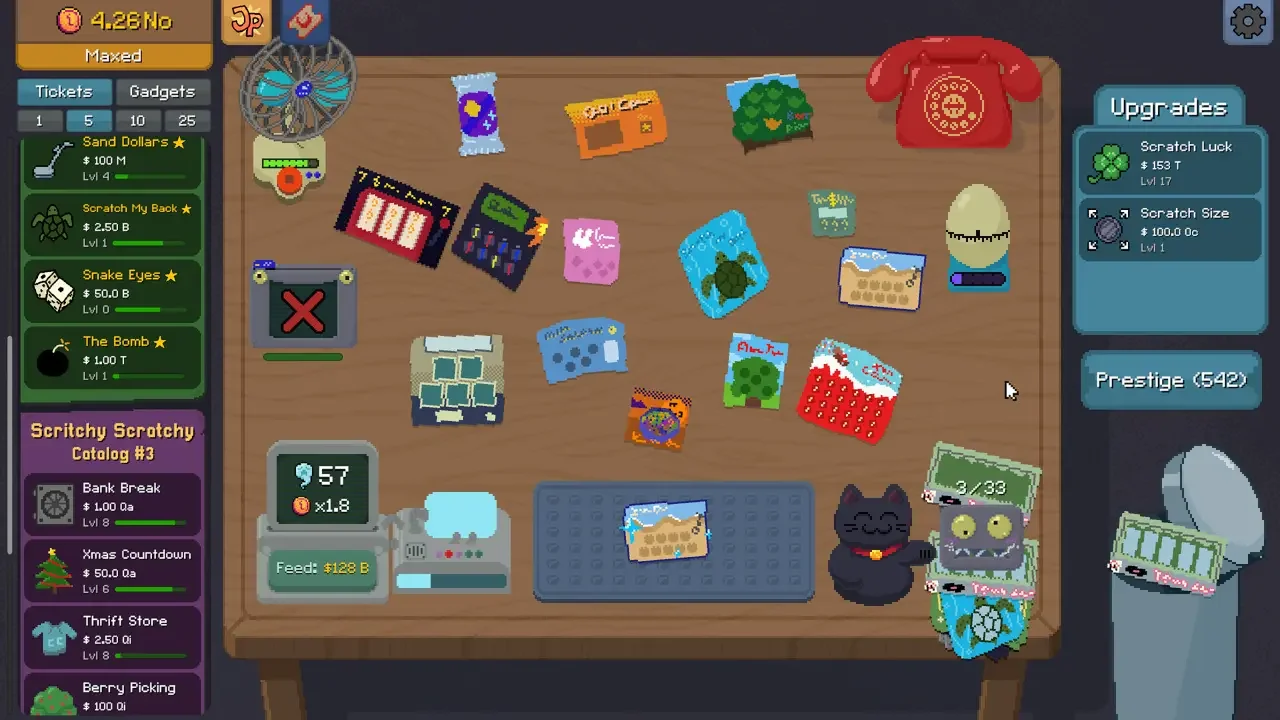
The Trash Can is your first purchase, a flat two bucks that lets you toss broken plates and losing tickets so your desk doesn't turn into a landfill. Right after that comes the purchase that actually matters: the Scratch Bot at a thousand dollars. This is the machine that takes the physical scratching off your hands entirely, and it's the single biggest quality of life jump in the early game.
Most of your early income should go straight into this bot. You'll want to push its scratching speed, how many cards it can hold at once, and its raw strength so it can handle the nastier tickets later on. If you're the type stockpiling uncollected tickets for specific trophies, the achievement guide breaks down exactly how much bot capacity you need for that.
Fixing The Traffic Jam On Your Desk
Get the bot running and you'll hit a new bottleneck fast: cards still need to physically get to it, and that's still on you.
That's the Fan's whole job, at fifty thousand dollars. It blows purchased tickets straight into the Scratch Bot's queue, cutting out the manual shuffling entirely. Put money into its battery duration and blowing speed to keep that pipeline moving without stalling out mid-run.
The Sticky Mat, also fifty grand, solves the opposite problem. Pin a card to it and it's safe from getting sucked into the automation loop, which matters if you're saving something specific for later instead of letting the fan grab it. The Badge Collection unlocks at fifty million and just tracks your milestones so you can claim the passive rewards attached to them. Not exciting, but it's free points sitting there if you check in on it.
When The Numbers Stop Making Sense
Cross into the billions and the gadgets stop resembling office supplies.
Mundo shows up at two billion dollars, and he's the piece that actually finishes the loop, gathering scratched cards off your bot and cashing them in. Left unmanaged, he can torch your bank account if your income can't keep pace with how fast he's spending it, so it's worth reading the dedicated automation breakdown before you let him run wild on a run you actually care about.
Feeding both Mundo and the Scratch Bot means picking up the Subscription Bot, priced at a genuinely absurd one hundred quadrillion dollars. It buys new tickets automatically. Once that's running alongside the fan blowing, the bot scratching, and Mundo collecting, your desk is a fully closed loop and you can mostly just watch the number climb.
Magic, Time Travel, and Selling Your Soul
At this point regular money stops being interesting, so the game starts bending physics instead.
The Spell Book runs one quadrillion dollars and lets you cast a spell on a manually scratched card to boost its odds significantly. It's genuinely useful on high tier tickets, and the cooldown can be upgraded so you're casting it more often.
Then there's the Egg Timer, which unlocks after your fourth death and costs one septillion dollars. It speeds up every other gadget on your desk at once, and pushing its capacity and charge (plus the Warp Speed upgrade) is basically how you push your whole setup into overdrive territory.
Last one's a strange purchase for a thousand bucks: The Machine. You feed it raw cash to synthesize artificial souls, which buy you attempts at the Final Chance ticket. Actually beating that ticket puts a real decision in front of you, and what happens if you hand the win back to the corporation is covered in the Faithful Servant guide if you want to go in with your eyes open.
Unlocking Gadgets Early Through Prestige
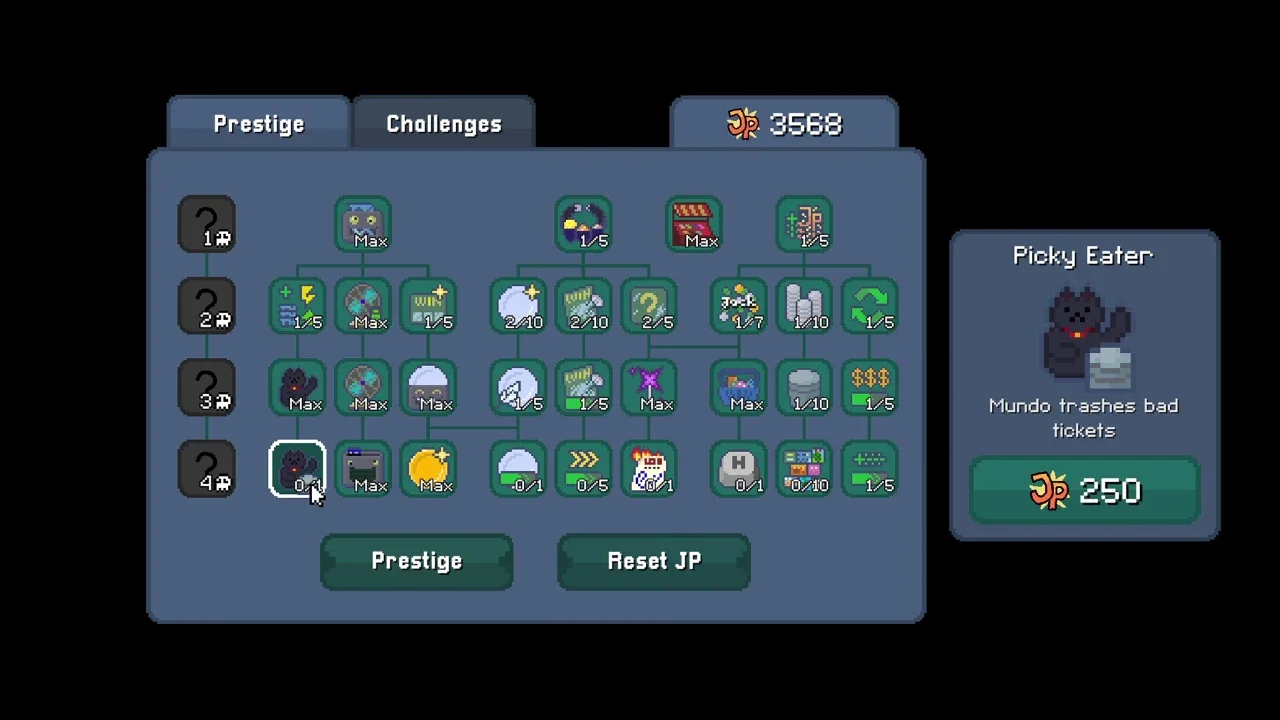
Prestiging your save hands you Jackpot Points, and you can spend those to start future runs with certain gadgets already unlocked instead of grinding back up to them. The Scratch Bot runs 1 JP, the Fan is 30 JP, the Spell Book is 35 JP, Mundo costs 50 JP, and the Subscription Bot is a steep 350 JP. Worth prioritizing whichever gadget was slowing you down most on your last run.
The Full Cost Breakdown
Build in that order and you'll go from washing dishes to owning a fully hands-off casino without wasting cash on the wrong upgrade at the wrong time. The bottleneck at every stage is whatever gadget you haven't invested in yet, so if progress stalls, that table's your first stop.